


When Mangus and his Atayal people settled on a remote mountain in Hsinchu County after a journey from Nantou County some 400 years ago, they may not have thought of it as a "Promised Land."
Today, however, 135 descendents of those early settlers have founded the first Israeli-style kibbutz "socialist commune" in an effort to protect their culture and tap the eco-tourist dollar.
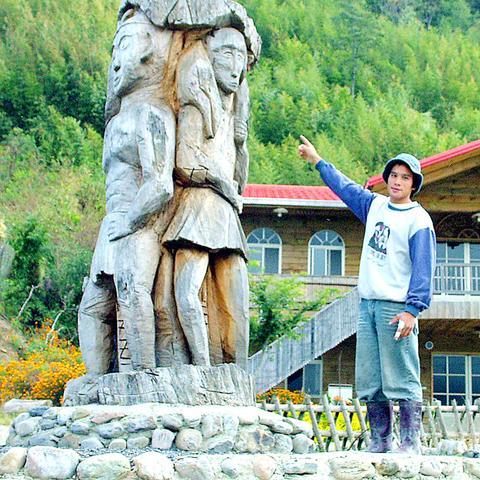
PHOTO: AFP
Reputedly the most isolated community in Taiwan, until recently the Smangus Atayal eked out a basic living from hunting and slash-and-burn agriculture on the mountain plateau sited at an altitude of 1,600m and surrounded by higher peaks.
Their way of life had seemed under threat as the youth of the tribe abandoned the mountain, lured by the opportunities in Taiwan's modern cities, where they often found themselves treated as second-class citizens.
Taiwan's 430,000 Aboriginals, whom anthropologists believe originally migrated from Malaysia or Indonesia, are among the country's most deprived communities.
Unemployment runs at 15 percent among them and 48 percent survive on less than NT$10,000 a month, a third of the average wage, according to independent lawmaker Kao Chin Su-mei (
More recently, however, the Atayal culture and a nearby grove of up to 1,000 ancient Formosan cypress trees, known as "divine trees," have drawn increasing numbers of eco-tourists to Smangus, an isolated village named after their ancestor.
"Thank our ancestors who gave us this land," says 69-year-old Icyh Sulong who is now head of the village.
Each week hundreds of tourists make the uncomfortable journey along bumpy mountain roads to see the giant trees and learn about the Atayal, who formerly hunted the local wildlife.
"My father had killed or captured 20-odd bears before he died," says 23-year-old Tqbil Icyan of his father Icyan.
While he died 20 years ago after a fall from a transport cable linking two mountains, the tribe believes the bears had their revenge.
"We believe those bears killed by my father avenged their death," Tqbil says.
The Atayal today see greater benefits from sparing the wildlife and tracking down tourist dollars instead.
"When I first visited Smangus 15 years ago, Atayal people shot birds to treat me," says writer Wu Chih-ching. "I told them if they want to attract more visitors to this remote village, they had to protect wild animals," adds Wu, who has advised on improvements to the villages.
The Atayal followed his advice but the transformation to eco-tourism was not without problems. When the Smangus people built their first tourist chalets about seven years ago, persistent squabbles arose over how to make the most of the new opportunities.
The disputes eventually prompted them to adopt a commune-style way of life, modeled on the Israeli kibbutz, although the tribe is Christian: a sign at the entrance of the village reads "Smangus is God's Tribe."
"The idea was inspired by the Bible" which encourages Christians to share their property, Taqbil says.
After a group of Atayal leaders visited Israel on a fact-finding trip early this year to see how Israelis operate their kibbutz communities, the Smangus residents decided to extend the communal lifestyle by sharing their land deeds.
"Now we feel the relationship among our people is much closer than before," Batu Icyh says happily.
Smangus adults work Monday through Thursday, with their jobs ranging from farming to maintaining roads and cooking. They are also required to spend Saturday and Sunday serving tourists living in their chalets while Friday is the day of rest.
In return, each adult receives a monthly salary of NT$10,000 from the communal Smangus coffers.
"I am able to save most of my monthly salary because it takes several hours to get to the nearest towns and there are few places to spend our money here," says Tqbil.
Smangus also boasts a modern restaurant where the residents are provided free meals. Nearly all other family expenses, such as medical bills and school fees, are also met by the communal coffers.
Unlike their parents, who had to walk several hours to attend the nearest school, Smangus children now take lessons in the village, which is also connected to the Internet.
Three Smangus families, attracted by its eco-tourism
success, have returned, a trend residents would not have dreamed of until recently.
Wu hopes the successes of the Smangu Atayal can be duplicated among the rest of Taiwan's Aboriginal communities, who are often marginalized in the predominantly Han Chinese society.
"The possibility cannot be ruled out. However, it may take time," Wu says. "At least the other Aboriginal tribes can learn something from Smangus."

This is the year that the demographic crisis will begin to impact people’s lives. This will create pressures on treatment and hiring of foreigners. Regardless of whatever technological breakthroughs happen, the real value will come from digesting and productively applying existing technologies in new and creative ways. INTRODUCING BASIC SERVICES BREAKDOWNS At some point soon, we will begin to witness a breakdown in basic services. Initially, it will be limited and sporadic, but the frequency and newsworthiness of the incidents will only continue to accelerate dramatically in the coming years. Here in central Taiwan, many basic services are severely understaffed, and
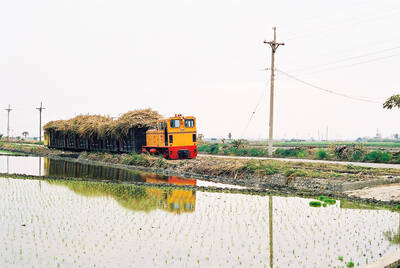
Jan. 5 to Jan. 11 Of the more than 3,000km of sugar railway that once criss-crossed central and southern Taiwan, just 16.1km remain in operation today. By the time Dafydd Fell began photographing the network in earnest in 1994, it was already well past its heyday. The system had been significantly cut back, leaving behind abandoned stations, rusting rolling stock and crumbling facilities. This reduction continued during the five years of his documentation, adding urgency to his task. As passenger services had already ceased by then, Fell had to wait for the sugarcane harvest season each year, which typically ran from

It is a soulful folk song, filled with feeling and history: A love-stricken young man tells God about his hopes and dreams of happiness. Generations of Uighurs, the Turkic ethnic minority in China’s Xinjiang region, have played it at parties and weddings. But today, if they download it, play it or share it online, they risk ending up in prison. Besh pede, a popular Uighur folk ballad, is among dozens of Uighur-language songs that have been deemed “problematic” by Xinjiang authorities, according to a recording of a meeting held by police and other local officials in the historic city of Kashgar in

It’s a good thing that 2025 is over. Yes, I fully expect we will look back on the year with nostalgia, once we have experienced this year and 2027. Traditionally at New Years much discourse is devoted to discussing what happened the previous year. Let’s have a look at what didn’t happen. Many bad things did not happen. The People’s Republic of China (PRC) did not attack Taiwan. We didn’t have a massive, destructive earthquake or drought. We didn’t have a major human pandemic. No widespread unemployment or other destructive social events. Nothing serious was done about Taiwan’s swelling birth rate catastrophe.


 RSS
RSS