


The curtain rose on this year at LUXY with a great party starring LTJ Bukem that confirmed the club's superclub status, but management at 2nd Floor have decided to draw a final curtain on central Taipei's first licensed club and tonight will be "The Last Dance."
The UK's Steve Lawler and resident DJs will be behind the decks for the final hurrah and punters are being encouraged to turn up one more time to the former @Live venue. A special price of NT$600 is being charged (as opposed to NT$1,000), if you fill out a flyer at the door on entry.
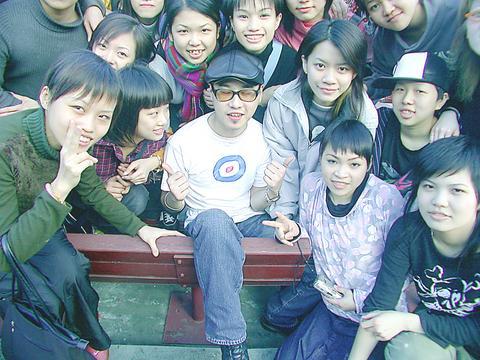
PHOTO: JULES QUARTLY, TAIPEI TIMES
Lawler earned his spurs in the British Midlands and gained international status by spinning at some of the biggest clubs in the world, such as Zouk in Singapore, Groovejet in Miami, Space in Ibiza, in addition to his Friday residency at Deep South in London. He also has his new album to plug, Lights Out 2, which is an acid-driven blend of pumping house. Since it will be a last night out, prepare to get dirty. Doors open at 10pm and kicking out time is 7:30am.
"There's going to be a lot of stuff on the TV news, as politicians have been pressuring us to voluntarily close down," said 2nd Floor and LUXY programming director and investor Alan Hsia, adding the former club would open again somewhere else in April.
"We just want to avoid all the hassle. We feel we have to move on because the police have said that if you don't move on then we will find a way of moving you on."
Hsia said he was looking at three possible locations for the new club, which will get rid of the VIP booths that line most of Taipei's clubs. "The new 2nd Floor will cater almost 100 percent to the people. It will be a kind of democratization of clubbing in town."
Hsia said his long-term plan was to build on the base that has been created at 2nd Floor.
"Taipei is now being recognized as an international location for DJs, so we're now in the second phase of sending out our DJs all over the world. The third phase is for international and local DJs to headline together."
One of the local DJs who could benefit from this strategy is DJ Em, who plays old skool 'n' breaks at Party Room, Spin, Siro, 2nd Floor, LUXY and just about anywhere else in the city that has two turntables and a mixer.
The 26-year-old moved to the US when he was two and lived there until he was seven. When he came back he made it all the way through school into the army, which he flunked.
"After three months they said I was too nervous and they just kicked me out. I had to see a doctor and he said, `When you're walking alone do you feel the devil behind you?' I said, `Hell no,' I wanted to stay, but they wouldn't have it," he said.
After that Em went to Rock Candy, one of the first late-night dance clubs in Taipei. He got his first break DJing there playing hard house and has migrated toward breakbeats, while picking up an MA in fine arts from UCLA on the way.
He said his first love was rock 'n' roll and reckoned electronic music was for the brain, while the former was for the heart.
"That's why sometimes people take drugs at [electronic music] parties, so you can feel the emotion of the music," he said. "I understand why people take drugs, it's because they're sick. The biggest problem with drugs in Taiwan is shit ecstasy. You rush for 20 minutes, you can't sleep, you drink but you can't get drunk and end up wanking off to porn, it's pointless.
As for the future, he's not sure whether DJing will be a career, "As the government is stupid and the market is too small." He said he might go to China instead and produce a film. "Music is not just a job, it's my life."
Em will spin at his own gig tomorrow at Bacchus with DJ @llen and a host of other local talent. Stop by Citizen Cain for a flyer that gets you in for free.
For your information:
2nd Floor is at 15 Heping W Rd. in Taipei (
Bacchus is at B1, 12 Songshou Rd, Taipei(
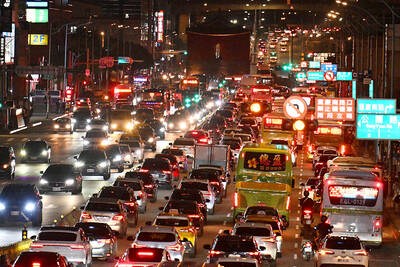
By global standards, the traffic congestion that afflicts Taiwan’s urban areas isn’t horrific. But nor is it something the country can be proud of. According to TomTom, a Dutch developer of location and navigation technologies, last year Taiwan was the sixth most congested country in Asia. Of the 492 towns and cities included in its rankings last year, Taipei was the 74th most congested. Taoyuan ranked 105th, while Hsinchu County (121st), Taichung (142nd), Tainan (173rd), New Taipei City (227th), Kaohsiung (241st) and Keelung (302nd) also featured on the list. Four Japanese cities have slower traffic than Taipei. (Seoul, which has some

In our discussions of tourism in Taiwan we often criticize the government’s addiction to promoting food and shopping, while ignoring Taiwan’s underdeveloped trekking and adventure travel opportunities. This discussion, however, is decidedly land-focused. When was the last time a port entered into it? Last week I encountered journalist and travel writer Cameron Dueck, who had sailed to Taiwan in 2023-24, and was full of tales. Like everyone who visits, he and his partner Fiona Ching loved our island nation and had nothing but wonderful experiences on land. But he had little positive to say about the way Taiwan has organized its

Michael slides a sequin glove over the pop star’s tarnished legacy, shrouding Michael Jackson’s complications with a conventional biopic that, if you cover your ears, sounds great. Antoine Fuqua’s movie is sanctioned by Jackson’s estate and its producers include the estate’s executors. So it is, by its nature, a narrow, authorized perspective on Jackson. The film ends before the flood of allegations of sexual abuse of children, or Jackson’s own acknowledgment of sleeping alongside kids. Jackson and his estate have long maintained his innocence. In his only criminal trial, in 2005, Jackson was acquitted. Michael doesn’t even subtly nod to these facts.
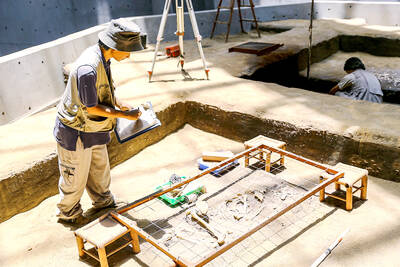
Writing of the finds at the ancient iron-working site of Shihsanhang (十 三行) in New Taipei City’s Bali District (八里), archaeologist Tsang Cheng-hwa (臧振華) of the Academia Sinica’s Institute of History and Philology observes: “One bronze bowl gilded with gold, together with copper coins and fragments of Tang and Song ceramics, were also found. These provide evidence for early contact between Taiwan aborigines and Chinese.” The Shihsanhang Web site from the Ministry of Culture says of the finds: “They were evidence that the residents of the area had a close trading relation with Chinese civilians, as the coins can be


 RSS
RSS