


Ecuador plans to build more mega-prisons to combat a surge in drug trafficking that has caused homicide rates to soar, Ecuadoran Minister of the Interior John Reimberg told reporters on Tuesday.
The South American country is attempting to deal with a wave of drug violence by constructing mega-prisons as part of Ecuadoran President Daniel Noboa’s anti-gang policies.
The first facility, which opened in November last year, was modeled on El Salvador’s Terrorism Confinement Center and has capacity for 800 suspected gang members.
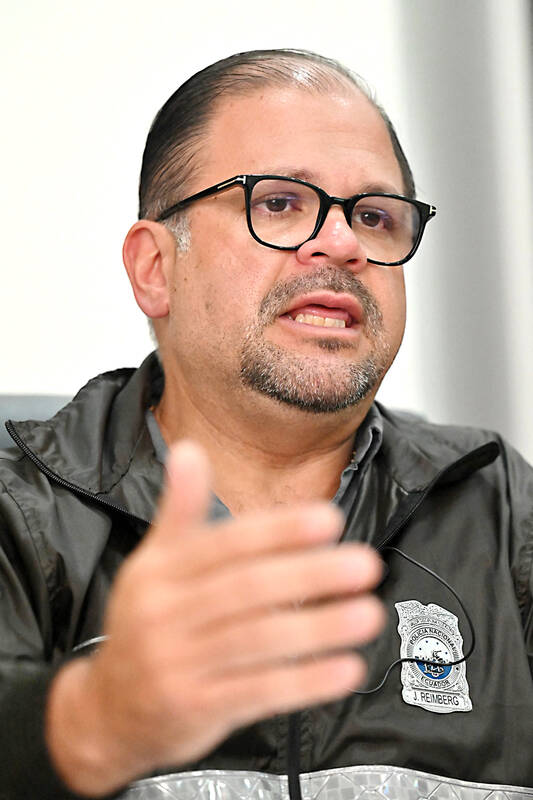
Photo: AFP
Reimberg said the prisons have prompted anger from gangs with ties to the international drug trade.
“We’ve had close to 600 drones that have tried to reach the El Encuentro prison since the day construction began,” Reimberg said, referring to the first prison in southwestern Santa Elena, where inmates with shaved heads wear orange uniforms. “They are 600 drones from organized crime gangs ... but we have been able to stop them from arriving.”
The government is planning to start construction on a second prison for about 15,000 people next month, which Reimberg said would be completed within 18 months.
Authorities are keeping the location of the second facility confidential for security purposes.
“A third prison? Yes, probably. And as many as are needed for these criminals,” Reimberg told reporters during an interview in the conflict-ridden port city of Guayaquil.
About 70 percent of the cocaine produced in Colombia and Peru — the world’s largest producers of the drug — transits through Ecuador to be exported via its Pacific ports.
The new prison is “essential,” Reimberg said, adding that it would be “very secure, just like the Encuentro facility is today.”
Clashes between gangs with links to international cartels have turned Ecuador into one of the region’s most violent countries, with a rate of 51 homicides per 100,000 inhabitants.
“We are not going to negotiate, we are not going to make pacts, we are going to attack them, we are going to weaken them,” Reimberg said, adding that 74,000 people were arrested last year.
The minister said that “highly dangerous criminals” who “must be held in isolation” would be transferred to the second prison, dismissing accusations about abuses from human rights organizations.
“I have to answer to the country with security,” he said.
Reimberg pointed to three factors as to why violent crime figures have yet to fall despite the government crackdown, blaming a corrupt judiciary and the actions of past governments.
The third factor was Colombia, amid simmering tensions between the two Andean nations that included sizeable mutual tariffs, he said.
“We have a neighboring country that is not working on the border, that is not attacking criminal groups ... we are doing our part,” he said.

Kouri Richins, a Utah mother who published a children’s book about grief after the death of her husband is to serve a life sentence for his murder without the possibility of parole, a judge ruled on Wednesday. Richins was convicted in March of aggravated murder for lacing a cocktail given to her husband, Eric Richins, with five times the lethal dose of fentanyl at their home near Park City in 2022. A jury also found her guilty of four other felonies, including insurance fraud, forgery and attempted murder for trying to poison her husband weeks earlier on Feb. 14, 2022, with a

DELA ROSA CASE: The whereabouts of the senator, who is wanted by the ICC, was unclear, while President Marcos faces a political test over the senate situation Philippine authorities yesterday were seeking confirmation of reports that a top politician wanted by the International Criminal Court (ICC) had fled, a day after gunfire rang out at the Philippine Senate where he had taken refuge fearing his arrest. Senator Ronald “Bato” dela Rosa, the former national police chief and top enforcer of former Philippine president Rodrigo Duterte’s “war on drugs,” has been under Senate protection and is wanted for crimes against humanity, the same charges Duterte is accused of. “Several sources confirmed that the senator, Senator Bato, is no longer in the Senate premises, but we are still getting confirmation,” Presidential

HELP DENIED? The US Department of State said that the Cuban leadership refuses to allow the US to provide aid to Cubans, ‘who are in desperate need of assistance’ US Secretary of State Marco Rubio on Wednesday said that Cuba’s leadership must change, as Washington renewed an offer of US$100 million in aid if the communist nation agrees to cooperate. Cuba has been suffering severe economic tumult led by an energy shortage that plunged 65 percent of the country into darkness on Tuesday. Cuba’s leaders have blamed US sanctions, but Rubio, a Cuban American and critic of the government established by Fidel Castro, said the system was to blame, including corruption by the military. “It’s a broken, nonfunctional economy, and it’s impossible to change it. I wish it were different,” he told
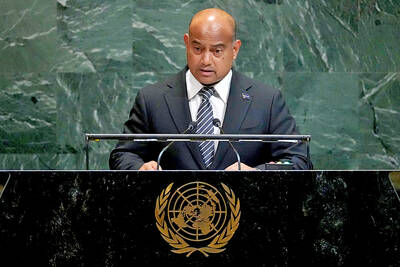
Nauru said it would hold a referendum to change its official name, described as a colonial relic from a time when “foreign tongues” mangled the native language. Nauru would change its name to Naoero to “more faithfully honor our nation’s heritage, our language and our identity,” Nauruan President David Adeang said in a statement on Tuesday. The Pacific island nation’s native language is Dorerin Naoero, which is spoken by the vast majority of its approximately 10,000 inhabitants. “Nauru emerged because Naoero could not be properly pronounced by foreign tongues, and was changed not by our choice, but for convenience,” the government said in


 RSS
RSS