


The satellite image posted by an Iranian news outlet looked real: a devastated US base in Qatar. However, it was an artificial intelligence (AI)-generated fake, underscoring the accelerating threat of tech-enabled disinformation during wartime.
The rise of generative AI has turbocharged the ability of state actors and propagandists to fabricate convincing satellite imagery during major conflicts, a trend that researchers warn carries real-world security implications.
As the US-Israeli war against Iran rages, Tehran Times, a state-aligned English daily, posted on X a “before vs after” image it claimed showed “completely destroyed” US radar equipment at a base in Qatar.
In fact it was an AI-manipulated version of a Google Earth image from last year of a US base in Bahrain, researchers said.
The subtle visual giveaways included a row of cars parked in identical positions in both the authentic satellite photo and the manipulated image.
Yet the manipulated photo garnered millions of views as it spread across social media in multiple languages, illustrating how users are increasingly failing to distinguish reality from fiction on platforms saturated with AI-generated visuals.
Brady Africk, an open-source intelligence researcher, noted an “increase in manipulated satellite imagery” appearing on social media in the wake of major events, including the Middle East war.
“Many of these manipulated images have the hallmarks of imperfect AI-generation: odd angles, blurred details and hallucinated features that don’t align with reality,” Africk said.
“Others appear to be an image manipulated manually, often by superimposing indicators of damage or another change on a satellite image that had no such details to begin with,” he said.
‘FOG OF WAR’
Information warfare analyst Tal Hagin flagged another AI-generated satellite image purporting to show that Israeli-US jets had targeted the painted silhouette of an aircraft on the ground in Iran, while Tehran seemingly moved real planes elsewhere.
The telltale clues included gibberish coordinates embedded in the fake image, which spread across sites including Instagram, Threads and X.
Agence France-Presse detected a SynthID, an invisible watermark meant to identify images created using Google AI.
The fabricated satellite images follow the emergence of imposter OSINT — or open-source intelligence — accounts on social media that appear to undermine the work of credible digital investigators.
“Due to the fog of war, it can be very difficult to determine the success of an adversary’s strikes. OSINT came as a solution, using public satellite imagery to circumvent the censorship” inside countries like Iran, Hagin said.
“But it’s now being preyed upon by disinformation agents,” he added.
Reports of fake satellite imagery created or edited using AI also followed the Russia-Ukraine conflict and the four-day war between India and Pakistan last year.
‘CRITICAL AWARENESS’
“Manipulated satellite imagery, like other forms of misinformation, can have real-world impacts when people act on the information they come across without verifying its authenticity,” Africk said.
“This can have effects that range from influencing public opinion on a major issue, like whether or not a country should engage in conflict, to impacting financial markets,” he added.
In the age of AI, authentic high-resolution satellite imagery collected in real time can give decisionmakers vital clues to assess security threats and debunk falsehoods from unverified sources.
During a recent militant attack on Niamey airport in Niger, satellite intelligence company Vantor said it detected images circulating online purporting to show the main civilian terminal on fire.
The company’s own satellite imagery helped confirm that the photos were fake, almost certainly generated using AI, Vantor’s Tomi Maxted said.
“When a satellite image is presented as visual evidence in the context of war, it can easily influence how people interpret events,” University of Washington professor of geography Bo Zhao said.
As AI-generated imagery grows increasingly convincing, it is “important for the public to approach such visual content with caution and critical awareness,” Zhao said.

Kouri Richins, a Utah mother who published a children’s book about grief after the death of her husband is to serve a life sentence for his murder without the possibility of parole, a judge ruled on Wednesday. Richins was convicted in March of aggravated murder for lacing a cocktail given to her husband, Eric Richins, with five times the lethal dose of fentanyl at their home near Park City in 2022. A jury also found her guilty of four other felonies, including insurance fraud, forgery and attempted murder for trying to poison her husband weeks earlier on Feb. 14, 2022, with a
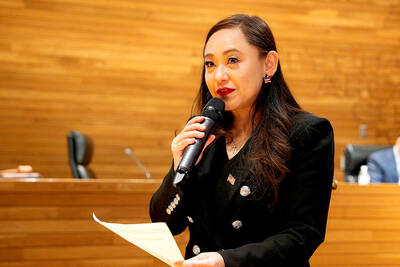
‘PERSONAL MISTAKES’: Eileen Wang has agreed to plead guilty to the felony, which comes with a maximum sentence of 10 years in federal prison A southern California mayor has agreed to plead guilty to acting as an illegal agent for the Chinese government and has resigned from her city position, officials said on Monday. Eileen Wang (王愛琳), mayor of Arcadia, was charged last month with one count of acting in the US as an illegal agent of a foreign government. She was accused of doing the bidding of Chinese officials, such as sharing articles favorable to Beijing, without prior notification to the US government as required by law. The 58-year-old was elected in November 2022 to a five-person city council, from which the mayor is selected
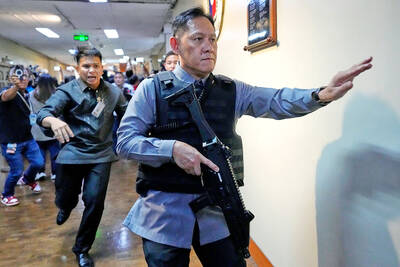
DELA ROSA CASE: The whereabouts of the senator, who is wanted by the ICC, was unclear, while President Marcos faces a political test over the senate situation Philippine authorities yesterday were seeking confirmation of reports that a top politician wanted by the International Criminal Court (ICC) had fled, a day after gunfire rang out at the Philippine Senate where he had taken refuge fearing his arrest. Senator Ronald “Bato” dela Rosa, the former national police chief and top enforcer of former Philippine president Rodrigo Duterte’s “war on drugs,” has been under Senate protection and is wanted for crimes against humanity, the same charges Duterte is accused of. “Several sources confirmed that the senator, Senator Bato, is no longer in the Senate premises, but we are still getting confirmation,” Presidential
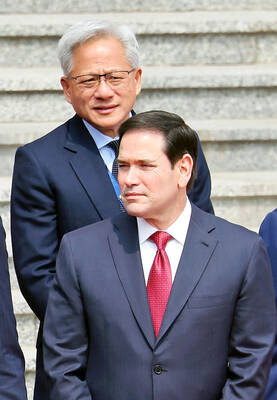
HELP DENIED? The US Department of State said that the Cuban leadership refuses to allow the US to provide aid to Cubans, ‘who are in desperate need of assistance’ US Secretary of State Marco Rubio on Wednesday said that Cuba’s leadership must change, as Washington renewed an offer of US$100 million in aid if the communist nation agrees to cooperate. Cuba has been suffering severe economic tumult led by an energy shortage that plunged 65 percent of the country into darkness on Tuesday. Cuba’s leaders have blamed US sanctions, but Rubio, a Cuban American and critic of the government established by Fidel Castro, said the system was to blame, including corruption by the military. “It’s a broken, nonfunctional economy, and it’s impossible to change it. I wish it were different,” he told


 RSS
RSS