


The Pacific nation of Vanuatu has announced plans to ban disposable diapers in a move it says would significantly reduce pollution.
Vanuatuan Minister of Foreign Affairs and Trade Ralph Regenvanu announced the ban at a conference in Port Vila this week, saying that plastic cutlery, polystyrene cups, plastic drinks stirrers and types of food packaging would also be outlawed.
Research showed that disposable diapers were the largest single item of household waste in the capital, he said.
“Eliminating this item alone will disproportionately reduce plastic waste,” he tweeted.
Vanuatu is one of several Pacific nations severely affected by climate change and prides itself on showing environmental leadership.
Last year it became one of the first countries in the world to ban single-use plastic bags.
The diaper ban, which still needs final approval, is scheduled to begin on Dec. 1.
Disposable diapers pose an environmental nuisance as they are lined with non-biodegradable plastic and use the chemical sodium polyacrylate as an absorbent.
The human waste they contain also leaches harmful chemicals into the environment, rather than going through the sewage system to minimize its impact.
Critics say that the manufacturing process also contributes to global warming.
However, parents find them far more convenient than cloth diapers, which have to be washed and dried.
British Secretary of State for Environment, Food and Rural Affairs Michael Gove was forced to rule out a diaper ban last year after making off-the-cuff remarks seen as paving the way for prohibiting their use.
Parents’ groups described the potential ban as a backward step for women, who were most likely to have to bear the labor-intensive burden of cleaning reusable diapers.
The environmental group Worldwatch Institute in 2007 estimated that 450 billion diapers were used globally every year. They are also big business.
A report by US market research firm Grand View Research last year said that the global baby diaper market was worth US$45.08 billion in 2016 and would grow to US$64.62 billion by 2022 amid rising demand from emerging nations such as China, India and Brazil.

Kouri Richins, a Utah mother who published a children’s book about grief after the death of her husband is to serve a life sentence for his murder without the possibility of parole, a judge ruled on Wednesday. Richins was convicted in March of aggravated murder for lacing a cocktail given to her husband, Eric Richins, with five times the lethal dose of fentanyl at their home near Park City in 2022. A jury also found her guilty of four other felonies, including insurance fraud, forgery and attempted murder for trying to poison her husband weeks earlier on Feb. 14, 2022, with a
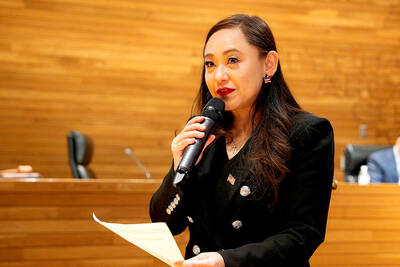
‘PERSONAL MISTAKES’: Eileen Wang has agreed to plead guilty to the felony, which comes with a maximum sentence of 10 years in federal prison A southern California mayor has agreed to plead guilty to acting as an illegal agent for the Chinese government and has resigned from her city position, officials said on Monday. Eileen Wang (王愛琳), mayor of Arcadia, was charged last month with one count of acting in the US as an illegal agent of a foreign government. She was accused of doing the bidding of Chinese officials, such as sharing articles favorable to Beijing, without prior notification to the US government as required by law. The 58-year-old was elected in November 2022 to a five-person city council, from which the mayor is selected

DELA ROSA CASE: The whereabouts of the senator, who is wanted by the ICC, was unclear, while President Marcos faces a political test over the senate situation Philippine authorities yesterday were seeking confirmation of reports that a top politician wanted by the International Criminal Court (ICC) had fled, a day after gunfire rang out at the Philippine Senate where he had taken refuge fearing his arrest. Senator Ronald “Bato” dela Rosa, the former national police chief and top enforcer of former Philippine president Rodrigo Duterte’s “war on drugs,” has been under Senate protection and is wanted for crimes against humanity, the same charges Duterte is accused of. “Several sources confirmed that the senator, Senator Bato, is no longer in the Senate premises, but we are still getting confirmation,” Presidential
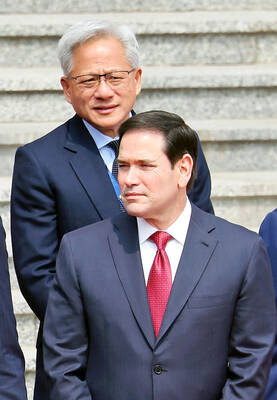
HELP DENIED? The US Department of State said that the Cuban leadership refuses to allow the US to provide aid to Cubans, ‘who are in desperate need of assistance’ US Secretary of State Marco Rubio on Wednesday said that Cuba’s leadership must change, as Washington renewed an offer of US$100 million in aid if the communist nation agrees to cooperate. Cuba has been suffering severe economic tumult led by an energy shortage that plunged 65 percent of the country into darkness on Tuesday. Cuba’s leaders have blamed US sanctions, but Rubio, a Cuban American and critic of the government established by Fidel Castro, said the system was to blame, including corruption by the military. “It’s a broken, nonfunctional economy, and it’s impossible to change it. I wish it were different,” he told


 RSS
RSS