


When people talk about fast delivery or logistics, most assume these are modern inventions. However, the need to convey messages and ship goods efficiently existed in ancient China. As early as the Shang and Zhou dynasties, the governments implemented official systems to deliver orders and military information across long distances. Later, this system, known as yizhan, reached its peak during the Tang period and remained crucial to Chinese society for centuries.
The main function of a yizhan was to deploy documents and personnel quickly across vast regions. Messengers would stop at these stations to change horses or rest. Sometimes, they also passed important letters to the next courier. Thanks to this system, information, supplies, and even tax payments could move quickly across thousands of kilometers. This helped the emperors manage the vast territory and maintain social order.
Aside from its function, the yizhan system was also known for its thoughtful design and layout. Yizhan were usually spaced about 30 kilometers apart, which was far enough for a horse to travel without needing rest. Each station typically included horse stables, storage spaces, kitchens, and rooms for messengers. Larger stations could host dozens of travelers at once and sometimes included government offices. Some even had signal towers or flags to make them easier to find.

Photo: Freepik 照片:Freepik
Over time, the yizhan network expanded and developed, and it began to take on new roles beyond its original purpose. Under Mongol rule, the network also served foreign officials and diplomats traveling on business. This infrastructure supported government communication, trade, and cultural exchange. Marco Polo even praised the system’s efficiency during his travels.
Although yizhan ended a long time ago, its legacy remains. Today’s postal services and communication networks owe much to this long tradition. Perhaps the ancient Chinese knew something we’re still figuring out—that keeping people connected is what makes a civilization thrive.
當人們談論快速送貨或物流時,大多數人認為這些是現代發明。然而,高效傳遞訊息和運輸貨物的需求在古時候的中國就已經存在。早在商朝和周朝,政府就建立了官方系統來跨越遠距離傳遞命令和軍事情報。後來,這個被稱為驛站的系統在唐代達到了頂峰,並在往後幾個世紀裡對中國社會來說至關重要。
驛站的主要功能是快速地在廣大地區內派送文件和人員。信使們會在這些驛站停留以更換馬匹或休息。有時,他們也會將重要的信件傳遞給下一位遞送員。多虧這個系統,訊息、物資,甚至稅收都可以跨越數千公里快速流通。這幫助皇帝管理遼闊的領土並維持社會秩序。
除了其功能性外,驛站系統還以其周到的設計和布局聞名。驛站通常間隔約 30 公里,這距離對於馬匹來說足以一次跑完,不需要休息。每個驛站通常包括馬廄、儲藏空間、廚房和信使的房間。較大的驛站可同時接待數十名旅客,有時還設有政府辦公室。有些驛站甚至有信號塔或旗幟,使其更容易被找到。
隨著時間的推移,驛站網路不斷擴大和發展,並開始承擔超出其原始用途的新角色。在蒙古統治下,該網路也服務出差的外國官員和外交人員。這樣的基礎建設支持了政府間的溝通、貿易和文化交流。馬可.波羅在旅途中甚至稱讚了該系統的效率。
雖然驛站很久以前就結束了,但它的影響力仍然存在。今天的郵政服務和通訊網路在很大程度上歸功於這一悠久的傳統。也許古時候的中國人深諳一些我們仍在摸索的道理——保持人們的聯繫是讓文明繁榮的關鍵。
MORE INFORMATION
logistics n. 物流(恆用複數)
layout n. 設計;布局
Mongol adj. 蒙古(人)的
postal adj. 郵政的;郵遞的
KEY VOCABULARY
1. invention n. 發明(物);創造
At the tech show, we saw a number of amazing inventions, including a talking toilet.
在那場科技展上,我們看到許多令人驚訝的發明,包括有聲馬桶。
2. goods n.(製造來販售的)商品;貨品(恆用複數)
The owner of the pet supply store sold goods such as pet food, dishes, and animal toys.
那家寵物用品店的老闆販售像是寵物食品、餐具和動物玩具等商品。
3. deploy v. 派遣;部署;有效運用
When Ryan was in the army, he was deployed to Afghanistan to fight the Taliban.
萊恩在軍隊服役時,他被派遣到阿富汗打擊塔利班。
4. document n. 文件;公文
Shane handed his documents to the man who worked behind the immigration counter.
夏恩把他的文件交給在移民櫃檯後方工作的那名男子。
5. messenger n. 信差;傳遞員
近義字 courier n.(遞送重要書信或文件的)信差;遞送員
In the old days, people often employed messengers to carry letters across the country.
在過去,人們常僱用信差來將信件送到全國各地。
6. diplomat n. 外交官
Nora is an American diplomat, so she travels to different countries to assist American citizens.
諾拉是一名美國外交官,因此她前往不同的國家協助美國公民。
7. infrastructure n. 基礎建設
Taipei has broad transportation infrastructure that allows its citizens to get anywhere in the city easily.
臺北有著廣泛的交通基礎設施,使其公民可以輕易地到達這座城市的任何地方。
8. civilization n. 文明;文化
On vacation in Mexico, my family learned about the complex ancient Mayan civilization.
在墨西哥度假時,我們一家人了解了複雜的古馬雅文明。
9. thrive vi. 蓬勃發展;茁壯成長
The local business thrived thanks to strong community support.
由於社區的大力支持,這間在地企業蓬勃發展。
學習音檔: https://magazine.english4u.net/Magdata/menu/av87q
《空中美語》雜誌APP免費下載: https://www.english4u.net/apps/index.aspx
免費收聽當月《空中美語》雜誌課文朗讀及解析 !
文章由AMC空中美語授權使用: https://www.english4u.net

Taiwan Travelogue, the novel by Taiwanese author Yang Shuang-zi and translated into English by Lin King, won the prestigious International Booker Prize in London on May 19. It marks the first time a Taiwanese literary work has received the International Booker Prize, setting a historic milestone both for Taiwanese literature and for the award itself. Prior to this achievement, Taiwan had only once appeared on the Booker radar, when Taiwanese author Wu Ming-yi was longlisted for the Booker Prize in 2018 with The Stolen Bicycle. The International Booker Prize honors works of fiction translated into English and published in the UK or Ireland.

A: Time magazine recently released its list of “The 100 Most Influential People of 2026.” It’s categorized into six groups: Artists, Pioneers, Titans, Icons, Leaders and Innovators. B: TSMC chairman C.C. Wei made the list this year. Which category is he in? A: Wei is actually among the Pioneers, with figures including Disney CEO Josh D’Amaro and MrBeast — the first YouTuber ever to surpass 400 million subscribers. B: Led by Wei, Taiwan’s “silicon shield” TSMC is the sixth-largest company in the world. A: As Nvidia founder Jensen Huang wrote in his introduction, “C.C. Wei is truly one of the

The animal kingdom is full of surprises that challenge our understanding of biology. From remarkable feeding mechanisms to extreme defense strategies, some creatures possess traits so unusual that they seem like pure fiction. Here are four fascinating examples that show nature’s endless creativity. The humble snail may appear simple, but its mouth tells a different story. Snails possess a ribbon-like tongue called a radula, densely covered with anywhere from 1,000 to 12,000 tiny teeth. This structure works like a cheese grater, allowing them to scrape and grind food with surprising efficiency. Far from being passive creatures, snails are actually
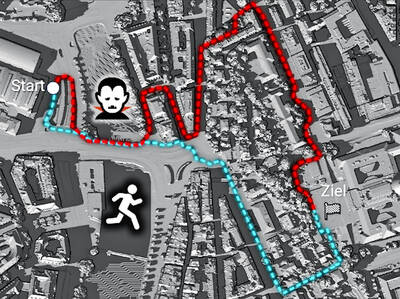
As climate change and urbanization push city temperatures higher, walking outdoors is becoming increasingly uncomfortable in many parts of the world, especially when prolonged time spent in sunlight is involved. As a result, outdoor lovers are now seeking cooler, shaded walking routes. However, most mainstream map apps still do not __1__ shaded footpaths. Enter routing.osm.ch — a Swiss web-based route planner that introduces a novel solution to this problem. Its “Vampire mode,” named after the legendary creatures’ fear of being __2__ natural light, was developed by a Swiss research team led by Professor Stefan Keller. The platform combines open data from


 RSS
RSS