


A: According to the 2024 TOEIC score statistics, Taiwanese scored an average of 315 points in listening and 265 points in reading. So the total average score rose by 13 points to a new high of 581 points.
B: Taiwan’s total was slightly higher than Japan’s 564 and China’s 561, but much lower than South Korea’s 678. India actually scored the highest in Asia at 772.
A: Since Taiwan’s universities cut English courses to save money, university students’ average of 585 was even lower than high school senior students’ average of 661.
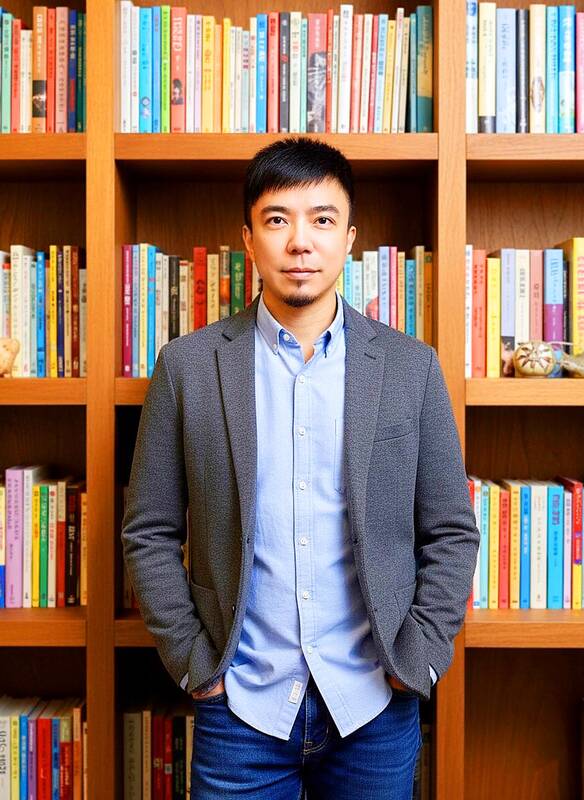
Photo: Avery Tsou 照片:鄒政威
B: Cram school English teacher Avery Tsou shared some tips for test-taking. For listening: stay focused on the opening of each question, since the crucial information in English questions usually appears at the beginning. For reading: scan for the main structure of each sentence, so you can grasp the overall idea of a passage more quickly.
A: Plus, don’t forget to read the Taipei Times, Taiwan’s only English newspaper, every day.
A: 多益測驗2024年統計︰台灣聽力315分、閱讀265分、總分581分進步13分再創新高。
B: 台灣小贏日本(564分)、中國(561分),大輸南韓(678分),而亞洲英文最強的則是印度(772分)。
A: 但近年來許多大學大砍英文課來省錢,大學生585分比高三生661分還差耶。
B: 英語補教名師鄒政威近日分享考多益的秘訣:考聽力要專注聆聽每題的開頭,因為英文疑問句重點在一開始。考閱讀要先掃描整句的主結構,快速掌握全文主旨和文章脈絡。
A: 別忘了還要多看台灣唯一的英文報紙:《台北時報》!
(By Eddy Chang, Taipei Times/台北時報張迪)

The US-Israeli war with Iran, which began on Feb. 28, has killed thousands of people, destabilized the Middle East and rocked global energy markets by effectively closing the strait. WHAT IS THE STRAIT OF HORMUZ? Lying between Oman and Iran and linking the Gulf north of it with the Gulf of Oman to the south and the Arabian Sea beyond, the strait is 33km wide at its narrowest point, with a shipping lane just 3km wide in either direction. Perhaps the world’s most important energy shipping channel, the waterway is about 167km long. Following through on an old threat, Tehran effectively closed the strait

A: Which TV drama series have been global hits so far this year? B: The US drama “Stranger Things 5,” South Korean drama “Can This Love Be Translated?” and Chinese megahit “Pursuit of Jade” are all popular lately. A: Isn’t “Pursuit of Jade” the costume idol drama about the romance between a charming marquis and a pig-slaughterer? Actor Zhang Linghe and actress Tian Xiwei are both so attractive. B: Plus, Netflix’s Korean-Japanese gay romance drama “Soul Mate” — starring Korea’s Ok Taec-yeon and Japan’s Hayato Isomura — is set to premiere in May. A: These hit international dramas

Have you ever found yourself desperately feeding coins into a claw machine just because you’ve already spent so much trying to win that stuffed animal? Or maybe you’ve continued watching a boring movie simply because you already paid for the ticket? If so, you’ve experienced the “sunk cost fallacy.” A sunk cost refers to time, money or effort that has already been spent and cannot be recovered. This psychological trap is surprisingly common. You might keep playing a video game you no longer enjoy because you’ve invested countless hours in building your character, or maintain a toxic friendship because you’ve known

對話 Dialogue 清清:這個週末你有空嗎?要不要一起去淨灘? Qīngqīng: Zhège zhōumò nǐ yǒu kòng ma? Yào bú yào yìqǐ qù jìngtān? 華華:淨灘?你為什麼突然想參加這個活動? Huáhua: Jìngtān? Nǐ wèishéme túrán xiǎng cānjiā zhège huódòng? 清清:因為我看到新聞說,海邊的垃圾越來越多,對海洋生物影響很大。 Qīngqīng: Yīnwèi wǒ kàndào xīnwén shuō, hǎibiān de lèsè yuèláiyuè duō, duì hǎiyáng shēngwù yǐngxiǎng hěn dà. 華華:聽起來很有意義,不過會不會很累啊? Huáhua: Tīng qǐlái hěn yǒu yìyì, búguò huì bú huì hěn lèi a? 清清:可能會有一點累,可是如果大家一起做,就不會那麼辛苦。 Qīngqīng: Kěnéng huì yǒu yìdiǎn lèi, kěshì rúguǒ dàjiā yìqǐ zuò, jiù bú huì nàme xīnkǔ. 華華:也是,而且做完應該會很有成就感。 Huáhua: Yě shì, érqiě zuò wán yīnggāi huì hěn yǒu chéngjiù gǎn. 清清:對啊!不但可以運動,還可以保護環境。 Qīngqīng: Duì a! Búdàn kěyǐ yùndòng, hái kěyǐ bǎohù huánjìng. 華華:好,那我跟你一起去!算我一份。 Huáhua: Hǎo, nà wǒ gēn nǐ yìqǐ qù! Suàn wǒ yí fèn. 翻譯 Translation Qingqing:


 RSS
RSS