


A: Happy Lunar New Year. I wish you joy and health in the Year of the Horse.
B: Thanks, you too. Actually, the Harvard Study of Adult Development claims that they’ve finally discovered the secret to living a happy life after 85 years of research.
A: What is it? Money? Fame? Career?

Photo: CNA 照片:中央社
B: Nope, the key is good relationships. Professor Robert Waldinger, the principal investigator, portrays one’s relationships as “social fitness,” and has worked with the New York Times to launch the “7-day Happiness Challenge.”
A: I wanna be socially fit. How can I participate in this challenge?
A: 新春愉快,祝你馬年健康快樂。
B: 謝啦你也快樂,據說哈佛大學的「成人發展研究」宣稱,經過85年的長期研究,他們已發現生活快樂的秘訣。
A: 是什麼?金錢、名聲、事業?
B: 都不是,秘訣其實是良好的人際關係!研究主持人瓦丁格教授將它視為「社交體能」,還和《紐約時報》推出了「7天快樂挑戰」。
A: 我也想鍛鍊「社交體能」。那要怎麼進行挑戰呢?
(By Eddy Chang, Taipei Times/台北時報張迪)

A: Which TV drama series have been global hits so far this year? B: The US drama “Stranger Things 5,” South Korean drama “Can This Love Be Translated?” and Chinese megahit “Pursuit of Jade” are all popular lately. A: Isn’t “Pursuit of Jade” the costume idol drama about the romance between a charming marquis and a pig-slaughterer? Actor Zhang Linghe and actress Tian Xiwei are both so attractive. B: Plus, Netflix’s Korean-Japanese gay romance drama “Soul Mate” — starring Korea’s Ok Taec-yeon and Japan’s Hayato Isomura — is set to premiere in May. A: These hit international dramas
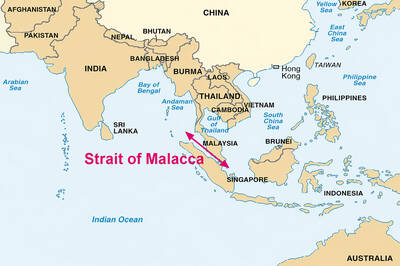
The closure of the Strait of Hormuz has forced policymakers in Asia to face questions over the security of other maritime chokepoints, including the Strait of Malacca, which is the world’s busiest waterway for international trade. WHAT IS THE MALACCA STRAIT? The 900km long Malacca Strait, bounded by Indonesia, Thailand, Malaysia and Singapore, provides the shortest sea route from East Asia to the Middle East and Europe. It carries nearly 22 percent of the world’s maritime trade, according to the Center for Strategic and International Studies (CSIS). This includes oil and gas shipments from the Middle East to the energy-hungry economies of China,
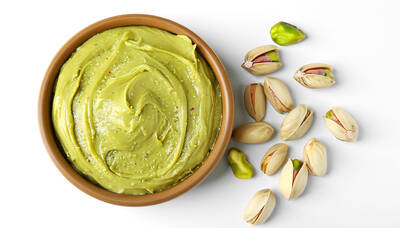
It seems like every year, new foods or drinks start trending and suddenly show up everywhere. A decade ago, avocado __1__ restaurant menus, while oat milk became the must-have addition to your coffee in cafes around five years back. The latest trend to hit this list is the pistachio. This flavorful green nut now features in everything from chocolate bars to Indian curries. While pistachios have long played a central role in certain regional cuisines, their recent global __2__ can be traced to Dubai. There, a specialty chocolate shop went __3__ on TikTok for one of its chocolate bars

One reason pistachios have taken the food world by storm compared to other nuts is their soft, green color. When ground down into a cream or butter, the green hue __6__ nicely with golden pastries or dark-brown chocolate, making it perfect for Instagram photos and TikTok videos. Their labor-intensive cultivation and __7__ also contribute to their image as a premium ingredient. Thus, buying a pistachio-based product often feels like a __8__ treat. Pistachios also stand out for their distinct flavor and health __9__. They have a subtle, sweet, earthy flavor that goes well with both sweet desserts and


 RSS
RSS