


The closure of the Strait of Hormuz has forced policymakers in Asia to face questions over the security of other maritime chokepoints, including the Strait of Malacca, which is the world’s busiest waterway for international trade.
WHAT IS THE MALACCA STRAIT?
The 900km long Malacca Strait, bounded by Indonesia, Thailand, Malaysia and Singapore, provides the shortest sea route from East Asia to the Middle East and Europe.
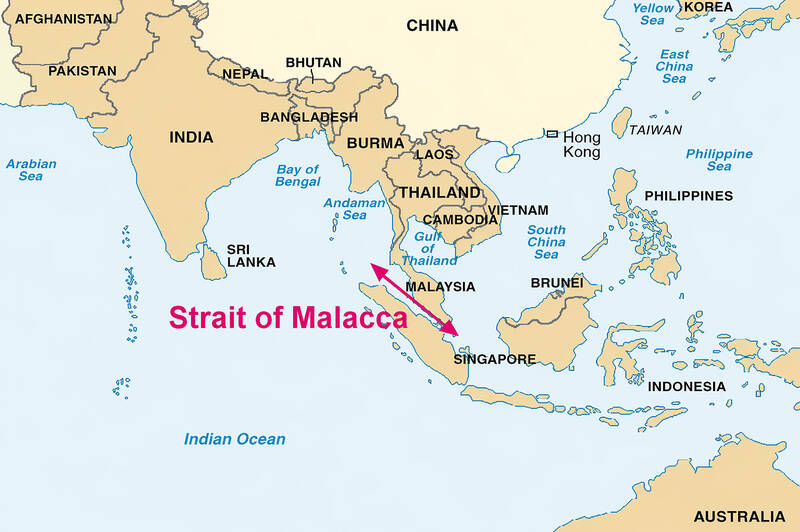
Photo: Wikimedia Commons 照片:維基共享資源
It carries nearly 22 percent of the world’s maritime trade, according to the Center for Strategic and International Studies (CSIS). This includes oil and gas shipments from the Middle East to the energy-hungry economies of China, Japan and South Korea.
Malacca is the largest “oil transit chokepoint” in the world and the only one that outpaces Hormuz, according to the US Energy Information Administration.
In the first half of 2025, some 23.2 million barrels of oil per day were transported through the Malacca Strait, accounting for 29 percent of total maritime oil flows. The next largest chokepoint, Hormuz, saw about 20.9 million bpd pass through.
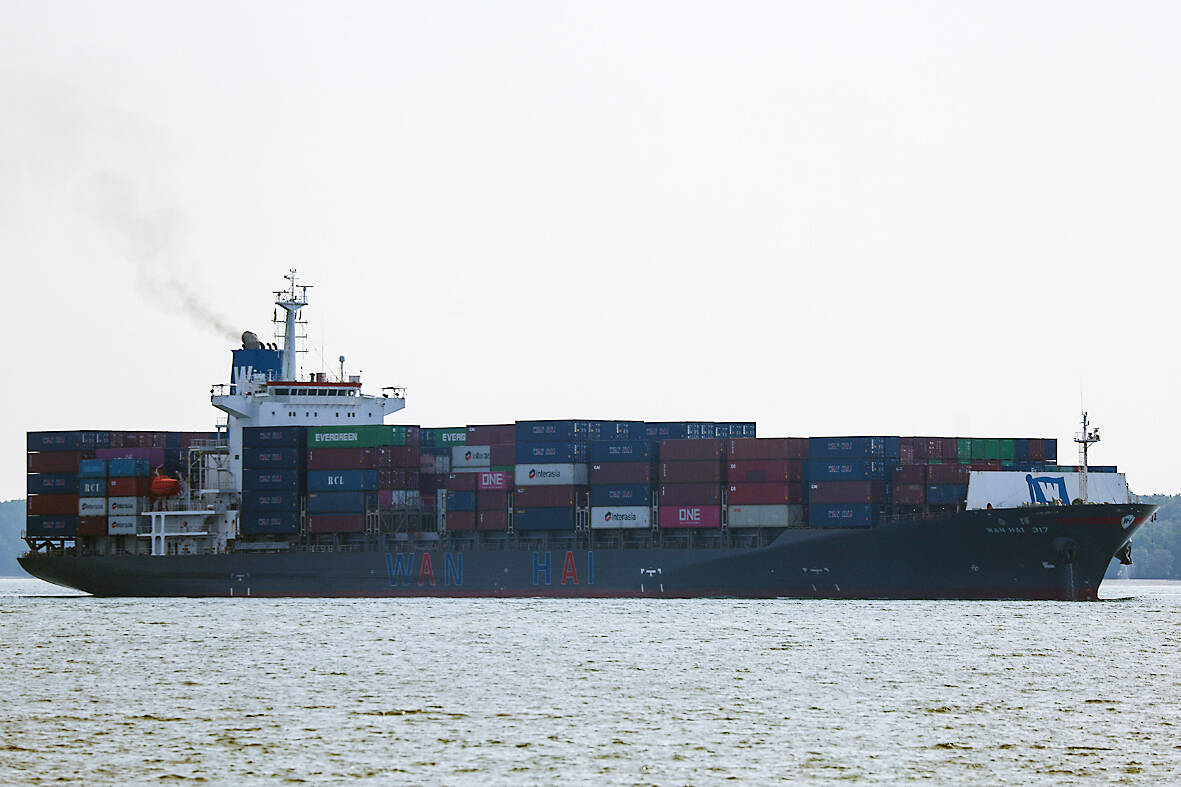
Photo: EPA 照片:歐新社
More than 102,500 ships, mostly commercial vessels, transited through the Malacca Strait in 2025, up from around 94,300 in 2024, data from Malaysia’s Marine Department showed. These include most tankers, but some very large vessels avoid the strait because of draught restrictions and go south around Indonesia instead.
This route allows the Strait of Malacca to be bypassed if it were closed, but it adds to journey time that would delay shipments and drive up prices.
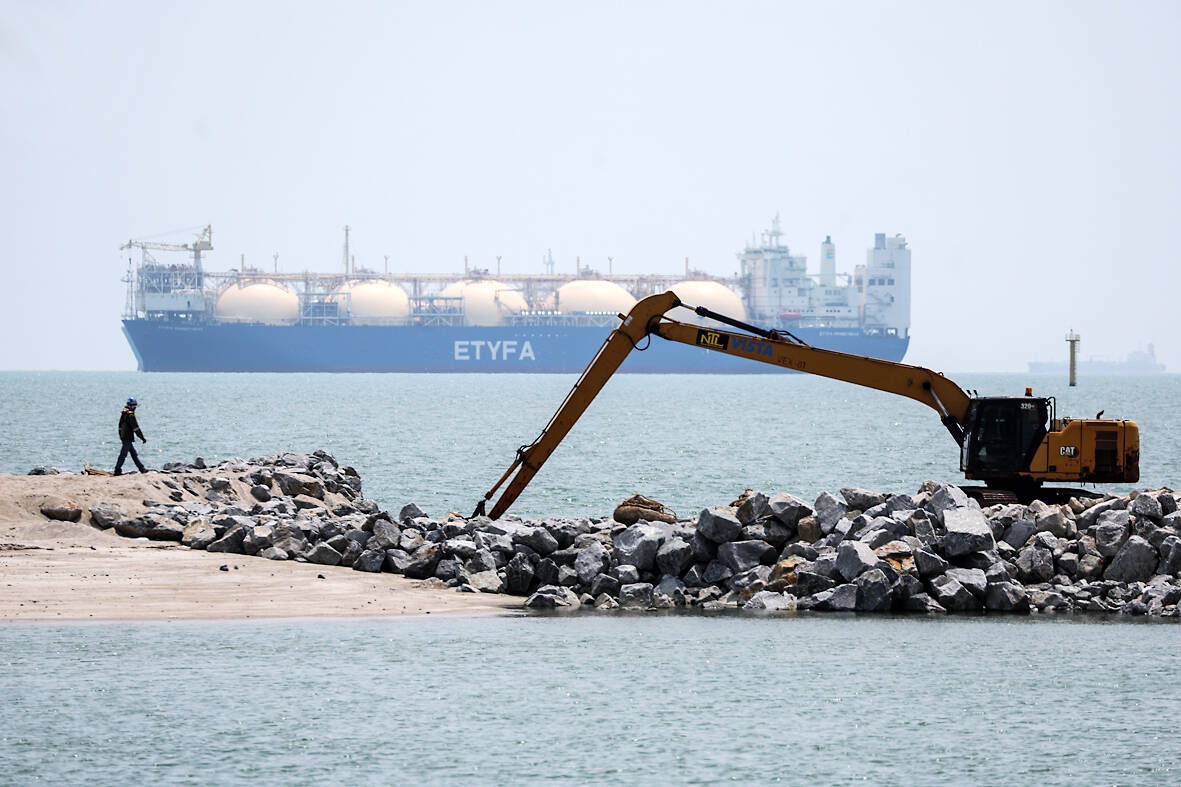
Photo: EPA 照片:歐新社
WHAT ARE THE CONCERNS ABOUT THE STRAIT OF MALACCA?
At its narrowest point in the Phillips Channel of the Singapore Strait, the Malacca Strait is only 2.7km wide, creating a natural bottleneck, as well as potential for collisions, grounding or oil spills.
Some parts of the strait are relatively shallow, with a depth of 25-27m, restricting the largest vessels, but even very large crude carriers (VLCCs) measuring more than 350m long, 60m wide and with a draft of more than 20m, make the transit.
For years, the strait has been a hotbed of piracy and attacks on merchant vessels. Last year saw criminal attacks spike to at least 104, but these have fallen off in the first quarter of this year, according to the ReCAAP Information Sharing Centre, an organization established by regional governments to combat piracy.
The narrow and congested waterway has been strategically important to Beijing, with around 75 percent of China’s seaborne crude oil imports passing through it from the Middle East and Africa, data from tanker tracker Vortexa shows.
The Iran crisis has crystallized long-standing worries about how chokepoints such as Malacca could be affected if a conflict breaks out in the South China Sea or the Taiwan Strait, where another 21 percent of global maritime trade transits, according to CSIS.
Malaysian authorities say the Malacca Strait is also a growing spot for illegal ship-to-ship transfers, where oil is shifted between tankers at sea to obscure its origin.
WHAT ARE OFFICIALS SAYING?
Indonesian Finance Minister Purbaya Yudhi Sadewa made waves on Wednesday last week by openly musing about ways countries could impose tolls on ships as a way to monetize the strait, before noting that such an arrangement is not possible.
When asked about the risks of tolls or other restrictions on movement in the strait, Singapore Foreign Affairs Minister Vivian Balakrishnan told CNBC that the nations along the strait share a strategic interest to keep it open, and have agreed not to collect tolls.
He also said Singapore had assured the US and China that the right of passage was guaranteed for all and it would not participate in any efforts to block the strait or impose tolls.
Malaysian Foreign Minister Mohamad Hasan told a forum on Wednesday last week that no unilateral decisions can be made about the strait and that Malaysia is on the same page with Singapore, Indonesia and Thailand, and they conduct joint patrols to ensure the waterway remains open.
(Reuters)
荷姆茲海峽(Strait of Hormuz)遭封鎖後,亞洲各國政府被迫開始面對其他海上咽喉要道的安全問題,其中包括麻六甲海峽(Strait of Malacca)——這條全球最繁忙的國際貿易航道。
關於麻六甲海峽
麻六甲海峽全長約900公里,介於印尼、泰國、馬來西亞與新加坡之間,是東亞通往中東與歐洲最短的海運路線。
根據美國智庫戰略暨國際研究中心(CSIS)的資料,全球約22%的海運貿易量經過此處,其中包括由中東輸出,供應中國、日本與南韓等能源需求大國的石油與天然氣。
美國能源資訊局(EIA)指出,麻六甲海峽是全球最大的「石油運輸咽喉點」,甚至超越荷姆茲海峽。
2025年上半年,平均每日約有2,320萬桶石油經由麻六甲海峽運輸,占全球海運石油運輸量29%。第二大石油運輸要道荷姆茲海峽,則是約每日2,090萬桶。
馬來西亞海事局的資料顯示,2025年共有超過 10萬2,500艘船舶通過麻六甲海峽,高於2024年的約9萬4,300艘,多數為商船。其中包括大部分為油輪,但部分超大型船舶因吃水限制,會繞道改走印尼南方海域。
雖然替代航線可在麻六甲海峽關閉時使用,但航程拉長將延誤貨運並推高價格。
麻六甲海峽面臨哪些風險?
在新加坡海峽的菲利普水道(Phillips Channel)最狹窄處,麻六甲海峽僅約2.7公里寬,形成天然瓶頸,也提高碰撞、擱淺與漏油的風險。
麻六甲海峽部分海域水深僅25至27公尺,讓最大型的船舶難以通行。不過,船身長度逾350公尺、寬公尺、吃水超過20公尺的超大型原油輪(VLCC),仍可通過。
多年來,麻六甲海峽也是海盜與商船遭襲事件的溫床。根據亞洲反海盜資訊共享中心(ReCAAP ISC)的資料,去年相關犯罪事件增加到至少104起,但今年第一季已有下降的趨勢。
對中國而言,這條狹窄且壅塞的水道具有高度戰略價值。油輪追蹤機構 Vortexa 數據顯示,中國約75%的海運原油進口需經由麻六甲海峽,來源主要為中東與非洲。
伊朗危機也讓各界重新關注長期隱憂:若南海或台灣海峽爆發衝突,麻六甲等戰略咽喉點可能受到波及。根據CSIS,另有約21%的全球海運貿易量經過台灣海峽。
馬來西亞政府也指出,麻六甲海峽正成為非法「船對船轉運」熱點,透過海上油輪轉運石油,以掩飾原產地來源。
官方說法如何?
印尼財政部長普爾巴亞.尤迪.薩德瓦上週三公開論及對通行船舶收費來增加收益,此言引發關注,但他隨後也表示,這種安排實際上不可行。
當被問及通行費或其他限令的風險時,新加坡外交部長維文接受CNBC訪問時表示,麻六甲海峽沿岸各國有共同戰略利益維持海峽開放,並已同意不收取過路費。
他也表示,新加坡已向美國與中國保證,所有國家皆享有通行權,新加坡不會參與任何封鎖海峽或課徵通行費的行動。
馬來西亞外交部長穆罕默德哈山上週三在論壇中表示,任何國家都不能單方面決定麻六甲海峽事務,馬來西亞與新加坡、印尼、泰國立場一致,並持續進行聯合巡邏,以確保航道保持開放。
(台北時報林俐凱編譯)
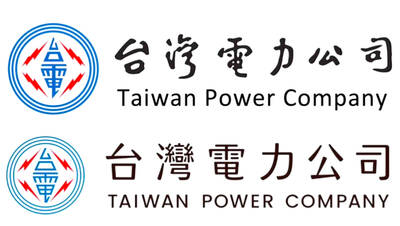
The debate surrounding Taipower’s recent corporate identity reboot has gone well beyond the design community. The controversy began after Taipower replaced the familiar “Taiwan Power Company” wording — widely regarded as the calligraphy of Yu You-ren (1879-1964), former Control Yuan president and master calligrapher — with a modern logotype by designer Aaron Nieh’s team, Aaron Nieh Workshop. Taipower said the change was not a wholesale replacement of old signage, but an “optimization of its identity system,” aimed at meeting the needs of digital media, electronic bills, apps, social media graphics and various small-format applications. Existing physical markings, such as building

Since 2005, the third Monday in January has come to be known as “Blue Monday.” In other words, that day is believed to be the most depressing day of the year. This concept seems logical at first. After all, Monday marks the start of the school or workweek after two days of rest and fun. Also, blue is a color that is often associated with sadness. Furthermore, in many parts of the world, January is a time when the weather is cold, rainy, and gloomy. But is there any scientific proof that this January day is truly sadder than any of

Continued from yesterday(延續自昨日) https://www.taipeitimes.com/News/lang For the most part, the idea of “Blue Monday” has been rejected as a myth. Some mental health experts also say there is a danger in labeling a certain day as the most depressing time of the entire year. Some argue that if people expect to feel sadder on the third Monday in January, this belief alone may increase their anxiety. One group that is worried about the negative effect of believing in Blue Monday is Samaritans. A mental health charity based in the UK, Samaritans is working to turn Blue Monday into “Brew Monday.” In this

A: In early May, there were concerts by Icyball, Chyi Yu, Korea’s EXO and Japan’s Anisama, but I missed them all. What a shame. B: That’s OK. There are shows coming up by various artists, including Power Station, Accusefive, Japanese singer Mika Nakashima, Chinese-Icelandic jazzer Laufey, and even Singaporean diva Stefanie Sun. A: After a 12-year hiatus, Stefanie is finally returning to Taipei again. B: In late May, there will be more shows by Crowd Lu, WeiBird, Korea’s Donghae, 2AM, EXID, and Thailand’s BUS. A: The Thai boyband is so popular. It looks like “T-pop” is catching up with J-pop


 RSS
RSS