


The Ministry of Economic Affairs yesterday dismissed Intel Corp’s comment questioning evidence in the case surrounding alleged leaks of trade secrets from Taiwan Semiconductor Manufacturing Co (TSMC, 台積電), saying that all allegations must be determined by judicial authorities rather than by any one party.
Relevant evidence should be determined through the prosecutors’ investigation and the court’s verification, and “cannot be concluded based on one side’s claims,” Minister of Economic Affairs Kung Ming-hsin (龔明鑫) told reporters before the ministry’s weekly business meeting.
As the case involves national security and core technologies, the High Prosecutors’ Office has launched an investigation, and the government will also provide necessary assistance to TSMC regarding the potential leak of its trade secrets, he said.
Photo: Ritchie B. Tongo, EPA
TSMC on Tuesday filed a lawsuit against former executive Lo Wei-jen (羅唯仁) in the Intellectual Property and Commercial Court over suspected contraventions of his employment contract, confidentiality and non-compete agreements, and breaches of the Trade Secrets Act (營業秘密法).
TSMC said Lo did not reveal any plans to take a position at Intel and instead claimed that he planned to enter academia upon retirement.
Chinese-language media have reported that Lo, who retired from TSMC in July after 21 years at the company, allegedly stole TSMC’s most advanced process technologies — including 2-nanometer, 16A and 14A nodes — before he joined Intel.
Intel on Wednesday issued a statement denying that Lo had taken confidential information before joining the US chipmaker as an executive vice president late last month.
Intel said that it maintains rigorous policies and controls that strictly prohibit the use or transfer of any third-party confidential information or intellectual property.
“Based on everything we know, we have no reason to believe there is any merit to the allegations involving Mr Lo,” Intel said in the statement.
Intel said it welcomed him back as part of its effort to “revitalize its engineering-driven, customer-first culture with a renewed focus on strengthening our x86 franchise, building a trusted US foundry, and accelerating our AI [artificial intelligence] strategy,” the statement said.
The High Prosecutors’ Office on Tuesday opened an investigation into whether Lo contravened the Trade Secrets Act and the National Security Act (國家安全法).
The office yesterday said that it had directed the Ministry of Justice Investigation Bureau on Wednesday to search Lo’s residences in Taipei and Hsinchu County, seizing computers, USB drives and other items.
The office also obtained approval from the Intellectual Property and Commercial Court to seize Lo’s stocks and real estate, it said.
Prosecutors have not yet filed any criminal charges against Lo.
In the investigation under the National Security Act, the ministry is responsible for determining which semiconductor production technologies fall under the nation’s core key technologies, which are prohibited from being conducted overseas without permission, Kung said yesterday.
If Lo did take important data or technologies overseas for use, the ministry would provide the necessary identification for judicial authorities to determine the case, he said.
Meanwhile, the Industrial Technology Research Institute is in the process of revoking Lo’s laureate title, which was granted to him in September, Kung said, adding that it would not take long to complete the process.
Additional reporting by CNA
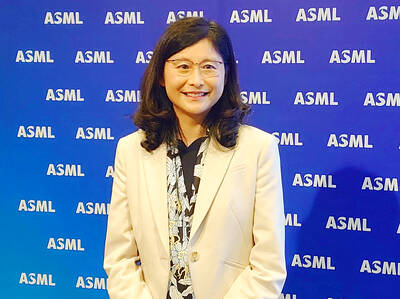
Netherlands-based semiconductor equipment supplier ASML Holding NV yesterday said that it is planning to hire an additional 1,000 people in Taiwan this year in response to growing demand from clients. ASML had previously planned to recruit 600 people this year, but that the plan has been adjusted upward, ASML vice president and ASML Taiwan general manager Grace Wang (汪佳慧) told reporters. ASML has a workforce of more than 4,500 in Taiwan, accounting for about 10 percent of its global total, Wang said. This year’s recruitment campaign would focus on adding people in the customer support, manufacturing and supply chain domains to assist ASML
UNDER MICROSCOPE: Taiwan detained three people who allegedly conspired to buy servers in Taiwan and export them using fraudulent documentation, prosecutors said Nvidia Corp chief executive officer Jensen Huang (黃仁勳) on Saturday urged Super Micro Computer Inc to tighten up on compliance after Taiwan detained three people this week for allegedly making fraudulent declarations about artificial intelligence (AI) servers made by its US partner. The development marked the nation’s first crackdown on semiconductor smuggling, which grew after the US slapped restrictions on exports of high-end chips such as Nvidia AI accelerators to China. Nvidia is “rigorous” in explaining regulations to all of its partners, Huang told reporters after arriving in Taipei. “Ultimately Super Micro has to run their own company,” he said in response to

Nvidia Corp yesterday announced that CEO Jensen Huang (黃仁勳) would attend an employee meeting in Taipei tomorrow to celebrate the launch of the company’s Taiwan headquarters project. Huang would attend a gathering at the site of Nvidia’s planned headquarters in Beitou Shilin Technology Park (北投士林科技園區), the company said in a statement. After arriving in Taiwan on Saturday last week, Huang told reporters that he plans to meet with Quanta Computer Inc (廣達) chairman Barry Lam (林百里) and Taiwan Semiconductor Manufacturing Co (TSMC, 台積電) chairman C.C. Wei (魏哲家), and would attend the groundbreaking ceremony for Nvidia’s Taiwan headquarters tomorrow. Nvidia has not yet applied

Huawei Technologies Co (華為) said it has come up with a new pathway to shorten its gap with industry leader Taiwan Semiconductor Manufacturing Co (TSMC, 台積電), potentially achieving a breakthrough in making advanced semiconductors without cutting-edge equipment. Right now there is about a five-year gap between what TSMC is capable of and what Huawei, together with its manufacturing partner Semiconductor Manufacturing International Corp (中芯), can produce. Huawei is to start making 1.4-nanometer chips by 2031 with its own “LogicFolding” technology, Huawei semiconductor chief He Tingbo (何庭波) said in a rare public appearance during a chip conference yesterday, while TSMC has


 RSS
RSS