


President William Lai (賴清德) today addressed the nation to mark the second anniversary of his inauguration and 30 years of democracy in Taiwan, speaking on national security amid growing global threats and future economic and social development.
Taiwan’s future cannot be decided by forces beyond its borders, nor can it be held hostage by fear, division or short-term gain, Lai said.
“Taiwan’s future must be determined together by our 23 million people,” he added.
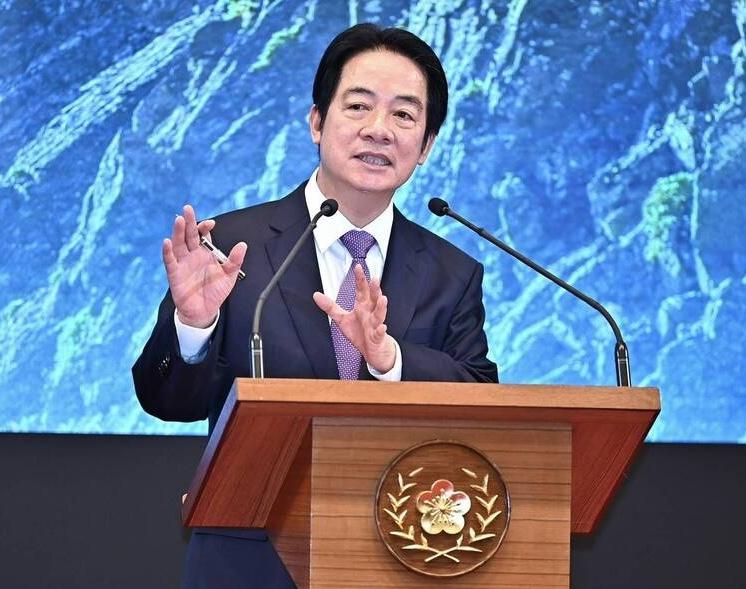
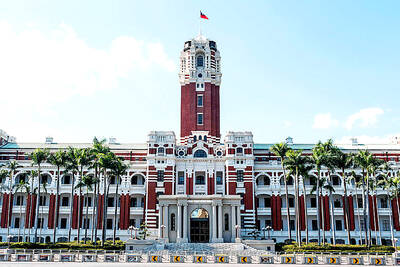
Photo: Tu Chien-jung, Taipei Times
The past two years have not been easy, as a changing geopolitical landscape, growing authoritarianism, supply chain restructuring, climate change, energy transition and the rise of artificial intelligence have challenged Taiwan’s competitiveness and resilience, he said.
Domestically, political infighting has brought unprecedented roadblocks in the legislature, testing whether Taiwan could continue forward in times of division, he said.
In a democracy, there will always be differences of opinion, but the nation cannot be divided, he said, urging the people to stand united against hostile threats.
Thirty years ago today, more than 10 million Taiwanese bravely went to the polls under the threat of Chinese missiles, completing Taiwan’s first democratic election with a 76 percent turnout, he said.
Three decades of direct presidential elections have shown the world that Taiwanese value peace, but will not give up their freedom, he said.
“We are willing to hold dialogue, but we will not be diminished. We seek stability, but we will not sacrifice our sovereignty or our democratic way of life,” he said.
Cross-Strait Relations and Defense
Taiwan is willing to engage with China under the principles of respect and reciprocity to establish healthy relations, although it would “firmly reject ‘united front’ tactics that package unification as peace,” he added.
Over the past two years, the government has advanced defense reforms, strengthened the nation’s asymmetric capabilities, enhanced whole-of-society defense resilience and built a more comprehensive security network, he said.
Increased defense spending reflects that the threats to Taiwan are “greater than ever before,” he said, adding that it is meant to prevent, not provoke conflict.
Similarly, Taiwan’s relations with like-minded nations are not to oppose anyone, but are a means to protect regional peace and stability, he added.
As parts of the special defense budget remain stalled in the legislature, the government would introduce an additional special budget act and utilize additional budgets alongside increases to the annual budget, he said.
These funds would be used to pursue commercial procurement, commissioned projects and international cooperation, while promoting self-sufficiency in producing uncrewed ground, marine and aerial vehicles, he said.
The president expressed sincere gratitude and respect to those in the armed forces, adding that he would ensure that they receive better equipment, training and support, in addition to the respect they rightly deserve.
Economic Strategy
Also over the past two years, Taiwan has been improving the investment environment through a national economic strategy of expanding its global presence while keeping a solid base in Taiwan, Lai said.
Taiwan is growing beyond its role as a manufacturing base into a base for innovation, and beyond its role as one link in the supply chain into a crucial and trustworthy partner in the democratic technology alliance, he added.
The results are evidenced in Taiwan’s economic growth of 8.68 percent last year, with GDP per capita surpassing Japan and South Korea, he said.
Energy and Social Investment
As for the energy transition, the government would continue to evaluate energy options based on scientific evidence to ensure energy security, industrial competitiveness and environmental sustainability, he said.
The administration has also expanded social investments, including raising wages, cutting taxes, providing social housing support, upgrading long-term care, easing the burden of childcare costs and investing in education, he said.
The president also announced a NT$100 billion (US$3.159 billion) acceleration plan to upgrade and transform micro, small and medium-sized enterprises and traditional industries.
Moreover, the government is to unveil a new population strategy, including a monthly allowance of NT$5,000 per child up to age 18 to combat the challenges posed by a declining birthrate, he said.
Speaking to Taiwan’s young people, Lai said that he hopes they can apply their creativity, expertise and action to forge a future for the next generation, building upon three decades of brave democracy pioneers.
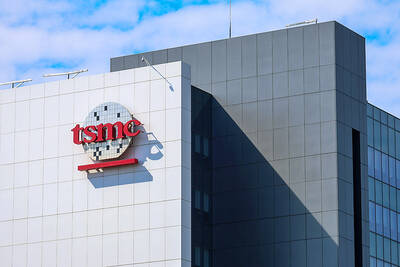
Taiwan Semiconductor Manufacturing Co (TSMC, 台積電), the world’s largest foundry service provider, yesterday said that global semiconductor revenue is projected to hit US$1.5 trillion in 2030, after the figure exceeds US$1 trillion this year, as artificial intelligence (AI) demand boosts consumption of token and compute power. “We are still at the beginning of the AI revolution, but we already see a significant impact across the whole semiconductor ecosystem,” TSMC deputy cochief operating officer Kevin Zhang (張曉強) said at the company’s annual technology symposium in Hsinchu City. “It is fair to say that in the past decade, smartphones and other mobile devices were
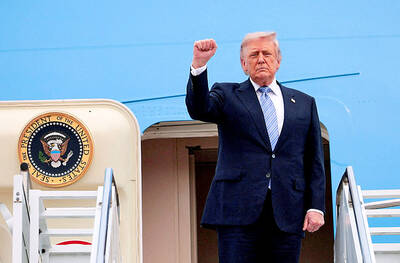
US-CHINA SUMMIT: MOFA welcomed US reassurance of no change in its Taiwan policy; Trump said he did not comment when Xi talked of opposing independence US President Donald Trump yesterday said he has not made a decision on whether to move forward with a major arms package for Taiwan after hearing concerns about it from Chinese President Xi Jinping (習近平). Trump’s comments on Taiwan came as he flew back to Washington after wrapping up critical talks in which both leaders said important progress was made in stabilizing US-China relations even as deep differences persist between the world’s two biggest powers on Iran and Taiwan. “I will make a determination,” Trump said, adding: “I’ll be making decisions. But, you know, I think the last thing we need right
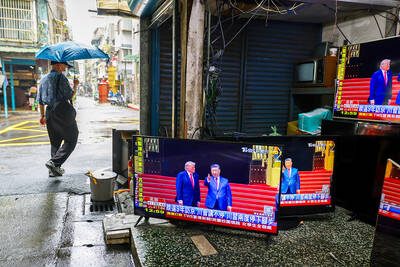
TAIWAN ISSUE: US treasury secretary Scott Bessent said on the first day of meetings that ‘it wouldn’t be a US-China summit without the Taiwan issue coming up’ There were no surprises on the first day of the summit between US President Donald Trump and Chinese President Xi Jinping (習近平), the Mainland Affairs Council (MAC) said yesterday, as the government reiterated that cross-strait stability is crucial to the Asia-Pacific region, as well as the world. As the two presidents met for a highly anticipated summit yesterday, Chinese state media reported that Xi warned Trump that missteps regarding Taiwan could push their two countries into “conflict.” Trump arrived in China with accolades for his host, calling Xi a “great leader” and “friend,” and extending an invitation to visit the White House
SECURITY: Taipei presses the US for arms supplies, saying the arms sales are not only a reflection of the US security commitment to Taiwan but also serve as a mutual deterrent against regional threats Taiwan is committed to preserving the cross-strait “status quo” and contributing to regional peace and stability, the Presidential Office said yesterday. “It is an undeniable fact that the Republic of China is a sovereign and independent democratic nation,” Presidential Office spokeswoman Karen Kuo (郭雅慧) reiterated, adding that Beijing has no right to claim sovereignty over Taiwan. The statements came after US President Donald Trump warned against Taiwanese independence. Trump wrapped up a state visit to Beijing on Friday, during which Chinese President Xi Jinping (習近平) had pressed him not to support Taiwan. Taiwan depends heavily on US security backing to deter China from carrying


 RSS
RSS