


Taiwan is committed to preserving the cross-strait “status quo” and contributing to regional peace and stability, the Presidential Office said yesterday.
“It is an undeniable fact that the Republic of China is a sovereign and independent democratic nation,” Presidential Office spokeswoman Karen Kuo (郭雅慧) said, adding that Beijing has no right to claim sovereignty over Taiwan.
The statements came after US President Donald Trump warned against Taiwanese independence.
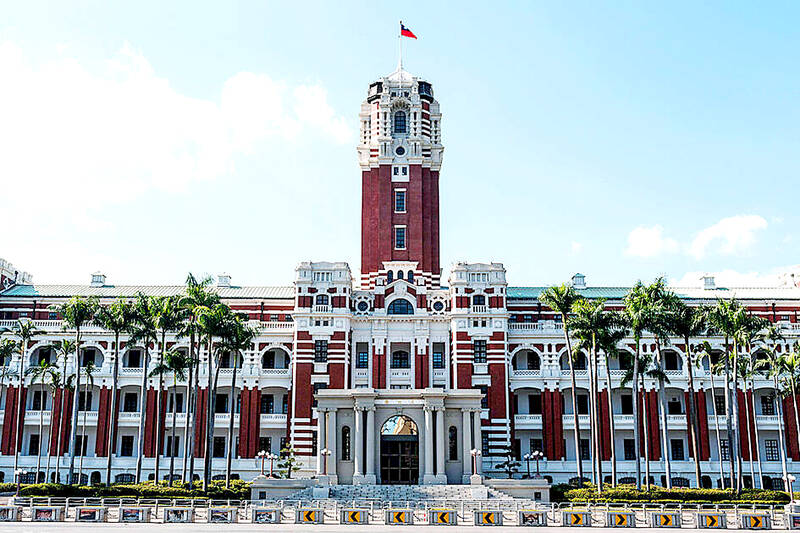
Photo: Yasuyoshi Chiba, AFP
Trump wrapped up a state visit to Beijing on Friday, during which Chinese President Xi Jinping (習近平) had pressed him not to support Taiwan.
Taiwan depends heavily on US security backing to deter China from carrying out its threat to annex the nation by force.
Trump said he and Xi “talked a lot” about Taiwan, and that the Chinese leader “does not want to see a fight for independence, because that would be a very strong confrontation.”
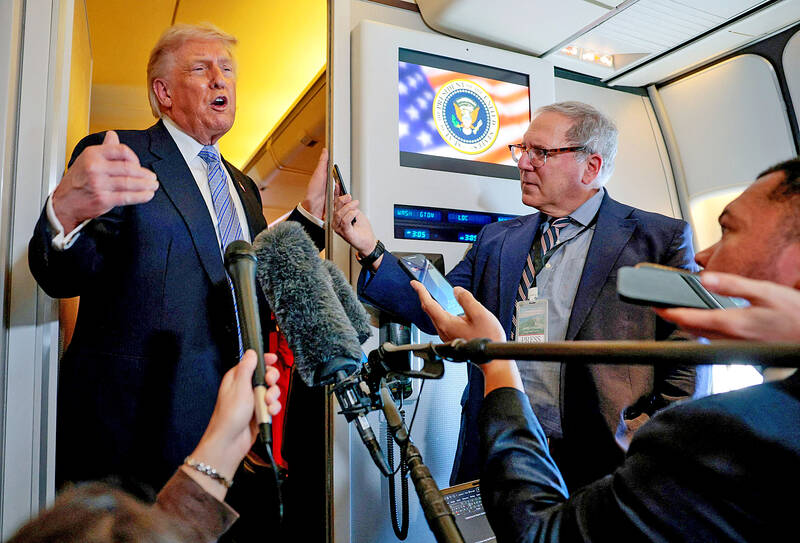
Photo: Reuters
“I’m not looking to have somebody go independent. And, you know, we’re supposed to travel 9,500 miles to fight a war. I’m not looking for that,” Trump said. “I want China to cool down.”
“We’re not looking to have wars, and if you kept it the way it is, I think China’s going to be OK with that,” he added.
The US president said he made no commitment to Xi over Taiwan.
"On Taiwan he feels very strongly, I made no commitment either way," Trump told reporters aboard Air Force One on Friday.
Kuo said President William Lai (賴清德) has consistently said Taiwan is committed to maintaining the cross-strait “status quo,” and contributing to regional peace and stability, adding that “it is a stance shared by Taiwan’s 23 million people who value freedom and democracy.”
Taiwan thanks Trump for his long-standing and continued support for security in the Taiwan Strait, she said, noting the “multiple reaffirmations from the US side, including President Trump and [US] Secretary of State Marco Rubio, that the consistent US policy and position toward Taiwan remain unchanged.”
Taiwan will continue to deepen cooperation with the US and “promote peace through strength, with the aim of safeguarding stability in the Taiwan Strait from threats or disruption,” Kuo said. “This is also a shared interest of Taiwan, the US and other democratic countries.”
The government yesterday also pressed for US arms supplies, after Trump said he had not decided on future sales.
Washington is bound by the Taiwan Relations Act to provide weapons to Taiwan.
In December last year, the Trump administration approved a record US$11 billion arms sale package for Taiwan. Lawmakers also approved a US$14 billion arms sale in January, but the sale cannot advance until Trump sends it to the US Congress.
Ahead of the summit with Xi, Trump had said he would speak to the Chinese leader about US arms sales to Taiwan, a departure from Washington’s previous insistence that it would not consult Beijing on the matter.
Trump said he would ultimately “make a determination over the next fairly short period” about the weapons after speaking to the person “that’s running Taiwan,” without specifying who he meant.
“I may do it. I may not do it,” Trump told Fox News.
“I’m holding that in abeyance, and it depends on China, it depends,” he said. “It’s a very good negotiating chip for us, frankly. It’s a lot of weapons.”
Trump also said Xi asked him directly if the US would defend Taiwan in a conflict.
“There’s only one person that knows that, you know, it is me, I’m the only person,” Trump said. “I said, ‘I don’t talk about that.’”
The US has a long-standing policy of strategic ambiguity over whether it would come to the aid of Taiwan if it is attacked by China, with Washington reserving the right to use force, but never explicitly saying whether it would actually intervene. However, negotiating any arms transfers with Xi would flout diplomatic policy.
Taiwan-US relations have also been dictated since 1982 by then-US president Ronald Reagan’s “six assurances,” which take a deliberately vague stance toward Taiwanese sovereignty, but explicitly state that the US would not consult with China on arms sales to Taiwan and would not revise the Taiwan Relations Act.
Asked whether he risked undermining the assurances, Trump said 1982 was “a long way” away, but reiterated he did not make commitments to Xi.
At the same time, he sowed doubt about whether he would follow through with the arms sale.
Still, he told Fox News that “nothing’s changed” with regard to the US’ stance on Taiwan.
In Taipei, the Presidential Office said yesterday that China’s escalating military threat is the “sole destabilizing factor” in the Indo-Pacific region, including the Taiwan Strait.
“Arms sales between Taiwan and the US are not only a reflection of the US security commitment to Taiwan as stipulated in the Taiwan Relations Act, but also serve as a mutual deterrence against regional threats,” Kuo said.
“Taiwan-US cooperation has always been demonstrated through action,” she said. “Taiwan looks forward to continuing to work with the US under the firm commitments of the Taiwan Relations Act.”
Asked about the possibility of Trump speaking with Lai about the proposed sale, Deputy Minister of Foreign Affairs Chen Ming-chi (陳明祺) yesterday said Taiwan still needed to try to understand the “true intent” of Trump’s remarks.
A senior security official said the implication from Trump was “quite clear.”
“The party with whom arms sales are to be discussed is Taiwan, not Beijing,” the official said, speaking on condition of anonymity.
The Ministry of Transportation and Communications yesterday inaugurated the Danjiang Bridge across the Tamsui River in New Taipei City, saying that the structure would be an architectural icon and traffic artery for Taiwan. Feted as a major engineering achievement, the Danjiang Bridge is 920m long, 211m tall at the top of its pylon, and is the longest single-pylon asymmetric cable-stayed bridge in the world, the government’s Web site for the structure said. It was designed by late Iraqi-British architect Zaha Hadid. The structure, with a maximum deck of 70m, accommodates road and light rail traffic, and affords a 200m navigation channel for boats,
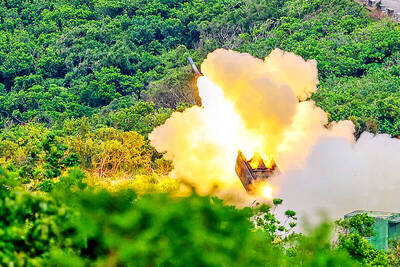
PRECISION STRIKES: The most significant reason to deploy HIMARS to outlying islands is to establish a ‘dead zone’ that the PLA would not dare enter, a source said A High Mobility Artillery Rocket System (HIMARS) would be deployed to Penghu County and Dongyin Island (東引) in Lienchiang County (Matsu) to force the Chinese military to retreat at least 100km from the coastline, a military source said yesterday. Taiwan has been procuring HIMARS and Army Tactical Missile Systems (ATACMS) from the US in batches. Once all batches have been delivered, Taiwan would possess 111 HIMARS units and 504 ATACMS, which have a range of 300km. Considering that “offense is the best defense,” the military plans to forward-deploy the systems to outlying islands such as Penghu and Dongyin so that
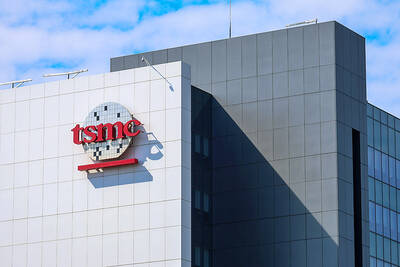
Taiwan Semiconductor Manufacturing Co (TSMC, 台積電), the world’s largest foundry service provider, yesterday said that global semiconductor revenue is projected to hit US$1.5 trillion in 2030, after the figure exceeds US$1 trillion this year, as artificial intelligence (AI) demand boosts consumption of token and compute power. “We are still at the beginning of the AI revolution, but we already see a significant impact across the whole semiconductor ecosystem,” TSMC deputy cochief operating officer Kevin Zhang (張曉強) said at the company’s annual technology symposium in Hsinchu City. “It is fair to say that in the past decade, smartphones and other mobile devices were
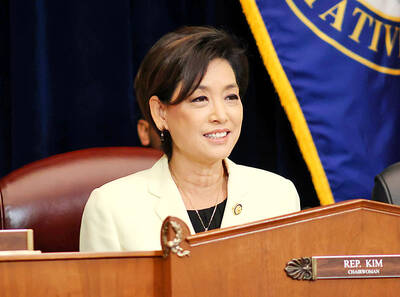
‘CLEAR MESSAGE’: The bill would set up an interagency ‘tiger team’ to review sanctions tools and other economic options to help deter any Chinese aggression toward Taiwan US Representative Young Kim has introduced a bill to deter Chinese aggression against Taiwan, calling for an interagency “tiger team” to preplan coordinated sanctions and economic measures in response to possible Chinese military or political action against Taiwan. “[Chinese President] Xi Jinping [習近平] has directed the People’s Liberation Army to be ready to invade Taiwan by 2027. China has a plan. America should have one too,” Kim said in a news release on Thursday last week. She introduced the “Deter PRC [People’s Republic of China] aggression against Taiwan act” to “ensure the US has a coordinated sanctions strategy ready should


 RSS
RSS