


Taiwan’s economy grew far faster than expected in the first quarter, as booming demand for artificial intelligence (AI) applications drove a surge in exports, spilling over into investment and consumption, the Directorate-General of Budget, Accounting and Statistics (DGBAS) said yesterday.
GDP growth was 13.69 percent year-on-year during the January-to-March period, beating the DGBAS’ February forecast by 2.23 percentage points and marking the most robust growth in nearly four decades, DGBAS senior official Chiang Hsin-yi (江心怡) told a news conference in Taipei.
The result was powered by exports, which remain the backbone of Taiwan’s economy, Chiang said.
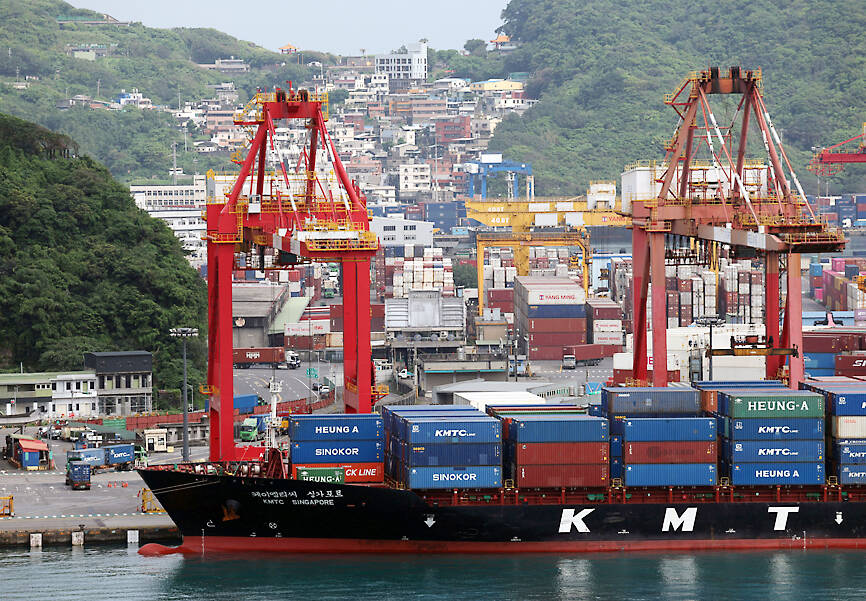
Photo: Edgar Su, Reuters
Outbound shipments jumped 51.12 percent year-on-year to US$195.7 billion, while exports of goods and services soared 35.25 percent as global demand for AI-related technologies boosted orders for semiconductors and other high-end components, she said.
Electronic components, and information and communications technology products accounted for 78.5 percent of exports, underscoring the economy’s deepening reliance on advanced technology shipments, she said.
Expansion by global cloud service providers is driving demand across Taiwan’s tech supply chain, Chiang said.
The export boom is feeding into broader economic activity.
Tech companies accelerated capacity expansion, and stepped up research and development spending to capture AI-driven opportunities, lifting capital formation by 5.2 percent, a sharp upward revision from earlier estimates.
Imports rose to US$142.8 billion, with purchases of capital equipment surging 33.52 percent and raw material imports climbing 38.82 percent, pointing to sustained momentum in manufacturing and production.
“Strong exports are feeding through to investment and manufacturing, creating a positive feedback loop,” Chiang said.
Domestic demand also held firm.
Private consumption grew 4.89 percent, supported by government cash handouts, stock market gains and promotional activities by businesses.
Retail sales and dining revenues increased, while spending on services such as telecommunications, leisure and transportation expanded, DGBAS data showed.
The sharp rebound in outbound and domestic travel was a significant boost to consumer spending, as increased mobility fueled demand across tourism-related sectors.
The average daily travel volume was 645,000 people during the Lunar New Year holiday in February, more than doubling the same period last year, lifting demand for transportation, dining, retail and leisure activities.
Financial-sector activity provided an additional lift, as increased equities and funds trading boosted fee income for brokerage and asset management firms, Chiang said.
Geopolitical uncertainties and uneven global demand remain key risks, although their effects have so far been limited, the DGBAS said.
Taiwan’s growth outlook remains closely tied to the trajectory of global AI investment, which continues to anchor the nation’s export-driven expansion, Chiang said.
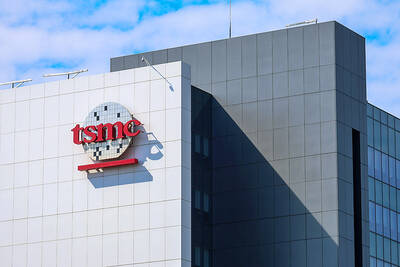
Taiwan Semiconductor Manufacturing Co (TSMC, 台積電), the world’s largest foundry service provider, yesterday said that global semiconductor revenue is projected to hit US$1.5 trillion in 2030, after the figure exceeds US$1 trillion this year, as artificial intelligence (AI) demand boosts consumption of token and compute power. “We are still at the beginning of the AI revolution, but we already see a significant impact across the whole semiconductor ecosystem,” TSMC deputy cochief operating officer Kevin Zhang (張曉強) said at the company’s annual technology symposium in Hsinchu City. “It is fair to say that in the past decade, smartphones and other mobile devices were
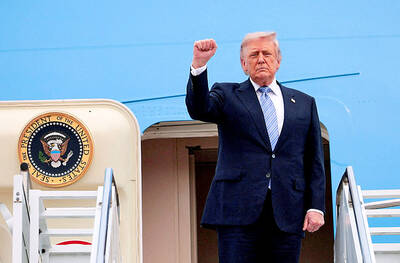
US-CHINA SUMMIT: MOFA welcomed US reassurance of no change in its Taiwan policy; Trump said he did not comment when Xi talked of opposing independence US President Donald Trump yesterday said he has not made a decision on whether to move forward with a major arms package for Taiwan after hearing concerns about it from Chinese President Xi Jinping (習近平). Trump’s comments on Taiwan came as he flew back to Washington after wrapping up critical talks in which both leaders said important progress was made in stabilizing US-China relations even as deep differences persist between the world’s two biggest powers on Iran and Taiwan. “I will make a determination,” Trump said, adding: “I’ll be making decisions. But, you know, I think the last thing we need right

TAIWAN ISSUE: US treasury secretary Scott Bessent said on the first day of meetings that ‘it wouldn’t be a US-China summit without the Taiwan issue coming up’ There were no surprises on the first day of the summit between US President Donald Trump and Chinese President Xi Jinping (習近平), the Mainland Affairs Council (MAC) said yesterday, as the government reiterated that cross-strait stability is crucial to the Asia-Pacific region, as well as the world. As the two presidents met for a highly anticipated summit yesterday, Chinese state media reported that Xi warned Trump that missteps regarding Taiwan could push their two countries into “conflict.” Trump arrived in China with accolades for his host, calling Xi a “great leader” and “friend,” and extending an invitation to visit the White House
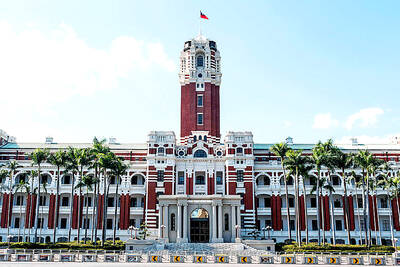
SECURITY: Taipei presses the US for arms supplies, saying the arms sales are not only a reflection of the US security commitment to Taiwan but also serve as a mutual deterrent against regional threats Taiwan is committed to preserving the cross-strait “status quo” and contributing to regional peace and stability, the Presidential Office said yesterday. “It is an undeniable fact that the Republic of China is a sovereign and independent democratic nation,” Presidential Office spokeswoman Karen Kuo (郭雅慧) reiterated, adding that Beijing has no right to claim sovereignty over Taiwan. The statements came after US President Donald Trump warned against Taiwanese independence. Trump wrapped up a state visit to Beijing on Friday, during which Chinese President Xi Jinping (習近平) had pressed him not to support Taiwan. Taiwan depends heavily on US security backing to deter China from carrying


 RSS
RSS