


The US government on Sunday called on Taiwanese lawmakers across party lines to pass a special defense budget bill that would finance Taiwan’s planned purchases of US weapon systems for self-defense.
“We encourage all parties in Taiwan’s legislature to work through political differences and quickly pass a special defense budget that demonstrates Taiwan’s commitment to its self-defense by funding the acquisition of critical defense capabilities,” an unnamed US Department of State spokesperson said.
The spokesperson also reiterated that Washington supports “Taiwan’s acquisition of critical defense capabilities, commensurate with the threat it faces,” in accordance with the Taiwan Relations Act, which has facilitated more than “45 years of commitment” across multiple administrations.
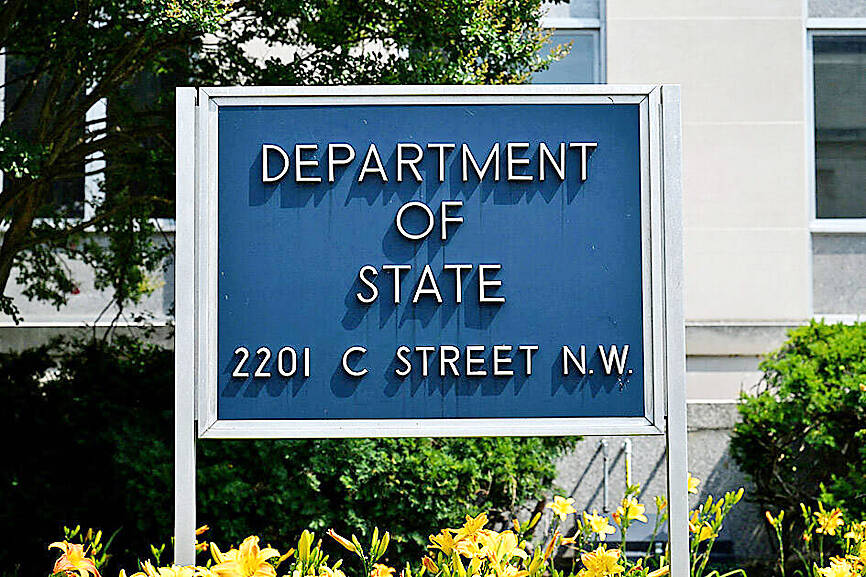
Photo: Reuters
The state department was responding to a Central News Agency question on whether Washington would support a version of the special defense budget bill proposed by the Chinese Nationalist Party (KMT), if it is passed in the legislature.
Last week, the KMT proposed a special defense budget of NT$380 billion (US$11.9 billion) — raised from the originally proposed figure of NT$350 billion after final adjustments on Thursday — to fund eight weapons sales approved by the US in December last year.
The proposal is a sizeable cut from the Executive Yuan’s proposal in November of a special defense budget bill of NT$1.25 trillion, which would pay for not just the eight systems, but also potential US arms sales that have not yet been approved, as well as future procurement of drones and a T-Dome multilayered air defense system from domestic manufacturers.
It has been stalled in the legislature for months, as the opposition KMT and Taiwan People’s Party (TPP) hold a combined majority.
On Friday, lawmakers across party lines unanimously agreed to a motion to send the special budget bills proposed by the Cabinet, the KMT and the TPP to the Foreign Affairs and National Defense Committee and the Finance Committee for review in line with an agreement reached during cross-caucus talks on Feb. 24.
Minister of National Defense Wellington Koo (顧立雄) on Friday said that the KMT’s version of the special defense budget could derail the procurement of five weapons systems approved by Washington for sale to Taiwan.
The budget ceiling in the KMT bill does not account for potential new arms sale packages that might be approved for Taiwan, he said.
Commenting on the KMT’s proposed budget, former KMT legislator Jason Hsu (許毓仁) said there are problems in terms of feasibility, technical implementation and legislative practice.
If Washington sees this, it could easily conclude that KMT is not truly willing to support arms procurement, Hsu said.
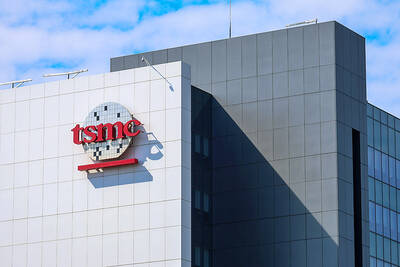
Taiwan Semiconductor Manufacturing Co (TSMC, 台積電), the world’s largest foundry service provider, yesterday said that global semiconductor revenue is projected to hit US$1.5 trillion in 2030, after the figure exceeds US$1 trillion this year, as artificial intelligence (AI) demand boosts consumption of token and compute power. “We are still at the beginning of the AI revolution, but we already see a significant impact across the whole semiconductor ecosystem,” TSMC deputy cochief operating officer Kevin Zhang (張曉強) said at the company’s annual technology symposium in Hsinchu City. “It is fair to say that in the past decade, smartphones and other mobile devices were
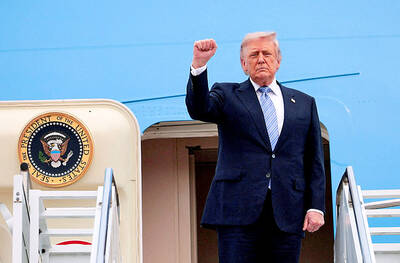
US-CHINA SUMMIT: MOFA welcomed US reassurance of no change in its Taiwan policy; Trump said he did not comment when Xi talked of opposing independence US President Donald Trump yesterday said he has not made a decision on whether to move forward with a major arms package for Taiwan after hearing concerns about it from Chinese President Xi Jinping (習近平). Trump’s comments on Taiwan came as he flew back to Washington after wrapping up critical talks in which both leaders said important progress was made in stabilizing US-China relations even as deep differences persist between the world’s two biggest powers on Iran and Taiwan. “I will make a determination,” Trump said, adding: “I’ll be making decisions. But, you know, I think the last thing we need right
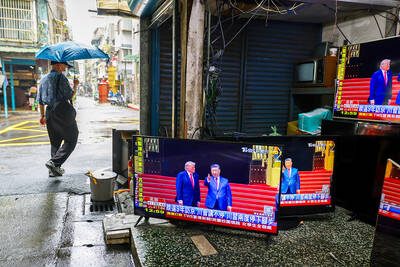
TAIWAN ISSUE: US treasury secretary Scott Bessent said on the first day of meetings that ‘it wouldn’t be a US-China summit without the Taiwan issue coming up’ There were no surprises on the first day of the summit between US President Donald Trump and Chinese President Xi Jinping (習近平), the Mainland Affairs Council (MAC) said yesterday, as the government reiterated that cross-strait stability is crucial to the Asia-Pacific region, as well as the world. As the two presidents met for a highly anticipated summit yesterday, Chinese state media reported that Xi warned Trump that missteps regarding Taiwan could push their two countries into “conflict.” Trump arrived in China with accolades for his host, calling Xi a “great leader” and “friend,” and extending an invitation to visit the White House
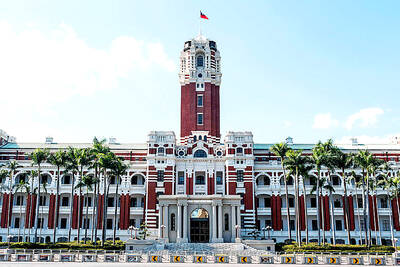
SECURITY: Taipei presses the US for arms supplies, saying the arms sales are not only a reflection of the US security commitment to Taiwan but also serve as a mutual deterrent against regional threats Taiwan is committed to preserving the cross-strait “status quo” and contributing to regional peace and stability, the Presidential Office said yesterday. “It is an undeniable fact that the Republic of China is a sovereign and independent democratic nation,” Presidential Office spokeswoman Karen Kuo (郭雅慧) reiterated, adding that Beijing has no right to claim sovereignty over Taiwan. The statements came after US President Donald Trump warned against Taiwanese independence. Trump wrapped up a state visit to Beijing on Friday, during which Chinese President Xi Jinping (習近平) had pressed him not to support Taiwan. Taiwan depends heavily on US security backing to deter China from carrying


 RSS
RSS