


The National Health Insurance Administration (NHIA) yesterday thanked the public and healthcare providers for their long-term support as it celebrated the 25th anniversary of the National Health Insurance (NHI) program and the record-breaking number of registers on its “My Health Bank” service.
The second-generation NHI, launched in 2013, covers 99.84 percent of the population, or about 23.9 million people, with nearly 93 percent of the nation’s medical institutions taking part in the program, agency Director-General Lee Po-chang (李伯璋) said at the anniversary event.
Launched in 2014, My Health Bank — a service that allows NHI members to register for an account on the online system and view their medical history on its Web site or mobile app — now has more than 5 million registered members, Lee said.

Photo: Liao Chen-huei, Taipei Times
The service also allows direct blood relatives to check the medical history of family members, he added.
The NHI has a 90 percent satisfaction rating among the public, Premier Su Tseng-chang (蘇貞昌) said, adding that it is an exemplary model that government agencies should look up to when providing public services.
Following the introduction in February of the government’s real-name system for mask rationing amid the COVID-19 pandemic, the number of My Health Bank accounts increased from 1.68 million to 5 million, Su said.
Promoting the health-monitoring service was initially difficult, but the government’s disease prevention measures, including travel history tracing and mask rationing, have contributed to the surge in its users, Minister of Health and Welfare Chen Shih-chung (陳時中) said.
A crisis can also be an opportunity, so it is important to make early preparations and keep a positive mindset, Chen added.
In related news, the NHIA plans to double the annual funding for medical compensation to healthcare institutions to NT$12.3 billion (US$417.15 million) as part of the nation’s efforts to improve overall healthcare quality, with a focus on critical care, nursing and medicine-related services fees.
The fund was last increased in 2017, when it was raised to NT$6 billion, the NHIA said.
The proposal would allocate NT$10.3 billion to hospitals for compensation for critical care and medicine services, among other items, it said.
Clinics would receive NT$2 billion for compensation in critical care, inpatient services for internal medicine, the establishment of barrier-free facilities and other services, it said.
The proposed budget, which is still under review, would take effect on Jan. 1 next year at the earliest.

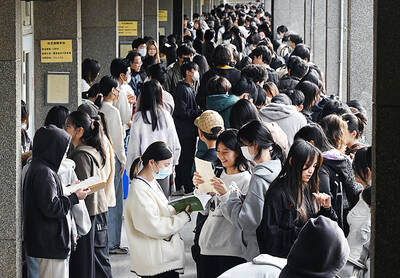
A global survey showed that 60 percent of Taiwanese had attained higher education, second only to Canada, the Ministry of the Interior said. Taiwan easily surpassed the global average of 43 percent and ranked ahead of major economies, including Japan, South Korea and the US, data from the Organisation for Economic Co-operation and Development (OECD) for 2024 showed. Taiwan has a high literacy rate, data released by the ministry showed. As of the end of last year, Taiwan had 20.617 million people aged 15 or older, accounting for 88.5 percent of the total population, with a literacy rate of 99.4 percent, the data

CCP ‘PAWN’? Beijing could use the KMT chairwoman’s visit to signal to the world that many people in Taiwan support the ‘one China’ principle, an academic said Chinese Nationalist Party (KMT) Chairwoman Cheng Li-wun (鄭麗文) yesterday arrived in China for a “peace” mission and potential meeting with Chinese President Xi Jinping (習近平), while a Taiwanese minister detailed the number of Chinese warships currently deployed around the nation. Cheng is visiting at a time of increased Chinese military pressure on Taiwan, as the opposition-dominated Legislative Yuan stalls a government plan for US$40 billion in extra defense spending. Speaking to reporters before going to the airport, Cheng said she was going on a “historic journey for peace,” but added that some people felt uneasy about her trip. “If you truly love Taiwan,

NEW LOW: The council in 2024 based predictions on a pessimistic estimate for the nation’s total fertility rate of 0.84, but last year that rate was 0.69, 17 percent lower An expected National Development Council (NDC) report expects the nation’s population to drop below 12 million by 2065, with the old-age dependency ratio to top 100 percent sooner than 2070, sources said yesterday. The council is slated to release its latest population projections in August, using an ultra-low fertility model, the sources said. The previous report projected that Taiwan’s population would fall to 14.37 million by 2070, but based on a new estimate of the total fertility rate (TFR) — the average number of children born to a woman over her lifetime — the population is expected to reach 12 million by
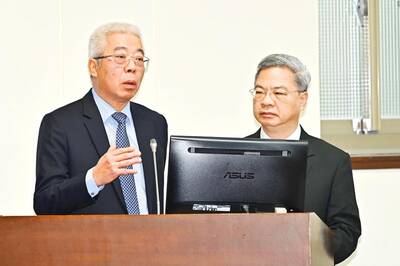
Taiwan has arranged for about 8 million barrels of crude oil, or about one-third of its monthly needs, to be shipped from the Red Sea this month to bypass the Strait of Hormuz and ease domestic supply pressures, CPC Corp, Taiwan (CPC, 台灣中油) said yesterday. The state-run oil company has worked with Middle Eastern suppliers to secure routes other than the Strait of Hormuz, through which about 20 percent of the world’s oil and liquefied natural gas typically passes, CPC chairman Fang Jeng-zen (方振仁) said at a meeting of the legislature’s Economics Committee in Taipei. Suppliers in Saudi Arabia have indicated they


 RSS
RSS