


The government will not act on a demand by the opposition Saint Lucia Labor Party (SLP) that Taiwan’s ambassador to Saint Lucia Tom Chou (周台竹) be replaced to stop him from allegedly interfering with the Caribbean ally’s year-end election, a Ministry of Foreign Affairs (MOFA) official said.
Over the years, the SLP has repeatedly petitioned Taiwan’s government to look into Chou’s “undiplomatic behavior,” addressing several letters to President Ma Ying-jeou (馬英九) and the ministry to register its protest against Chou.
The latest protest came on Sept. 8, when Saint Lucia Leader of the Opposition Kenny Anthony said the SLP would “no longer afford him any diplomatic courtesies” apart from calling for the “resignation, reprimand, and recall” of Chou, who has served in the country since the incumbent United Workers Party (UWP) administration re-established ties with Taiwan in 2007 shortly after it regained power.
In one of the letters to Ma, the SLP enumerated 10 points “out of many, many more that we can produce” to draw his attention to Chou’s “reprehensible” and “undiplomatic” behavior and “violations of diplomatic norms and interference in our international political affairs.”
Among the allegations were that Chou provided each UWP parliamentarian with US$1 million that was ostensibly for aid projects, but was used to fund elections and to personally enrich the parliamentarians; Chou personally and publicly distributed money to contractors and community operatives of the UWP who were hired to perform tasks in the constituencies represented by the UWP.
The SLP requested that Chou “be immediately recalled to Taipei” and that “a thorough investigation be carried out into his behavior and the consequences thereof for the international reputation of our country,” the letter read.
Based on what the ministry has learned from its diplomatic mission in Saint Lucia, MOFA spokesman James Chang (章計平) on Friday dismissed the demand to recall Chou and vowed to continue with its aid projects, which he said have been “well received by the government and its people.”
Saying that the allegations brought up again ahead of Saint Lucia’s general election were “groundless,” Chang added: “We never interfere in its internal politics and we have no plan to get involved in its party politics.”
Chou challenged the SLP to present solid evidence to back its claims.
“They would have presented evidence if they had it. The opposition wasn’t able to provide evidence because the claim was not true. The Republic of China’s embassy in Saint Lucia never offers any money to any individuals or groups to serve their constituents,” Chou said.
Chou gave three reasons for the “misunderstandings” the SLP has about Taiwan.
First, the SLP favors recognizing China over Taiwan. Second, the implementation of Taiwanese aid projects have helped the UWP government win public support and thus placed the SLP at a disadvantage in the coming election, Chou said.
Third, the SLP preferred large construction projects, for example a large stadium and a hospital built when it was in power from 1997 to 2007 with financial support from China, as opposed to the projects carried out by Taiwan, which are mainly aimed at improving the quality of life of its people by building footpaths, bridges, community halls and drains to prevent floods, Chou said.
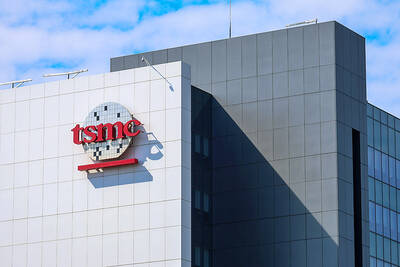
Taiwan Semiconductor Manufacturing Co (TSMC, 台積電), the world’s largest foundry service provider, yesterday said that global semiconductor revenue is projected to hit US$1.5 trillion in 2030, after the figure exceeds US$1 trillion this year, as artificial intelligence (AI) demand boosts consumption of token and compute power. “We are still at the beginning of the AI revolution, but we already see a significant impact across the whole semiconductor ecosystem,” TSMC deputy cochief operating officer Kevin Zhang (張曉強) said at the company’s annual technology symposium in Hsinchu City. “It is fair to say that in the past decade, smartphones and other mobile devices were
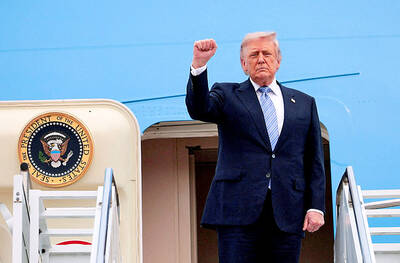
US-CHINA SUMMIT: MOFA welcomed US reassurance of no change in its Taiwan policy; Trump said he did not comment when Xi talked of opposing independence US President Donald Trump yesterday said he has not made a decision on whether to move forward with a major arms package for Taiwan after hearing concerns about it from Chinese President Xi Jinping (習近平). Trump’s comments on Taiwan came as he flew back to Washington after wrapping up critical talks in which both leaders said important progress was made in stabilizing US-China relations even as deep differences persist between the world’s two biggest powers on Iran and Taiwan. “I will make a determination,” Trump said, adding: “I’ll be making decisions. But, you know, I think the last thing we need right
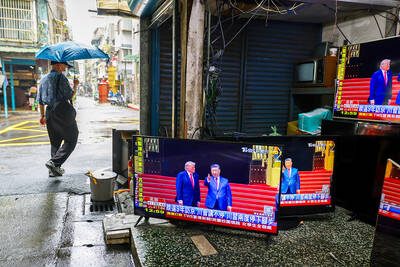
TAIWAN ISSUE: US treasury secretary Scott Bessent said on the first day of meetings that ‘it wouldn’t be a US-China summit without the Taiwan issue coming up’ There were no surprises on the first day of the summit between US President Donald Trump and Chinese President Xi Jinping (習近平), the Mainland Affairs Council (MAC) said yesterday, as the government reiterated that cross-strait stability is crucial to the Asia-Pacific region, as well as the world. As the two presidents met for a highly anticipated summit yesterday, Chinese state media reported that Xi warned Trump that missteps regarding Taiwan could push their two countries into “conflict.” Trump arrived in China with accolades for his host, calling Xi a “great leader” and “friend,” and extending an invitation to visit the White House
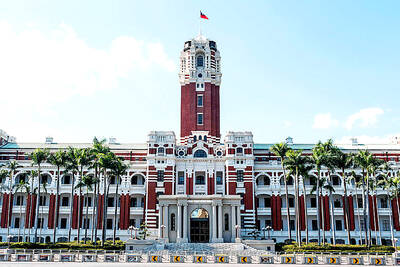
SECURITY: Taipei presses the US for arms supplies, saying the arms sales are not only a reflection of the US security commitment to Taiwan but also serve as a mutual deterrent against regional threats Taiwan is committed to preserving the cross-strait “status quo” and contributing to regional peace and stability, the Presidential Office said yesterday. “It is an undeniable fact that the Republic of China is a sovereign and independent democratic nation,” Presidential Office spokeswoman Karen Kuo (郭雅慧) reiterated, adding that Beijing has no right to claim sovereignty over Taiwan. The statements came after US President Donald Trump warned against Taiwanese independence. Trump wrapped up a state visit to Beijing on Friday, during which Chinese President Xi Jinping (習近平) had pressed him not to support Taiwan. Taiwan depends heavily on US security backing to deter China from carrying


 RSS
RSS