


Boots Riley holds nothing back in his audacious, surrealist social satire I Love Boosters. The film is a go-for-broke expression of wild imagination and social consciousness that’s impossible not to admire for its wacky, bold vision, with teleporting, high fashion snobbery and pyramid schemes.
Here is a movie where we get Keke Palmer, Naomi Ackie and Taylour Paige leading a vigilante shoplifting operation, Demi Moore as a toxic girl boss, Don Cheadle as a sleazy lifestyle evangelist, Will Poulter as a fussy store manager and LaKeith Stanfield as a discount brand model with a strange accent and a hypnotizing stare.
It sounds like fun, right? Like a raucous, madcap ride through the inequities of the fashion business from the executive suite, down to the retail store where the goods are sold and the Chinese factories where they’re made? And on a certain level it is all of that, but one thing it is not is very funny. I Love Boosters can be amusing and clever, but the laugh-out-loud comedy just isn’t quite there. And it doesn’t help that the film goes more off the rails as it progresses to a climax that is less rousing than mind-numbing.
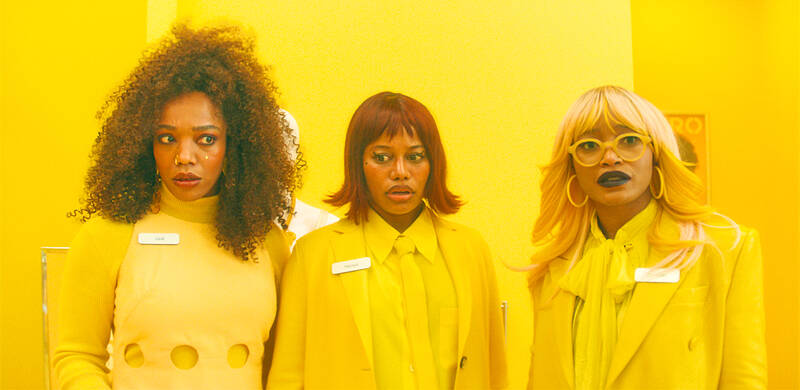
Photo: AP
The thing is, I Love Boosters does start on a strong, albeit minor key as we’re introduced to the Velvet Gang, Corvette (Palmer), Sade (Ackie) and Mariah (Paige) and their booster operation, stealing overpriced designer wares from high end stores and selling them for a steep discount on the street. There’s a kind of a Robin Hood sensibility to it all. Mariah calls it “Triple F,” or “Fashion Forward Filanthropy.” She knows how to spell philanthropy, she deadpans; This is branding.
But despite the colorful surroundings, there’s a pervasive hopelessness in this off-kilter world that looks a lot like our own. Corvette, particularly, feels outside of it all, as a woman who dreams of being a designer herself but is currently squatting in a closed fast food chicken shop and being haunted by a boulder of debt (like, literally). It doesn’t help that the founder she idolizes, Moore’s Christie Smith, has become obsessed with stopping the boosters. To Christie, a genius megalomaniac, they’re the big problem with her business and not the fact that her store employees are being paid a pittance and her factory employees even less. The people who work at the factories are also getting sick from sandblasting the denim. And yes, these are all real things.
Eiza Gonzalez’s vaping Violeta becomes the face of the store employees forced to use their own paychecks to buy their uniforms. Poppy Liu’s Jianhu, who teleports herself from China to the Bay Area, is that for the factory workers. This oddball group of five women band together to get revenge against Christie. Again, this all sounds like it should be a fun time, but the film is too busy jumping around and throwing ideas and concepts at the screen (teleporting somehow the least distracting of them) for us to spend much time just hanging out with these vibrant personalities.
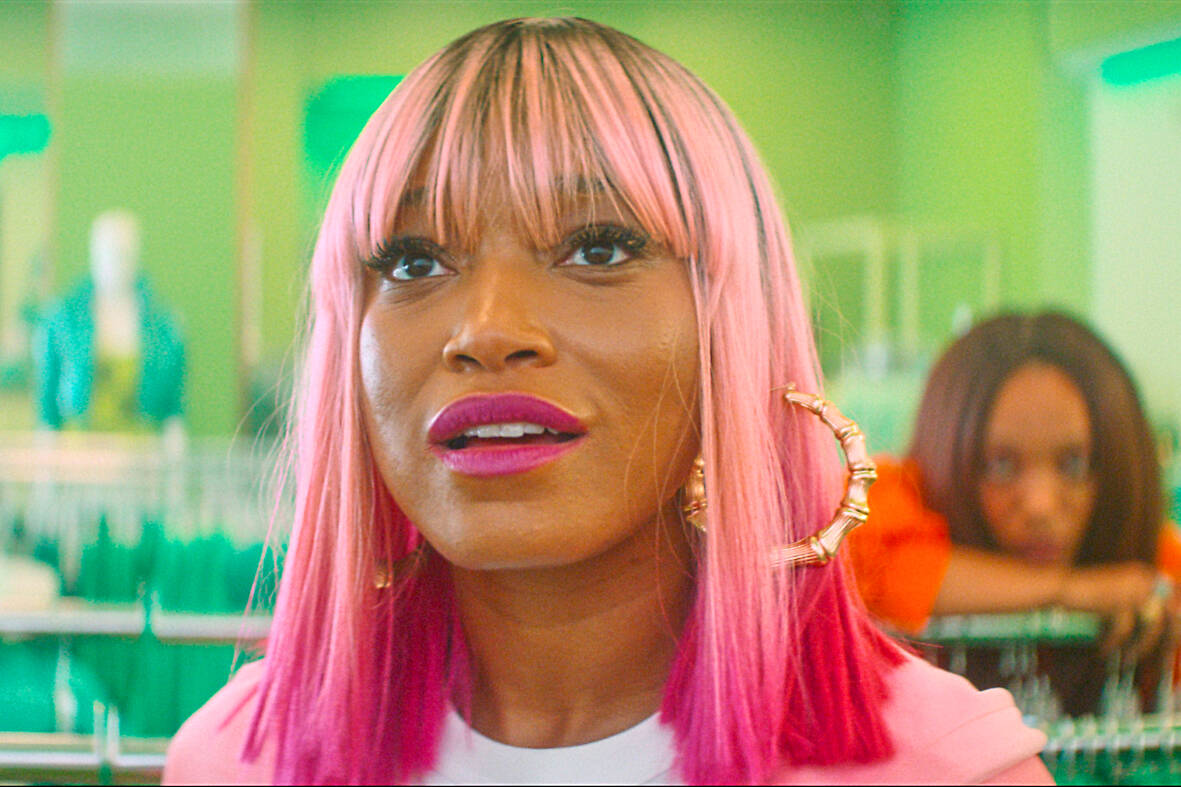
Photo: AP
It is a crime that this is only Riley’s second produced movie. Though it might not reach the crackling heights of his debut, Sorry to Bother You, his imagination is still on fire. Unlike so much of what’s out there, I Love Boosters has both style and substance, which is worth something even if it doesn’t land perfectly (or capably inspire any kind of revolution). In a marketplace full of content and franchises, here is a filmmaker with something to say and an interesting way to say it.
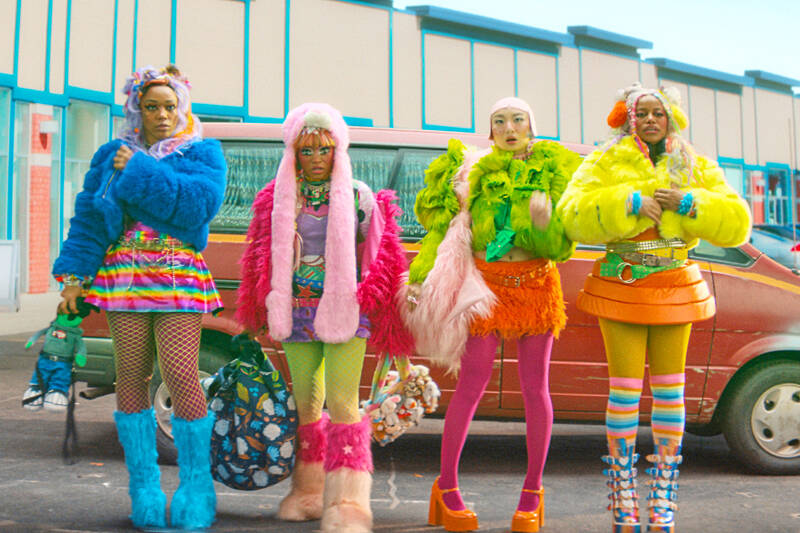
Photo: AP
Ajay Verma, a consultant gastroenterologist at Kettering general hospital in Northamptonshire, says our gut is a “complex machine.” “It is constantly providing us with the nutrition we need, initially to grow and develop, and then for us to survive, thrive and repair from injury and illness.” How can we keep it functioning well? Put simply: “Make sure what you put into it is balanced, and that you clear out its waste products adequately,” Verma says. “In a general gastroenterology clinic, the most common conditions we see are irritable bowel syndrome (IBS), gastroesophageal reflux disease, inflammatory bowel disease and constipation,” says Nisha
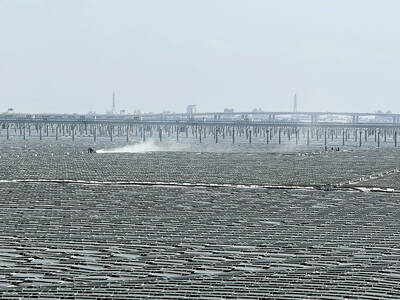
The arithmetic is straightforward and uncomfortable. By the end of 2025, Taiwan had committed itself to a 50-30-20 electricity mix — half natural gas, 30 per cent coal, 20 per cent renewables. The Ministry of Economic Affairs’s (MOEA) own monthly energy reports tell a different story. Natural gas reached 47.8 per cent of generation last year. Coal stood at 35.4 per cent, comfortably above its target ceiling. Renewables came in at 13.1 per cent, well short of the 20 per cent Taipei had pledged a decade earlier. Installed renewable capacity reached roughly half of the 12 gigawatts (GW) the government
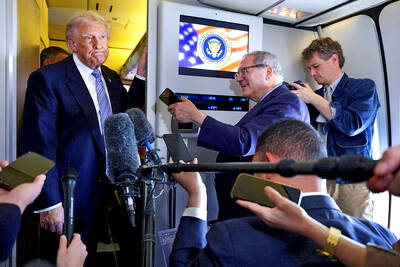
Last week US President Donald Trump was asked by a reporter whether he would speak on the phone to the President of Taiwan. “l’ll speak to him. I speak to everybody. We have that situation very well in hand,” Trump said. This marked the second time in a couple of weeks he had said he would talk to the President of Taiwan. In 2016 he famously took a call from then-president Tsai Ing-wen (蔡英文), when he was president-elect. Despite warnings that the apocalypse was nigh because of a phone call, the world quickly forgot about the conversation between two democratically-elected presidents.

May 25 to May 31 Few believed that apples could be cultivated on a commercial scale in Taiwan’s high mountains. When horticulturalist Cheng Chao-hsiung (程兆熊) first proposed the idea in 1955, both American and Taiwanese colleagues dismissed it as implausible, arguing that temperate fruit could not be reliably grown on a subtropical island, especially on rugged terrain. However, it was this terrain in the Central Mountain Range where many Chinese Civil War veterans were resettled in the late 1950s. With limited job prospects and no family in Taiwan, they were placed on cooperative farms aimed toward self-sufficiency. Some say the conditions


 RSS
RSS