


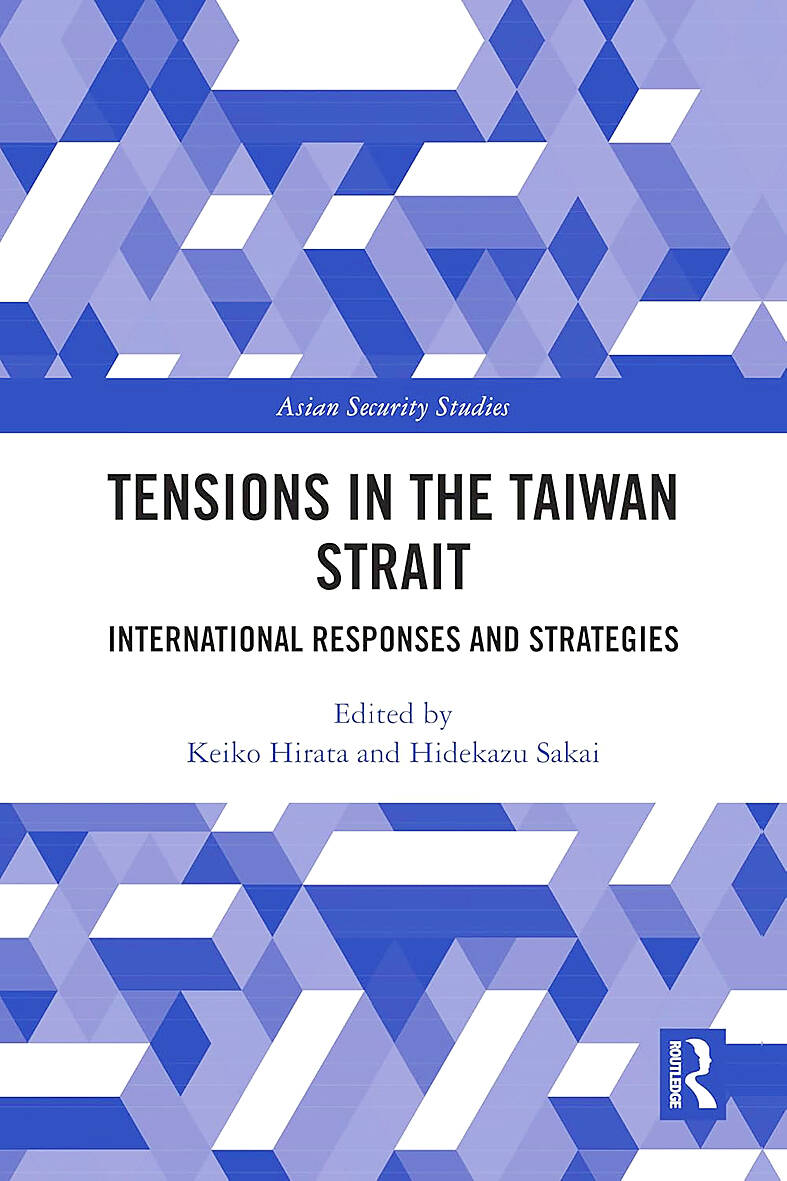
A book about Taiwan’s relevant partners, looking at what they do rather than what they say? This is exactly what anyone wishing to comment on Taiwanese geopolitics needs to have on their bedside table.
The book is a collection of texts written by academics presenting their conclusions on how a given country or region relates to Taiwan. We often see that official discourse, or the most prominent narrative, differs from what happens on the ground.
This is clear from the first chapter, which looks at the US. It explains that Washington has applied a form of dual deterrence toward both Beijing and Taipei. While attempting to stop the People’s Republic of China (PRC) from invading, the US also consistently blocked Taiwan’s independence movement.
This brings us to one of several recurring themes in the book: the re-election of Donald Trump is independently mentioned by most of the authors as seriously disrupting the turn toward Taiwan that many countries were just initiating. The rising uncertainty and the pressure they face from his administration distract them from engagement with Taipei.
This is again mentioned in one of the best chapters — about Australia — which concludes Canberra’s Taiwan strategy “will be difficult to predict as any future response will depend upon the incoming Trump administration.”
This is especially regrettable since its author meticulously describes how Australia went from “enmeshment” with China to much more Taiwan-friendly behavior.
Australia is also one of several countries that sees Taiwan’s democracy as a reason for support. It is another recurring theme: how the administration of former president Tsai Ing-wen (蔡英文), its effective outreach to democracies and its response to the COVID-19 pandemic considerably changed a country’s despondent behavior toward Taipei into much deeper engagement and practical support.
We also see it in the chapter about the UK, appropriately titled “How the UK ‘discovered’ Taiwan.” This is an apt demonstration of how a distant country once stayed out of what was, until democratization in Taiwan, essentially the feud between two dictators — and then embraced Taipei. Again, bipartisan support came after the COVID pandemic and the rise of China’s pressure, and is now disrupted by Trump’s actions.
Tsai’s New Southbound Policy (NSP) is also named several times as a positive factor. In the excellent chapter on ASEAN, the NSP is described as successful in understanding ASEAN’s paradox: it sees unity as an ideal but knows it is out of reach.
Again, ASEAN members often speak differently from how they act. The authors say Indonesia officially follows Beijing’s one-China principle, yet is the most active ASEAN member in keeping the Americans engaged in the region. Vietnam apparently uses Taiwan as a way to assert its freedom from Chinese dominance. Along with the Philippines, they also have an interest in Taiwan due to the presence of many migrant workers, which represents an opportunity for Taipei.
Taiwan’s NSP is also mentioned as mirroring India’s Act East Policy, which allowed the two countries to cross paths. The chapter about India is one of the most important, and from the first paragraph, the author reiterates that India will never be pro or anti-West.
But again, words and actions do not always match. The author reminds us that the India-China border is the longest contested border in the world, and writes that this border is as central to India as Taiwan is to China.
South Korea does not get a flattering portrait in its own chapter. Although the authors note that South Korea started talking more about Taiwan in 2021, they see this as a way to please the US more than genuine commitment. Seoul is intensely focused on its own issues with North Korea, and actually fears that Taiwan diverts American resources South Korea needs.
This differs significantly from the chapter on Japan, which reads as a love letter. It includes interesting data supporting what many have observed: the mutual affection between Japan and Taiwan. Former Taiwanese president Lee Teng-hui (李登輝) gets credit for this relationship, which traces back much further than that of any other country.
Japan is also described as shifting its defense focus from Hokkaido, against Russian threats, to its southernmost islands near Taiwan.
Finally, the EU chapter sees a savage trouncing of tropes.
Contradicting Europhobic Trumpist narratives, we get a thorough description of how the EU used many mechanisms to counter Chinese influence. We are treated to a list of EU-Taiwan cooperation efforts that may not be glamorous enough for headlines, but display depth. Again, there is a sharp contrast between what we hear and what is done.
This is the only chapter that mentions disinformation and political warfare at all. The EU appears to be the only place in the world that understands and values Taiwan’s expertise in countering Chinese information warfare and psychological attacks — and the only one that reached out to cooperate on this matter. The two sides appear committed to resilience, a concept now central to Taiwan and absent in every other country treated in the book.
And once more, in the EU chapter, Tsai-era communication, COVID responses and Trump’s disruption of the resulting progress are echoed.
A book co-signed by such a wide collection of authors will be uneven by nature. The chapter on Canada can be entirely overlooked, as the author makes factual mistakes. In general, however, it is remarkably astute, and finds a great balance between academic rigour and accessibility.
In any case, it will take you far beyond the usual platitudes — and that’s all we are asking.
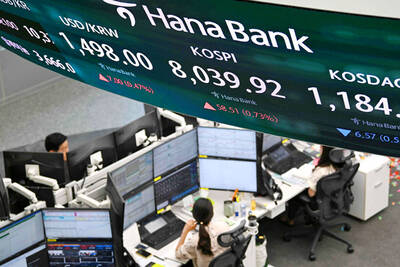
Taiwan’s overtaking of South Korea in GDP per capita is not a temporary anomaly, but the result of deeper structural problems in the South Korean economy says Chang Young-chul, the former CEO of Korea Asset Management Corp. Chang says that while it reflects Taiwan’s own gains, it also highlights weakening growth momentum in South Korea. As design and foundry capabilities become more important in the AI era, Seoul risks losing competitiveness if it relies too heavily on memory chips. IMF forecasts showing Taiwan widening its lead over South Korea have fueled debate in Seoul over memory chip dependence, industrial policy and
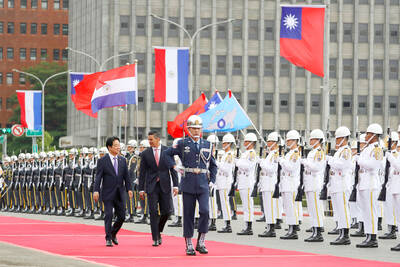
“China wants to unify with Taiwan at the lowest possible cost, and it currently believes that unification will become easier and less costly as time passes,” wrote Amanda Hsiao (蕭嫣然) and Bonnie Glaser in Foreign Affairs (“Why China Waits”) this month, describing how the People’s Republic of China (PRC) is playing the long game in its quest to seize Taiwan. This has been a favorite claim of many writers over the years, easy to argue because it is so trite. Very obviously, if the PRC isn’t attacking Taiwan, it is waiting. But for what? Hsiao and Glaser’s main point is trivial,
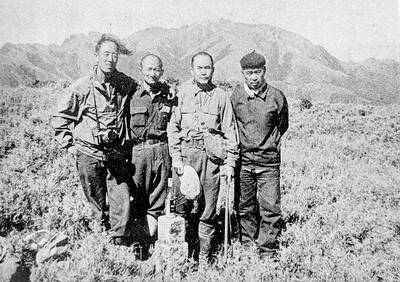
May 18 to May 24 Gathered on Yangtou Mountain (羊頭山) on Dec. 5, 1972, Taiwan’s hiking enthusiasts formally declared the formation of the “100 Peaks Club” (百岳俱樂部) and unveiled the final list of mountains. Famed mountaineer Lin Wen-an (林文安) led this effort for the Chinese Alpine Association (中華山岳協會). Working with other experienced climbers, he chose 100 peaks above 10,000 feet (3,048m) that featured triangulation points and varied in difficulty and character. The list sparked an alpine hiking craze, inspiring many to take up mountaineering and competing to “conquer” the summits. A common misconception is that the 100 Peaks represent Taiwan’s 100 tallest
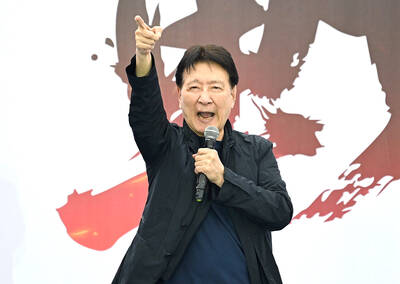
In a sudden move last week, opposition lawmakers of the Chinese Nationalist Party (KMT) and Taiwan People’s Party (TPP) passed a NT$780 billion special defense budget as a preemptive measure to stop either Chinese leader Xi Jinping (習近平) or US President Donald Trump from blocking US arms sales to Taiwan at their summit in Beijing, said KMT heavyweight Jaw Shaw-kong (趙少康), speaking to the Taipei Foreign Correspondents Club on Wednesday night in Taipei. The 76-year-old Jaw, a political talk show host who ran as the KMT’s vice presidential candidate in 2024, says that he personally brokered the deal to resolve


 RSS
RSS