


The last couple of weeks spectators in Taiwan and abroad have been treated to a remarkable display of infighting in the Chinese Nationalist Party (KMT) over the supplementary defense budget. The party has split into two camps, one supporting an NT$800 billion special defense budget and one supporting an NT$380 billion budget with additional funding contingent on receiving letters of acceptance (LOA) from the US. Recent media reports have said that the Taiwan People’s Party (TPP) is leaning toward the latter position.
President William Lai (賴清德) has proposed NT$1.25 trillion for purchases of US arms and for development of domestic weapons systems that are critical for the proposed “hellscape” concept the US is backing to hold off an invasion from the People’s Republic of China (PRC).
By contrast, the NT$380 billion proposal of the faction led by KMT Party Chair Cheng Li-wun (鄭麗文) eliminates the domestic weapons component and purchases only existing weapons systems from the US. It is obvious who benefits from that shriveled echo of President Lai’s proposal.
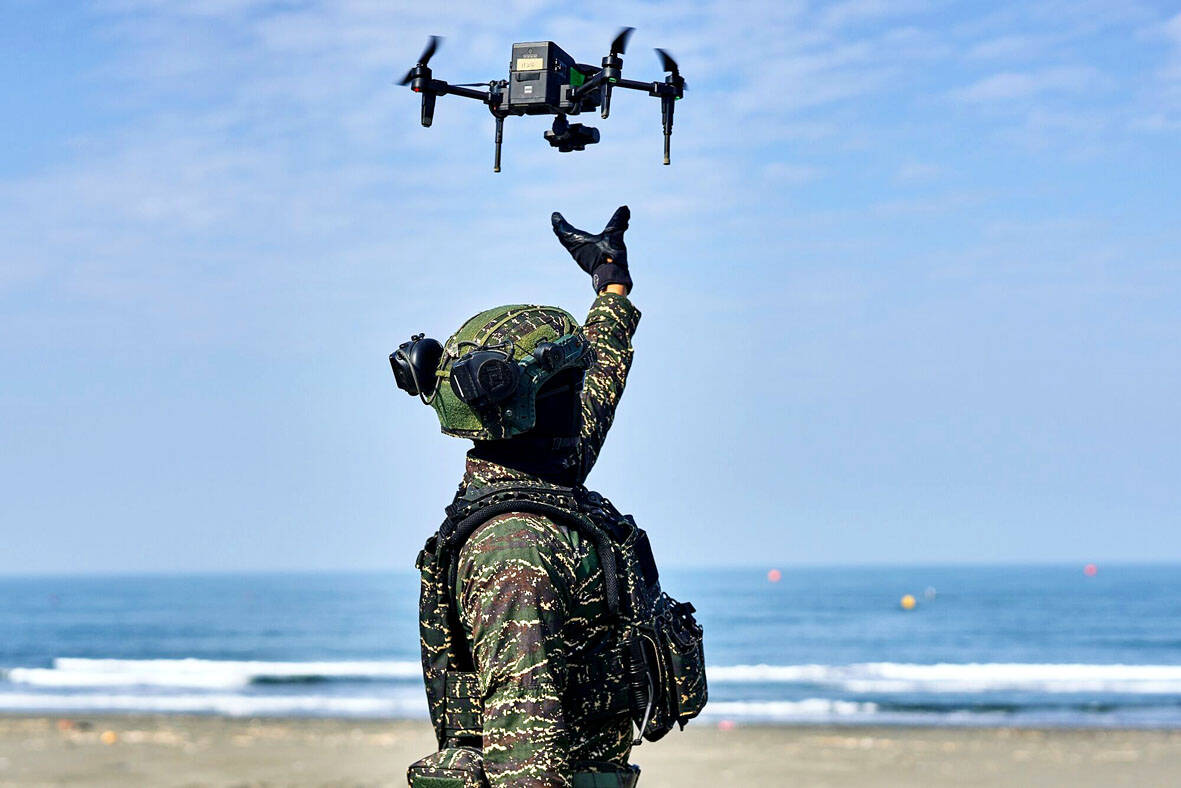
Photo: Bloomberg
The infighting, fun as it is to watch, nevertheless represents an obstruction to the passage of the special defense funds. After yet another failure to reach consensus on Tuesday, the Taipei Times reported that DPP Legislator Lo Mei-ling (羅美玲) observed that the KMT appeared to be intentionally delaying the defense spending bill until after the planned meeting next week between US President Donald Trump and Chinese President Xi Jinping (習近平). The unspoken thrust of that point is clear: if Trump appears to sell out Taiwan, the KMT can then claim the entire supplementary budget is unnecessary, since the US is not going to intervene anyway.
Readers may be tempted to see the KMT split as a positive by-product of the political thrust of the supplementary defense budget: Lai’s proposal has broad public support, fracturing the pro-PRC parties. Not only has the KMT split (and the TPP from the KMT), but individual KMT politicians have been forced to cosplay as moderates in order to position themselves for the elections in November and for 2028.
Polling on the budget is consistent across organizations. A DPP poll released in March showed 66.6 percent of the public backed the DPP’s proposed NT$1.25 trillion budget. An Institute for National Defense and Security Research (INDSR) survey, also from March, showed over 60 percent support for the government’s budget. A Taiwan Public Opinion Foundation (TPOF) poll from December showed that over half the public disapproved of the KMT’s blocking of review of the government’s proposed supplementary defense budget. A poll by INDSR in May last year found 51 percent supported increasing Taiwan’s defense spending, with 44 percent favoring a “significant increase.” A poll published in March by Academia Sinica found that 53.9 percent supported increasing the defense budget to 3 percent of GDP. Moreover, 58.7 percent of respondents said they would be willing to fight if the US did not intervene. Clearly defense spending has broad support.
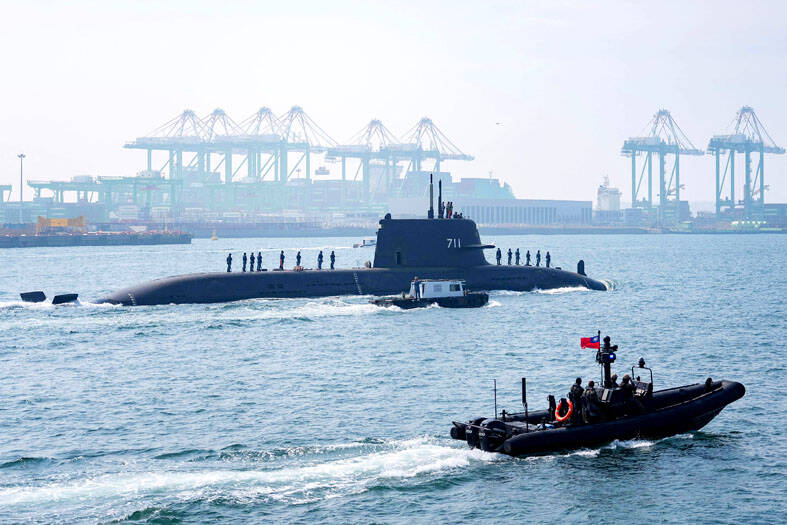
Photo courtesy of the Military News Agency
This fact has compelled KMT leaders to attempt to appear centrist. The most notable example of this is Taichung Mayor Lu Shiow-yen (盧秀燕), who took an 11-day trip to the US in March. There she posed as a “moderate” on the defense budget, distancing herself from the KMT’s extremist position. Lu is widely regarded as a serious contender for the KMT’s presidential candidacy in 2028. This creates a decided contrast between herself and party Chair Cheng, whom many also see as positioning herself for 2028. If the reader imagines that someone as extreme as Cheng, who has claimed Russian dictator Vladimir Putin was democratically elected and calls herself “Chinese,” cannot become a presidential candidate, recall that the KMT has fielded Hung Hsiu-chu (洪秀柱) — a Cheng precursor — and the dour, unpopular Lien Chan (連戰) as presidential candidates.
Another “moderate” move was made by Taipei Mayor Chiang Wan-an (蔣萬安). When asked earlier this week whether KMT legislators supported the NT$800 million budget, Chiang demurred, saying the matter was open to discussion. Commenting on New Taipei City Mayor Hou Yu-yi’s (侯友宜) statement earlier this week that he supported a defense budget of 3 percent and leaned towards the position of the Ministry of Defense, Chiang made correct noises, noting that he has always supported strengthening Taiwan’s defense capabilities and engaging in necessary and appropriate defense spending. Chiang is not in the legislature, and can avoid this fight. But he too is trying to appear presidential.
Alas for readings that attribute the KMT infighting to smart DPP politicking. The truth is, the splits in the KMT, and the fits of moderation among its leaders, are structural features of the KMT problem of attempting to appease the US and appearing to support the defense of Taiwan, while at the same time attempting to please its allies in Beijing. That is why Cheng’s NT$380 billion proposal is focused solely on purchases of existing US weapons systems and eliminates domestic production: it is a cynical ploy aimed squarely at appeasing the US that removes the Hellscape technology, a real threat to Beijing.
This is an old game: the KMT goes into this mode whenever major arms purchases are proposed. Inevitably, party politicians will individually coalesce around positions that reflect the need to make voters, Washington and Beijing happy. The result is more obstructionism, depicted as “splits in the KMT.”
This column has often documented how the KMT has been using the same obstructionist tactics against President Lai that it deployed against former president Chen Shui-bian (陳水扁). Consider KMT caucus whip Fu Kun-chi’s (傅?萁) explanation of why the KMT is throwing up obstacles to the supplementary budget: the KMT is freezing the funds because the US isn’t providing data on costs.
No, sorry, I am confused. That was the KMT’s claim late in the Chen administration when Chen had requested 66 F-16s and the KMT was blocking that sale. What Fu said was an update of that: the KMT was concerned about timely delivery of weapons and safeguarding against misuse of funds. Same tune, different words. In fact, under Chen the KMT prevented arms purchase bills from reaching the floor of the legislature 60 times. Sound familiar?
“Indeed, the KMT has assured the US several times going back almost a year, ... that they have taken US demands into account. KMT Chair … promised again back in May to move the arms proposal forward. Visits to Washington ... brought promises.”
I wrote that in 2006. Nothing has changed.
The chorus of US officials and legislators demanding that “Taiwan” buy weapons while doing nothing concrete about the KMT stance is also an old tune. Weapons sales had broad bipartisan support, just like today. The problem was that the KMT president in power did not want them. KMT legislators then expressed — I am sure this will come as a surprise to the reader — budgetary doubts.
KMT arms obstructionism is thus fixed policy. Whenever the US wants to sell weapons to Taiwan, suddenly the KMT cares about the budget.
Also a feature: “...eroding US support was one of three sets of factors that would ultimately determine Taiwan’s future, along with China’s ever-growing strength and Taiwan’s inherent weakness.”
Oh yeah, longtime US government Taiwan expert Robert Sutter wrote that in 2011 in this paper.
The structure never changes.
Notes from Central Taiwan is a column written by long-term resident Michael Turton, who provides incisive commentary informed by three decades of living in and writing about his adoptive country. The views expressed here are his own.
Ajay Verma, a consultant gastroenterologist at Kettering general hospital in Northamptonshire, says our gut is a “complex machine.” “It is constantly providing us with the nutrition we need, initially to grow and develop, and then for us to survive, thrive and repair from injury and illness.” How can we keep it functioning well? Put simply: “Make sure what you put into it is balanced, and that you clear out its waste products adequately,” Verma says. “In a general gastroenterology clinic, the most common conditions we see are irritable bowel syndrome (IBS), gastroesophageal reflux disease, inflammatory bowel disease and constipation,” says Nisha
The arithmetic is straightforward and uncomfortable. By the end of 2025, Taiwan had committed itself to a 50-30-20 electricity mix — half natural gas, 30 per cent coal, 20 per cent renewables. The Ministry of Economic Affairs’s (MOEA) own monthly energy reports tell a different story. Natural gas reached 47.8 per cent of generation last year. Coal stood at 35.4 per cent, comfortably above its target ceiling. Renewables came in at 13.1 per cent, well short of the 20 per cent Taipei had pledged a decade earlier. Installed renewable capacity reached roughly half of the 12 gigawatts (GW) the government
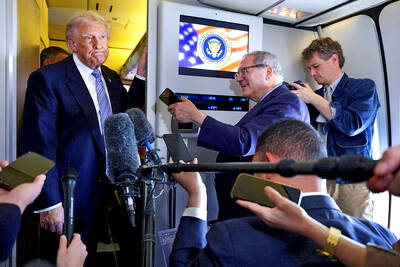
Last week US President Donald Trump was asked by a reporter whether he would speak on the phone to the President of Taiwan. “l’ll speak to him. I speak to everybody. We have that situation very well in hand,” Trump said. This marked the second time in a couple of weeks he had said he would talk to the President of Taiwan. In 2016 he famously took a call from then-president Tsai Ing-wen (蔡英文), when he was president-elect. Despite warnings that the apocalypse was nigh because of a phone call, the world quickly forgot about the conversation between two democratically-elected presidents.

May 25 to May 31 Few believed that apples could be cultivated on a commercial scale in Taiwan’s high mountains. When horticulturalist Cheng Chao-hsiung (程兆熊) first proposed the idea in 1955, both American and Taiwanese colleagues dismissed it as implausible, arguing that temperate fruit could not be reliably grown on a subtropical island, especially on rugged terrain. However, it was this terrain in the Central Mountain Range where many Chinese Civil War veterans were resettled in the late 1950s. With limited job prospects and no family in Taiwan, they were placed on cooperative farms aimed toward self-sufficiency. Some say the conditions


 RSS
RSS