


In the classic history of the Chinese Nationalist Party’s (KMT) covert military operations in Thailand, Laos and Burma (now Myanmar) during the Cold War, The Secret Army, authors Richard Gibson and Wen H. Chen (陳文華) include an anecdote on KMT intelligence operative Yang Eng-tsai.
Yang started out in the 1960s as a soldier in the People’s Liberation Army, then fled to Burma where he became part of a covert KMT intelligence unit, and then, upon the unit’s dissolution in 1975, he joined the drug army of Myanmar’s “Opium King” Khun Sa, one of the world’s most wanted narcotics producers. When Yang finally retired in 1996, he came back to Taiwan and received a military pension that covered both his Republic of China (ROC) military service as well as his two decades in the service of the Burmese drug lord.
Beyond pointing to an almost completely undocumented relationship between the ROC military and one of the biggest drug kingpins in Asia’s history, Yang’s story shows how incredibly fluid movements and allegiances were for ethnic Chinese in the China-Burma border region during the second half of the 20th century.
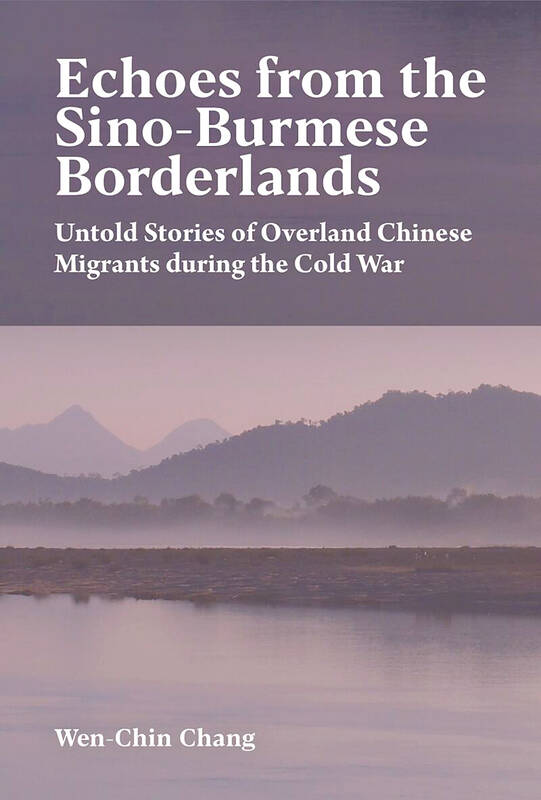
Now, a new volume of scholarship by Academia Sinica researcher Wen Chin-chang (張雯勤) examines the oral histories of these borderland Chinese. Echoes from the Sino-Burmese Borderlands: Untold Stories of Overland Chinese Migrants During the Cold War draws on decades of field work in China, Taiwan and Myanmar (especially in Myanmar’s Kachin and Shan states and the Chinese-dominated Kokang region) and focuses on stories of individuals who fought for the KMT, the Burmese Communist Party, established Chinese language schools and ran mule caravans, which through the 1980s formed the backbone of the region’s transportation networks.
In the wake of the Chinese Civil War that ended in 1949, the Yunnan Chinese, or Yunnanese, in that rugged mountain region eked out lives amid a war-torn territorial patchwork divided between the armies of the KMT, the Chinese Communists, the Burmese Communists, the Burmese government, multiple ethnic militias and a handful of drug warlords. They worked as soldiers, traders, educators and farmers and somehow managed to establish networks of business and political influence that even now form a vital and undergirding fabric of the region.
Wen’s book offers numerous illustrations of individual allegiances that shifted with the political winds, and one of the most powerful was portraits of Mao Zedong (毛澤東) and Chiang Kai-shek (蔣中正) hanging side by side in the homes of borderland Chinese during the 1960s.
Most of the stories in Echoes share a common beginning in communist China’s post-1949 campaigns against well-to-do property owners, merchants and intellectuals, whom they labeled “rightists,” “capitalist roaders” and “reactionaries.” Rather than submit to these persecutions, many in Yunnan chose to flee into neighboring Burma.
These migrations had three major waves — the immediate post-war years of the early 1950s, the Great Leap Forward from 1958 to 1962 and the Cultural Revolution from 1966 to 1976.
The movements of people were often dramatic. During the Great Leap Forward, nearly half the population of the Chinese border town of Ruili fled to Burma to avoid communist persecution. At the same time, Muse, the Burmese town facing Ruili from just across the river, grew quickly, going from 40 households in 1950 to become one of Burma’s major portals of cross-border trade with a population of 165,000 today.
In Taipei and Beijing, these human flows presented opportunities for intelligence gathering and political maneuvering. The KMT supported military units inside Burma openly until 1961, and then covertly into the early 1990s.
As China was closed to the outside world for much of this time, reports from fleeing refugees, defectors and captured communists offered windows of information into the sealed kingdom. But according to Wen, this involved a lot of filing useless reports from remote mountaintops and inconsequential border raids designed only to keep the funds flowing from Taipei.
The Chinese Communists also saw a chance to spread communism in Burma as the region heated up during the Vietnam War. Though the Burma Communist Party was badly scattered in the mid-1960s with key leaders living in exile in Beijing, China in 1968 helped the Burmese communists establish a new stronghold on the Burma-China border.
Wen tells the stories of two Yunnanese “educated youths” who joined this newly refurbished Burmese Communist Party, though ironically they did so in order to flee the persecutions of China’s Cultural Revolution. Their stories include dramatic accounts of large-scale battles, guilt over civilian casualties, and — in the rare personal story of one female soldier — descriptions of sexual assault and the hardships of menstruation during forced marches.
But these volunteers also encountered absurdity and disillusionment, especially when it came to prosecuting class warfare in villages where the “rich” owned five or six buffalo, while the poor owned perhaps one or two.
For several of these personal histories, Wen draws on an invaluable trove of underground memoirs and novels written by the “educated youth,” or zhishi qingnian (知識青年), who were sent down from the cities and universities to rural communes during the Cultural Revolution. This genre of underground publishing emerged in China during the 2000s and spans online blogs to self-published books with fake ISBN numbers.
One memorable story that draws on personal diaries is that of a school principal named Huang, who, a university graduate, fled China in 1966 after he was targeted as a “class enemy” by China’s Red Guards. In 1973, he established a Chinese-language school in a small Burmese village, which over the years grew from around 30 students to over 2,600 today. The student body also evolved from primarily Yunnanese to its current majority of local ethnic minorities, a tribute to the Yunnanese’s positive impact on the region.
For most of his life, Principal Huang was a staunch anti-communist and supporter of the ROC, which he saw as a bastion of democracy. In his first two decades running the school, Taiwan supported him with textbooks and scholarships, which allowed three of his five sons to study and settle in Taiwan.
But after a China-supported warlord army took over the region at the start of the 1990s, Huang was forced to switch from Taiwanese to PRC textbooks, a change he accepted as pragmatic. After attending a 2004 educational seminar in China, he was impressed by educational standards and the booming economy and softened his views on the PRC. By this time he had also come to consider himself as Burmese rather than Chinese.
While these numerous accounts offer a goldmine of data, their presentation in Echoes is all too frequently rambling and disorganized, and Wen’s analysis can be unfortunately overgeneral and naive. The book also suffers from a bit of Han bias, like when Wen fails to distinguish between Hui muslim caravan traders, who historically dominated regional trade routes, and regular Yunnanese. Another major omission is the failure to address the opium trade, despite the fact that this Burmese zone is one of the world’s top opium producing regions.
Wen’s primary mission for Echoes, she insists, is to foreground the “bare life” of the borderland Yunnanese against the larger political forces that swirled violently around them. In that at least she succeeds. If her book accomplishes one thing, it’s showing how these common folk were motivated more by poverty and survival than by ideology.

Just after 6am, I walked up to the ticket gate at Taipei Main Station and entered the Taiwan Railway platform without scanning any ticket; instead, I flashed the Sanrio Fun Rail pass on my phone to the gate worker and was admitted. I found my train and prepared to board. My destination? This very same station. I was embarking on a 13-hour journey on one of two round-the-island trains operated by ezTravel. They run each day, one counterclockwise around the island and one clockwise. They differ in a number of ways from an ordinary Taiwan Railway train and can make for
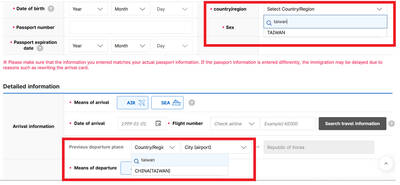
Jason Han says that the e-arrival card spat between South Korea and Taiwan shows that Seoul is signaling adherence to its “one-China” policy, while Taiwan’s response reflects a reciprocal approach. “Attempts to alter the diplomatic status quo often lead to tit-for-tat responses,” the analyst on international affairs tells the Taipei Times, adding that Taiwan may become more cautious in its dealings with South Korea going forward. Taipei has called on Seoul to correct its electronic entry system, which currently lists Taiwan as “China (Taiwan),” warning that reciprocal measures may follow if the wording is not changed before March 31. As of yesterday,
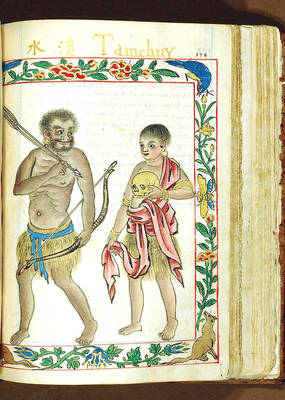
The Portuguese never established a presence on Taiwan, but they must have traded with the indigenous people because later traders reported that the locals referred to parts of deer using Portuguese words. What goods might the Portuguese have offered their indigenous trade partners? Among them must have been slaves, for the Portuguese dealt slaves across Asia. Though we often speak of “Portuguese” ships, imagining them as picturesque vessels manned by pointy-bearded Iberians, in Asia Portuguese shipping between local destinations was crewed by Asian seamen, with a handful of white or Eurasian officers. “Even the great carracks of 1,000-2,000 tons which plied

On Thursday, former Taipei mayor and founder of the Taiwan People’s Party (TPP) Ko Wen-je (柯文哲) was sentenced to 17 years in prison and had his civil rights suspended for six years over corruption, embezzlement and other charges. Seven others related to the case were also handed prison sentences, while two were found not guilty. It has been a bad week for the TPP. On Tuesday, prosecutors charged Chinese immigrant Xu Chunying (徐春鶯) with suspicion of taking part in Beijing-directed election interference. Xu has strong links to the TPP, which once offered her a party list legislator nomination. Tuesday also


 RSS
RSS