


The Portuguese never established a presence on Taiwan, but they must have traded with the indigenous people because later traders reported that the locals referred to parts of deer using Portuguese words. What goods might the Portuguese have offered their indigenous trade partners? Among them must have been slaves, for the Portuguese dealt slaves across Asia.
Though we often speak of “Portuguese” ships, imagining them as picturesque vessels manned by pointy-bearded Iberians, in Asia Portuguese shipping between local destinations was crewed by Asian seamen, with a handful of white or Eurasian officers.
“Even the great carracks of 1,000-2,000 tons which plied between Goa, Macao and Nagasaki might be entirely crewed by Asians and negro slaves,” wrote Charles Boxer, a historian of Portugal’s empire. The Africans, Clifford Pereira observed, were widely feared in Asia and were used as bodyguards by Jesuit missionaries, among others, more mercenary than slave.
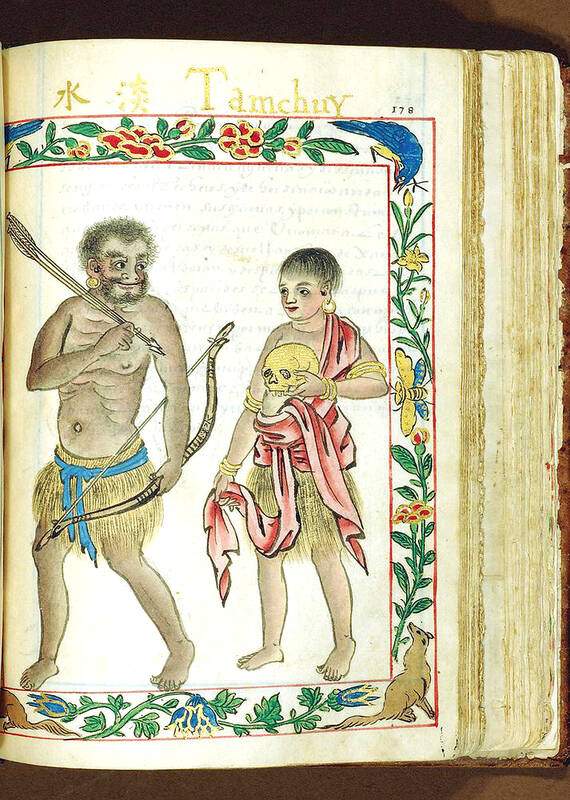
Photo courtesy of Wikimedia Commons
Portuguese traders in Formosa, now lost to history, must have arrived in such ships. Perhaps, like Portuguese ships all over Asia, they kidnapped such locals as they could for slaves. The pirates in the previous century who had bases on Formosa must have raided the island for slaves as well. Despite such abuses, outsiders were often met with friendliness. When the Spanish arrived in northern Taiwan in 1626 they encountered a Japanese Christian who had been living here for years, hiding out from the anti-Christian edicts in Japan. Similarly, when French-speaking Swiss mercenary Elie Ripon, fighting for the Dutch, arrived in Anping (Tainan) in 1623 ahead of the Dutch invasion the following year, he was welcomed by the first indigenous people he met.
SLAVERY
In 2017, research directed by historian Maria Cruz Berrocal of the University of Konstanz in Germany reported the findings of DNA research on skeletons found in a dig site in Keelung Harbor: the Spanish-era skeletons had Asia, European and African genetic signals. What were the Africans doing there? Were they slaves?
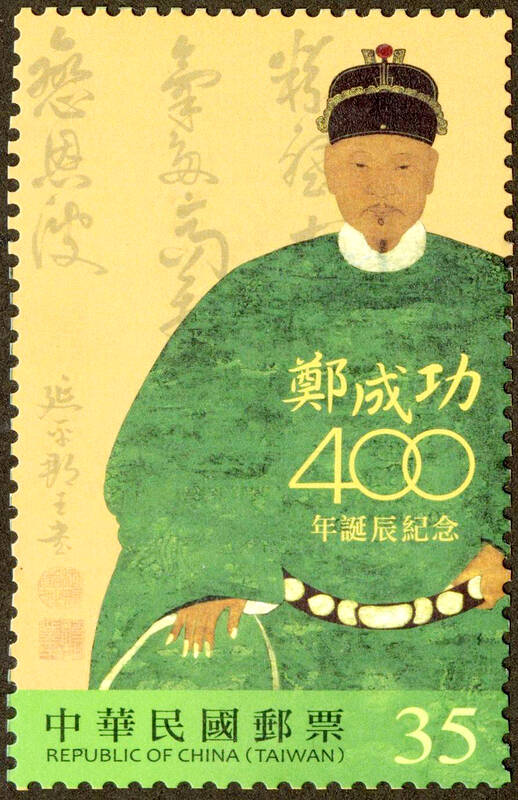
Photo: Tsai Yuan-pei
The Spanish, like almost all societies of their time, engaged in slavery. In 1586, Philip II of Spain forbade slavery simply by declaring the children of slaves to be freemen. This produced demand in the Spanish Philippines for slaves who were not the King’s subjects: Chinese, Koreans, Indians and Malays. The Portuguese jumped at the opportunity to supply Africans to the Philippines, according to Pereira.
“By 1621 Africans constituted about a third of the Intramuros population at Manila,” he writes.
The Spanish brought a large number of people up from Pampanga and Cagayan in the Philippines to aid in constructing their colony in northern Formosa in 1626 (they wound up as Dutch slaves when the Dutch tossed out the Spanish). Simon Green’s excellent PhD thesis observes that a document produced at the trial of the governor of the Philippines for the loss of Formosa lists 233 wage earners in the Spanish colony, not counting priests, servants, natives and slaves, who, it asserts, could number 300. In Spanish minds the term “native” often referred to the Filipinos, not the locals. Green observes that all the information we have about the colony comes from Spanish males of rank.
“We do not have the views of any women or children, or of the surgeon, the carpenter, the blacksmiths or the slaves who were part of the Spanish settlements,” he writes.
Fang Chen-chen (方真真), in a wide ranging study of the slave trade in East Asia, notes that slaves entered Spanish Taiwan both as laborers on land, and as rowers in Spanish ships. Indeed, Fang says, when the Spanish set forth for Taiwan the residents of Manila were ordered to provide one slave rower for every two residents, a testimony to both the abundance of slaves and the short lifespan of rowers.
SLAVES IN THE RECORD
Glimpses of black slaves appear in the records. A ship bound for Taiwan wrecked off Luzon in 1627, and one of the two slave rowers who drowned was described as a “cafre” (African), observes Fang. Jacinto Esquivel, whose account of the Spanish period is an important source for modern scholars, complained in 1632 that northern Taiwan lacked black rowers. A letter of 1641 requests a slave as a personal servant for a military commander in the Spanish colony.
While reading Spanish accounts may give the impression that slaves were not common, the Dutch counted 200 in the Spanish colony in their intelligence reports, Fang says. While a large number of slaves sent to northern Taiwan were Africans, the majority were from the Philippines, an important source of slaves.
For example, innumerable Muslims were enslaved in the course of Spanish campaigns in the south before Cheng Cheng-kung’s (鄭成功, also known as Koxinga, a Dutch corruption of one his titles, 國姓爺) threat to invade Manila compelled the Spanish to withdraw their troops. Not all the slaves were servants or manual laborers. Fang tells of a Bengali surgeon, sent to act as the colony’s doctor.
Fang writes that African slaves found the weather in northern Taiwan difficult and some tried to escape (recall that it frosted in northern Taiwan regularly until the end of the Japanese period as the globe warmed). Those that succeeded disappeared, not just from their captors, but from history. They must have intermarried with the locals, as both African slaves and escapees did in Macao (where the Portuguese gave their African slaves Chinese female slaves as wives), and in the American south, but nothing is known of it.
Africans arrived in other ways. Koxinga brought Africans to Taiwan when he tossed out the Dutch, now a key component of the legends surrounding the pirate lord of Formosa.
Fang writes that in 1630 a Portuguese trader en route from Malacca to Manila with 40 or so African slaves aboard, adults and children, suffered a mishap and ended up in Anping. Indeed, scores of vessels have been wrecked around Taiwan over the centuries. Information on them is of course lost, but with so many Africans on ships in Asia, it’s a good bet some must have reached the shore alive. Perhaps, like the Okinawan, Japanese and western sailors shipwrecked in later centuries, they ended up as slaves in Taiwan.
The narrative of early Africans in Taiwan is a broken and incomplete story, but it helps illuminate the complexities of Taiwanese ancestry and history. It is easy to see how such details are useful in contextualizing the simpleminded narratives of the People’s Republic of China (PRC) of Taiwan as “China” and its people as “Chinese.”
The African slaves were a mix of peoples, with no common culture other than their status as slaves and the color of their skin. They appear to have left no mark on local indigenous culture, if they ever entered it.
And yet, they were here.
Notes from Central Taiwan is a column written by long-term resident Michael Turton, who provides incisive commentary informed by three decades of living in and writing about his adoptive country. The views expressed here are his own.
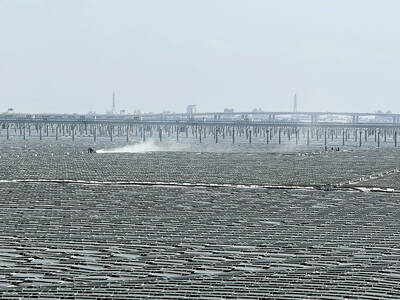
The arithmetic is straightforward and uncomfortable. By the end of 2025, Taiwan had committed itself to a 50-30-20 electricity mix — half natural gas, 30 per cent coal, 20 per cent renewables. The Ministry of Economic Affairs’s (MOEA) own monthly energy reports tell a different story. Natural gas reached 47.8 per cent of generation last year. Coal stood at 35.4 per cent, comfortably above its target ceiling. Renewables came in at 13.1 per cent, well short of the 20 per cent Taipei had pledged a decade earlier. Installed renewable capacity reached roughly half of the 12 gigawatts (GW) the government
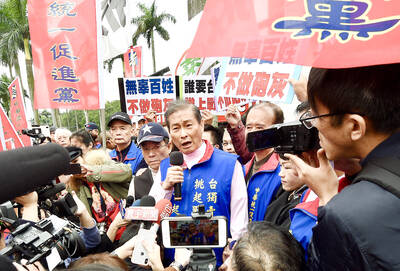
There are shadowy cabals plotting to sell out Taiwan to be annexed by China, by invasion if necessary. Fortunately, they are buffoons. In 2019, former Bamboo Union gangster and founder of the China Unification Promotion Party (CUPP), Chang An-le (張安樂, colorfully known as “White Wolf”), led a protest at the Legislative Yuan against comments made by then-premier Su Tseng-chang (蘇貞昌) that in the event of an attack by China, he would never surrender, but would protect the nation by fighting to the end, even if he only had a broom. Chang had party members bring a wooden casket that they
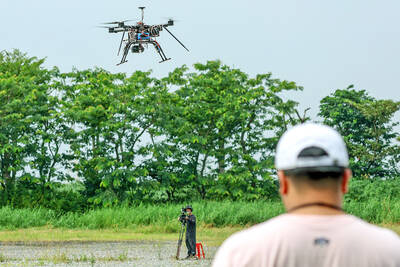
Taiwan’s drone exports are taking off, fuelled by the war in Ukraine, as Taiwanese companies seek a stake in the fast-growing global market for unmanned aerial vehicles (UAV). Low-cost drones used for reconnaissance and strikes are in high demand as governments around the world boost defense spending in the face of intensifying conflicts. A relative new player in the increasingly competitive industry, Taiwan’s pitch is to be an “Asian hub” for the production of UAVs and components free of Chinese materials, or “non-red.” That means its UAVs can be up to three times more expensive than their Chinese competitors, like the world’s biggest
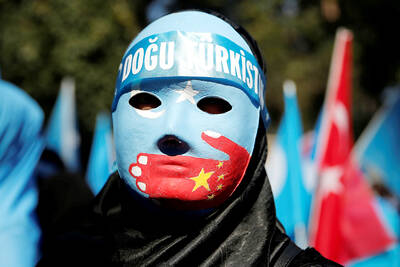
It seems every few days one bumps into one of those “real man” comments in which Taiwan is urged to “face reality” or similar, and “make a deal,” with the speaker implying that soon it will be too late. “Deal” advocates always present themselves as having a superior grip on reality, and the manly ability to make the “hard choice.” Their testosterone-laden language often echoes that of Taiwan sellout advocates. Note that such commentary always specifies a process (“make a deal, work with, make progress”), never the end state of what occupation by a violent authoritarian colonialist state will entail. In


 RSS
RSS