


The Centers for Disease Control (CDC) yesterday reported the first case of a new COVID-19 subvariant — BA.3.2 — in a 10-year-old Singaporean girl who had a fever upon arrival in Taiwan and tested positive for the disease.
The girl left Taiwan on March 20 and the case did not have a direct impact on the local community, it said.
The WHO added the BA.3.2 strain to its list of Variants Under Monitoring in December last year, but this was the first imported case of the COVID-19 variant in Taiwan, CDC Deputy Director-General Lin Ming-cheng (林明誠) said.
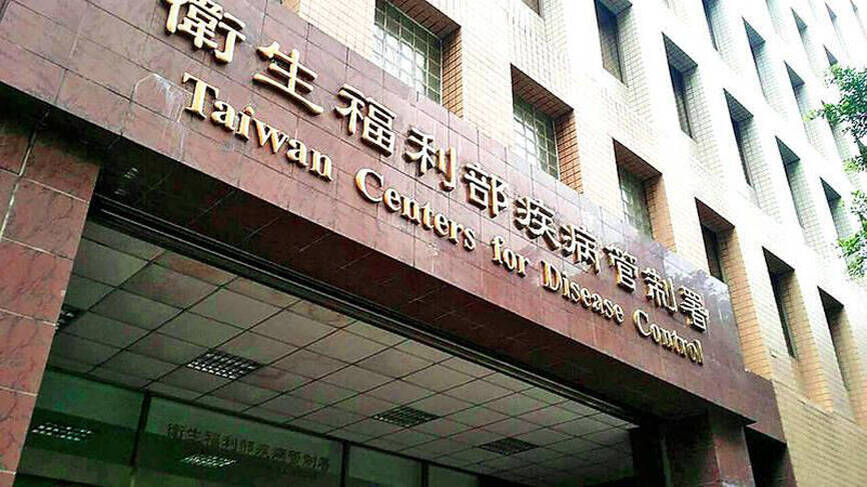
Photo: Lin Huei-chin, Taipei Times
The girl arrived in Taiwan on March 14, and was found to have a fever of 38.5°C upon entry, so she was intercepted by quarantine personnel at Taiwan Taoyuan International Airport, he said.
The girl agreed to provide a saliva sample for testing, which came back positive for the COVID-19 variant, Lin said.
The girl had been in Singapore for 14 days before arriving in Taiwan, where she stayed until March 20, Lin said, adding that her activities were primarily centered around Taipei.
The girl had not had a COVID-19 vaccine shot in the past 12 months, and after quarantine personnel conducted a travel, occupation, contact and cluster, or TOCC, assessment, they issued a notice instructing her to seek medical attention within 24 hours, the CDC said.
No community transmission occurred during her stay, and there is no need for people to be concerned about contact risks, it said.
The global prevalence of infections with the BA.3.2 variant had initially grown to about 3 or 4 percent, but it has not further risen and has not become a dominant strain, Lin said.
There is no evidence the BA.3.2 variant causes a significant increase in transmissibility or the risk of developing severe illness, although it remains a “variant under monitoring,” he said.
The WHO has said that existing COVID-19 vaccines remain effective at preventing severe illness from the new variant, so people do not need to panic, he said.
However, high-risk groups, including those aged 65 or older and people with chronic diseases, are advised to get vaccinated, he said.
Regarding global COVID-19 activity, Lin said it is declining in Japan, but infections in Okinawa have risen by 1.2 times in the past four weeks, which requires continued attention.
The CDC will continue tracking trends of COVID-19 variants through border surveillance to ensure that local epidemic risks remain under control, he said.
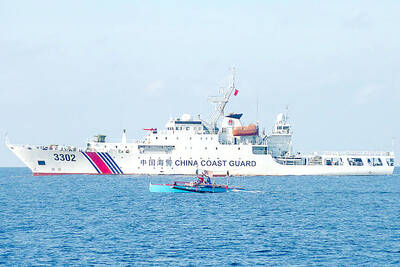
EXPANSIONIST: China deploys an average of 40 to 50 warships and coast guard vessels daily in the South China Sea, despite pledges not to militarize the region, an official said China is attempting to expand its influence across the First Island Chain and increase pressure on Japan by sending coast guard vessels into waters off of Taiwan under the pretext of maritime negotiations with Japan and the Philippines, a national security official said yesterday. China’s recent actions in the waters east of Taiwan and Japan and the Philippines’ exclusive economic zones (EEZ) are attempts to establish dominance in First Island Chain waters, said the official who declined to be named, adding that this is “expansion disguised as law enforcement.” Framing China’s actions solely as a cross-strait issue is a serious misjudgment that
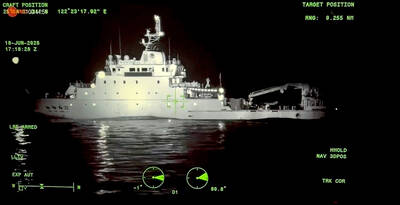
EXCUSES: Beijing is using government and research vessels as a pretext to harass the nation and enter its EEZ, and engage in ‘hegemonic expansion,’ the coast guard said The Coast Guard Administration yesterday said it drove away Chinese oceanographic research vessel Xiang Yang Hong 22 (向陽紅33) from restricted waters after warning it that it was in Taiwan’s exclusive economic zone (EEZ). The Chinese vessel entered restricted waters off the coast of Yilan County’s Suao (蘇澳) at 11:35pm on Thursday, the coast guard said, adding that it dispatched the Lanyu patrol vessel and the boat PP-10077 to shadow the Chinese ship and issue radio warnings ordering it to leave. China has no sovereignty over waters off Taiwan’s east coast, Lanyu’s crew told Xiang Yang Hong 22 over the radio, and demanded
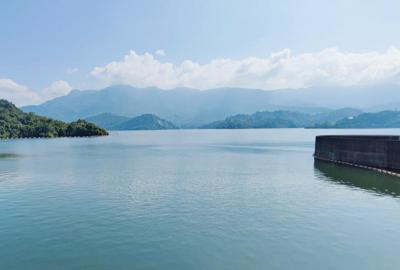
Several major reservoirs are estimated to have received 590 million tonnes of water inflow from June 4 to this morning, with storage levels at Wushantou Reservoir exceeding 50 percent and Zengwen Reservoir approaching 30 percent as of 9am today, data from the Water Resources Agency showed. Of the estimated 590 million tonnes, 450 million have already been stored in reservoirs, the data showed. As of 9am today, Baoshan Reservoir storage levels reached 100 percent, while Baoshan Second Reservoir, Yongheshan Reservoir and Techi Reservoir all exceeded 90 percent, data on the Water Resources Agency’s Web site showed. In addition, the Shimen Reservoir is at

BAIT AND SWITCH: Allowing KMT-run counties to sell to China while the threat of abrupt cancelations hangs overhead is another form of coercion, officials said Beijing is using agricultural purchase offers announced during the Straits Forum to deepen Taiwan’s dependence on the Chinese market, a Taiwanese official said yesterday as they criticized the Taitung County commissioner’s participation in the initiative. During the Straits Forum held in Xiamen on Saturday, Chinese officials announced a sales and purchase agreement for agricultural products from some counties led by the Chinese Nationalist Party (KMT). Taitung County Commissioner Yao Ching-ling (饒慶鈴), who was barred from attending the event in person by the Mainland Affairs Council, participated via video. Under the agreement, China would purchase atemoyas, pomeloes, tea and grouper harvested in Taitung,


 RSS
RSS