


The government must carefully consider the national security implications of building a bridge connecting Kinmen County and Xiamen, China, the Public Construction Commission (PCC) said yesterday.
PCC Commissioner Derek Chen (陳金德), who is also a minister without portfolio, made the remarks in a meeting of the legislature’s Transportation Committee, after Democratic Progressive Party Legislator Hsu Fu-kuei (徐富癸) asked about China’s proposal of new infrastructure projects to further connect Kinmen and Lienchiang (Matsu) counties with Xiamen.
China unveiled the bridge plan, along with nine other policies for Taiwan, on Sunday, the last day of Chinese Nationalist Party (KMT) Chairwoman Cheng Li-wun’s (鄭麗文) visit across the Strait. She on Friday met with Chinese President Xi Jingping (習近平).
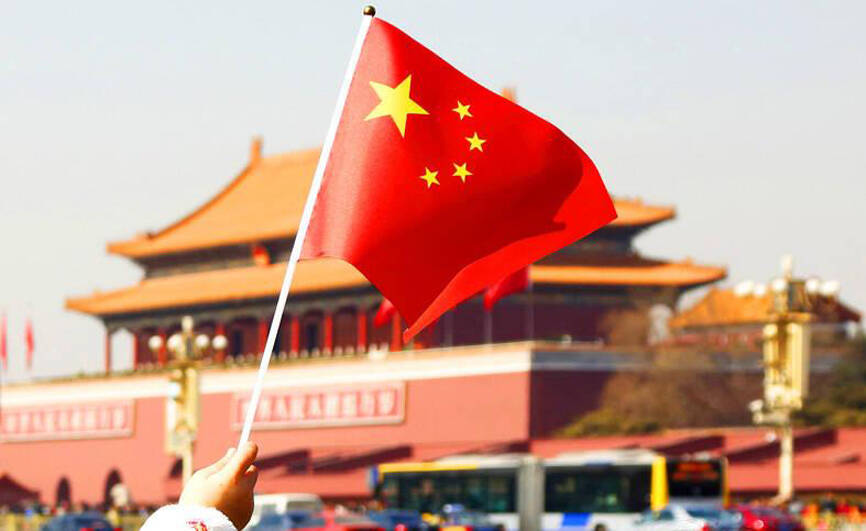
Photo: Bloomberg
The projects, known as the “New Four Infrastructure Links,” include increased connectivity in water, electricity and gas between Kinmen and Xiamen, as well as the bridge. China was reported to have begun construction of the bridge in Xiamen.
The PCC oversees public construction projects in Taiwan, and the bridge would be a highly political issue, Chen said.
“Building roads or bridges is a good thing, but can only proceed when the two countries are on equal and friendly terms, and have developed mutual trust,” he said.
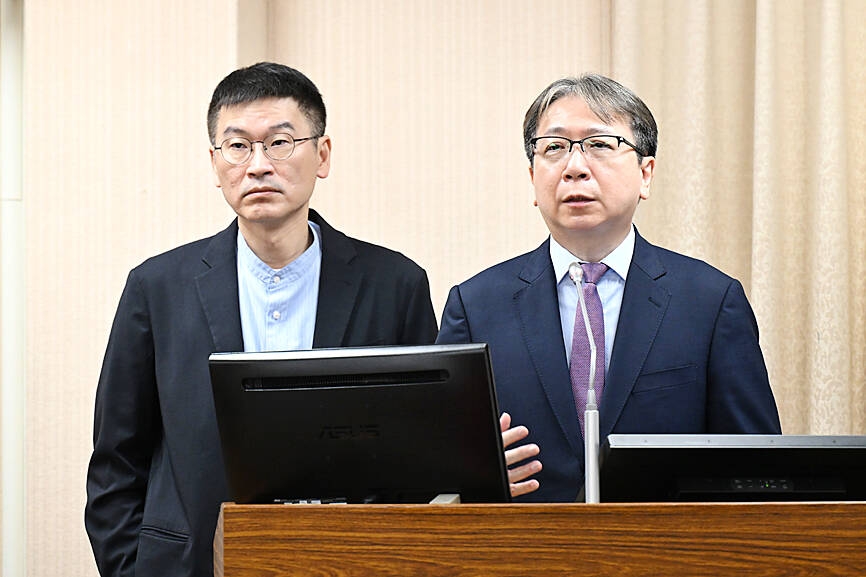
Photo: Chen Yi-kuan, Taipei Times
“The bridge would be a positive development if China has the benefit of the people in mind and acknowledges Taiwan’s sovereignty over its territories. However, if it continues to threaten to overtake Taiwan by force and shows no sign of improvement, we would have to carefully evaluate the project to ensure national security,” Chen added.
Kinmen is already allowed to access water from Xiamen, but the majority of its water comes from its own seawater desalination plant. The raw water from China’s Fujian Province needs to be treated before it can be consumed.
At a meeting of the legislature’s Foreign Affairs and National Defense Committee, Deputy Minister of the Mainland Affairs Council Liang Wen-chieh (梁文傑) also addressed China’s latest measures.
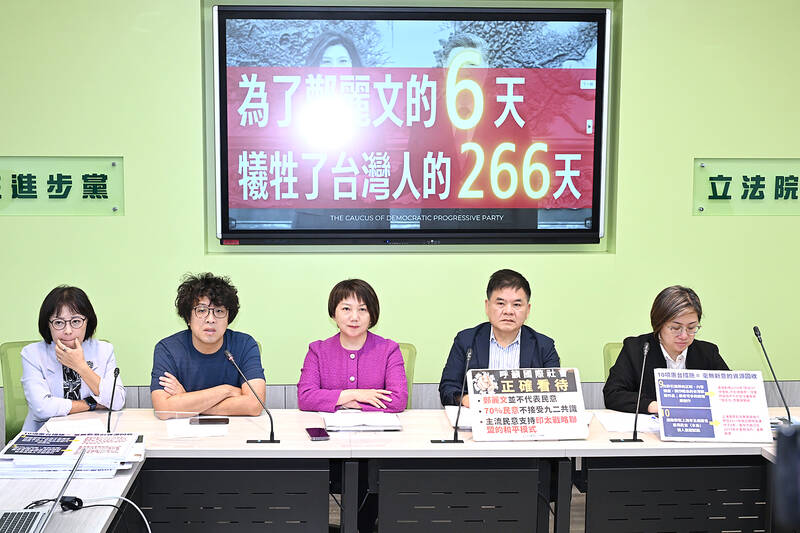
Photo: Chen Yi-kuan, Taipei Times
He said that only one policy was new, which involved expediting sales of Taiwan-caught distant-water fishery products in China.
Regarding allowing individual travelers from Shanghai and China’s Fujian Province to visit Taiwan, Liang said that any tourism exchange across the Taiwan Strait requires bilateral negotiations, whether it involves tour groups or individual tourists.
“We have not received any request for negotiations from Beijing on tourism-related matters,” he said.
Even though Beijing announced after last year’s Shanghai-Taipei City Forum that Shanghai residents are allowed to visit Kinmen and Lienchiang counties, the Shanghai City Government has yet to announce when residents could start applying for travel permits to Taiwan, Liang said.
All of the measures are empty promises that have not been delivered, he said.
As to the proposal of allowing Kinmen residents to use the Xiamen Xiangan International Airport once it is finished, Liang said China was attempting to encourage Kinmen residents to fly overseas through the airport rather than through Taiwan Taoyuan International Airport.
“We are more concerned about aviation safety issues that might arise from the nearly overlapping airspace between Kinmen Airport and Xiangan airport,” he said.
By announcing preferential policies, Beijing scored a major victory in its “united front” efforts against Taiwan and in propaganda aimed at the international community, Liang said.
Cheng risked misleading the international community by pledging to propose a framework of peace governing cross-strait relations, he added.
“In effect, Beijing traded a simple dish, like a bowl of tempura, and, in return, received a luxury Chinese delicacy like Buddha’s Temptation,” he said.
Speaking to reporters before the committee meeting yesterday, National Security Bureau Director-General Tsai Ming-yen (蔡明彥) said that Taiwan’s engagement with China on looser controls proposed by Beijing for trade and tourism should be led by the government rather than private party-to-party contacts.
Only the government should be assessing, planning and driving relevant exchanges, he said.
So-called goodwill measures from China are historically brought up ahead of elections, and are concentrated on specific counties and cities, or companies, industries or individuals, Tsai said.
“It has already become a tool the Chinese communists use to interfere in Taiwan’s elections,” he said.
Taiwan is to hold local elections in November.
Additional reporting by Reuters

A magnitude 6.1 earthquake struck off the coast of Yilan County at 8:39pm tonight, the Central Weather Administration (CWA) said, with no immediate reports of damage or injuries. The epicenter was 38.7km east-northeast of Yilan County Hall at a focal depth of 98.3km, the CWA’s Seismological Center said. The quake’s maximum intensity, which gauges the actual physical effect of a seismic event, was a level 4 on Taiwan’s 7-tier intensity scale, the center said. That intensity level was recorded in Yilan County’s Nanao Township (南澳), Hsinchu County’s Guansi Township (關西), Nantou County’s Hehuanshan (合歡山) and Hualien County’s Yanliao (鹽寮). An intensity of 3 was
Instead of focusing solely on the threat of a full-scale military invasion, the US and its allies must prepare for a potential Chinese “quarantine” of Taiwan enforced through customs inspections, Stanford University Hoover fellow Eyck Freymann said in a Foreign Affairs article published on Wednesday. China could use various “gray zone” tactics in “reconfiguring the regional and ultimately the global economic order without a war,” said Freymann, who is also a nonresident research fellow at the US Naval War College. China might seize control of Taiwan’s links to the outside world by requiring all flights and ships entering or leaving Taiwan
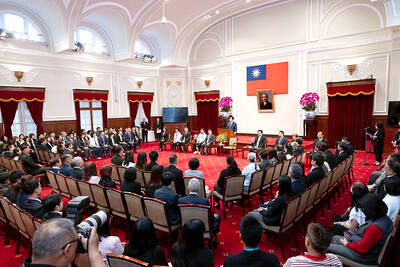
The next minimum wage hike is expected to exceed NT$30,000, President William Lai (賴清德) said yesterday during an award ceremony honoring “model workers,” including migrant workers, at the Presidential Office ahead of Workers’ Day today. Lai said he wished to thank the awardees on behalf of the nation and extend his most sincere respect for their hard work, on which Taiwan’s prosperity has been built. Lai specifically thanked 10 migrant workers selected for the award, saying that although they left their home countries to further their own goals, their efforts have benefited Taiwan as well. The nation’s industrial sector and small businesses lay
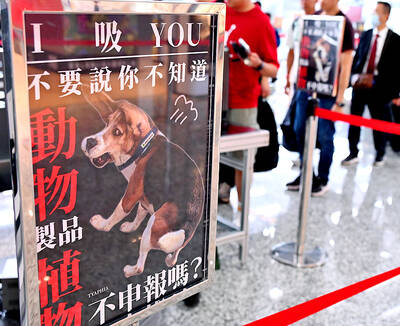
Quarantine awareness posters at Taiwan Taoyuan International Airport have gone viral for their use of wordplay. Issued by the airport branch of the Animal and Plant Health Inspection Agency, the posters feature sniffer dogs making a range of facial expressions, paired with advisory messages built around homophones. “We update the messages for holidays and campaign needs, periodically refreshing materials to attract people’s attention,” quarantine officials said. “The aim is to use the dogs’ appeal to draw focus to quarantine regulations.” A Japanese traveler visiting Taiwan has posted a photo on X of a poster showing a quarantine dog with a


 RSS
RSS