


Instead of focusing solely on the threat of a full-scale military invasion, the US and its allies must prepare for a potential Chinese “quarantine” of Taiwan enforced through customs inspections, Stanford University Hoover fellow Eyck Freymann said in a Foreign Affairs article published on Wednesday.
China could use various “gray zone” tactics in “reconfiguring the regional and ultimately the global economic order without a war,” said Freymann, who is also a nonresident research fellow at the US Naval War College.
China might seize control of Taiwan’s links to the outside world by requiring all flights and ships entering or leaving Taiwan to first stop at a Chinese port in Fujian Province, the report said.
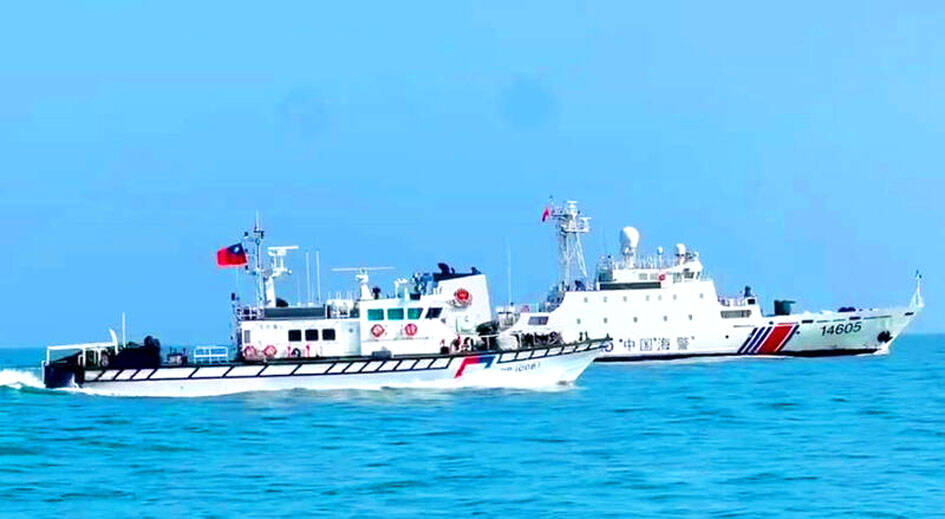
Photo courtesy of the Coast Guard Administration
This quasi-blockade, disguised as Beijing exercising customs law, would allow people and goods to flow freely, with exceptions such as weapons components, US military advisers and Taiwan Semiconductor Manufacturing Co (TSMC) employees, it said.
As the move would not rupture critical supply chains, Taiwan’s semiconductors could still move freely to the US via China, although it would signify that Washington had been “checkmated,” it said.
Washington would ultimately bear the burden of escalation, a contingency for which it lacks strategies related to financial markets, economic response with allies, resupplying Taiwan or evacuating US and allied citizens, it said.
The US would be caught between destroying TSMC fabs to prevent China from accessing them — a devastating economic blow — or allowing China to seize the advantage in cutting-edge artificial intelligence (AI) capabilities, it added.
The quasi-blockade would also have wider regional impacts, leaving Japan, the Philippines and South Korea vulnerable to similar coercion, it added.
The US and other Western countries must also pre-determine evacuation plans for the nearly 1 million foreign nationals in Taiwan, particularly as the effort would likely take more than a month, the article said.
Washington would face executing four contradictory plans at once: evacuating US citizens, reassuring Taiwan that it should not capitulate, reassuring financial markets and warning Beijing not to push further, it said.
Freymann suggested a four-pillar approach for Washington to respond to a “gray zone” crisis.
Politically, the US must deepen engagement with Taiwan through trade and investment agreements, energy security partnerships, public reassurances of continued support and ensuring Taiwan invests in its own defense, he said.
Militarily, it should prioritize asymmetric capabilities, including long-range munitions, drones, undersea warfare, electronic warfare and naval mines, while rebuilding logistics systems and industrial bases, he said.
Strategically, the US must keep modernizing its nuclear forces and delivery systems, deploy more intermediate-range capabilities in the Indo-Pacific region, and explore nuclear-sharing arrangements with Japan and South Korea, Freymann said.
It should further develop AI-enabled weaponry, such as cyberweapons, he added.
Economically, Washington must show China that the US and its allies could leverage a Taiwan crisis to their advantage, he said.
The four pillars would convince Chinese President Xi Jinping (習近平) that a Taiwan crisis would not just be militarily costly, but “politically isolating, economically ruinous and strategically futile,” he added.
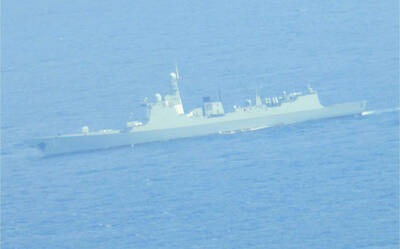
The military has spotted two Chinese warships operating in waters near Penghu County in the Taiwan Strait and sent its own naval and air forces to monitor the vessels, the Ministry of National Defense (MND) said. Beijing sends warships and warplanes into the waters and skies around Taiwan on an almost daily basis, drawing condemnation from Taipei. While the ministry offers daily updates on the locations of Chinese military aircraft, it only rarely gives details of where Chinese warships are operating, generally only when it detects aircraft carriers, as happened last week. A Chinese destroyer and a frigate entered waters to the southwest
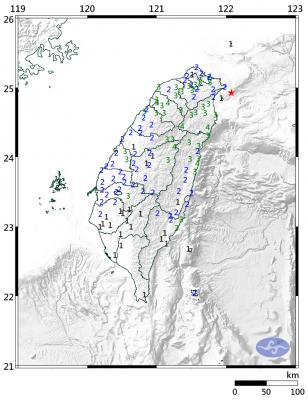
A magnitude 6.1 earthquake struck off the coast of Yilan County at 8:39pm tonight, the Central Weather Administration (CWA) said, with no immediate reports of damage or injuries. The epicenter was 38.7km east-northeast of Yilan County Hall at a focal depth of 98.3km, the CWA’s Seismological Center said. The quake’s maximum intensity, which gauges the actual physical effect of a seismic event, was a level 4 on Taiwan’s 7-tier intensity scale, the center said. That intensity level was recorded in Yilan County’s Nanao Township (南澳), Hsinchu County’s Guansi Township (關西), Nantou County’s Hehuanshan (合歡山) and Hualien County’s Yanliao (鹽寮). An intensity of 3 was
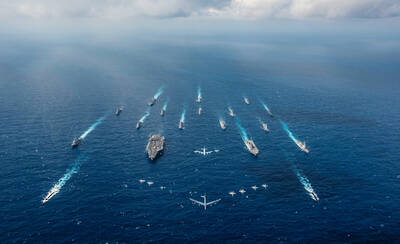
Japanese Prime Minister Sanae Takaichi’s comment last year on Tokyo’s potential reaction to a Taiwan-China conflict has forced Beijing to rewrite its invasion plans, a retired Japanese general said. Takaichi told the Diet on Nov. 7 last year that a Chinese naval blockade or military attack on Taiwan could constitute a “survival-threatening situation” for Japan, potentially allowing Tokyo to exercise its right to collective self-defense. Former Japan Ground Self-Defense Force general Kiyofumi Ogawa said in a recent speech that the remark has been interpreted as meaning Japan could intervene in the early stages of a Taiwan Strait conflict, undermining China’s previous assumptions
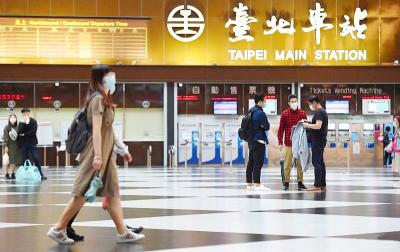
Taiwan Railways Corp (TRC) today announced that Shin Kong Mitsukoshi has been selected as the preferred bidder to operate the Taipei Railway Station shopping mall, replacing the current operator, Breeze Development Co Ltd. Among eight qualified firms that delivered presentations and were evaluated by a review committee, Shin Kong Mitsukoshi was ranked first, while Breeze was named the runner-up, the rail company said in a statement. Contract negotiations are to proceed in accordance with regulations, it said, adding that if negotiations with the top bidder fail, it could invite the second-ranked applicant to enter talks. Breeze in a statement today expressed doubts over


 RSS
RSS