


Just after 6am, I walked up to the ticket gate at Taipei Main Station and entered the Taiwan Railway platform without scanning any ticket; instead, I flashed the Sanrio Fun Rail pass on my phone to the gate worker and was admitted. I found my train and prepared to board. My destination? This very same station.
I was embarking on a 13-hour journey on one of two round-the-island trains operated by ezTravel. They run each day, one counterclockwise around the island and one clockwise. They differ in a number of ways from an ordinary Taiwan Railway train and can make for a memorable excursion with friends or family.
The passenger cars are each themed according to a different Sanrio character. Bright colors cover the floor, walls, seats and ceilings, in a style you might call either gaudy or cute, depending on how much of a Sanrio fan you are. There are only three seats per row — two on one side and one on the other — and there was enough room to fully extend my legs. Essentially, every passenger is getting what would be business class seats on an ordinary TR train.
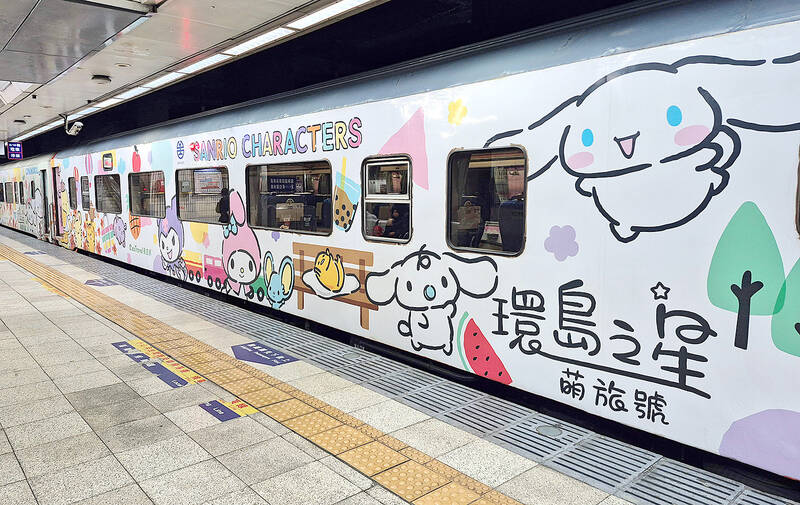
Photo: Tyler Cottenie
After the 6:22am departure, breakfast was served at our seats and drink service followed, airline style. This first meal was a bit of a disappointment. Opening the quaint Sanrio characters box, I found a croissant with jam inside, as well as a small mass-produced pastry, and the cheapest, most boring sandwich on the market: thin slices of egg and ham in white bread. Not the most glorious welcome but, fortunately, the food on the rest of the trip was more appetizing.
EXPLORING THE TRAIN
On the back of each seat is a QR code that leads you to a collection of online files introducing the train and all its amenities. There is a high-quality English version of each one, good enough to allow someone who does not speak any Mandarin to figure out how to make the most of their time on the train. I perused this material as I ate my breakfast and prepared to explore the rest of the train.
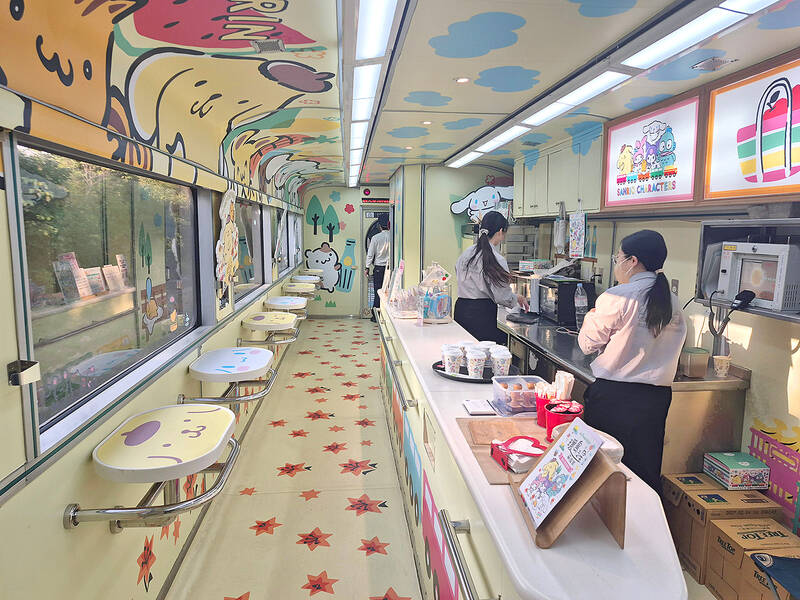
Photo: Tyler Cottenie
Leaving the passenger carriages behind, I entered the bar carriage, which is continuously staffed as all passengers on the train are entitled to unlimited free soda, juice, coffee or tea at any time during the journey. It’s just one of the small perks of a ticket. I sipped on a second coffee here while enjoying the view of the foothills of Miaoli through the wide windows opposite the bar.
Continuing forward, I entered the part of the train that makes this a quintessentially Taiwanese experience: the karaoke carriage. This was in nearly constant use throughout my journey but, thankfully, the sound did not carry into the adjacent carriages.
Right at the front, behind the locomotive, is the activity carriage. One side is lined with tables and seating for groups of four, while the other side has single and double seats facing straight out the window, ideal for watching the Taiwanese landscape roll by.
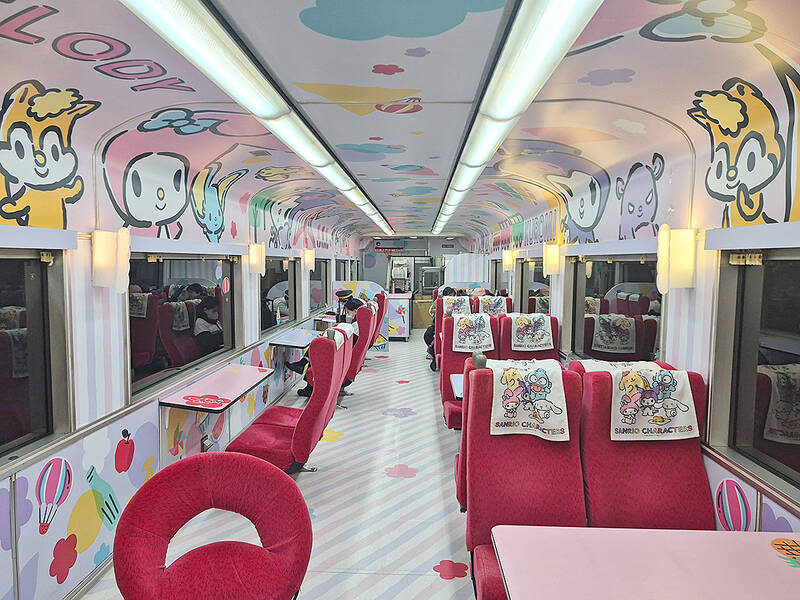
Photo: Tyler Cottenie
This ended up being my favorite place to sit on our 13-hour trip around the island. Each table also has a power outlet under it, so I was able to plug in my laptop and phone and keep them charged for the duration of the trip. All the way down western Taiwan, I caught up on some work, while taking frequent breaks to get another complimentary drink and enjoy the views of Changhua’s Bagua Mountain (八卦山), the rice fields of Yunlin and the plains of Chiayi and Tainan.
OPTIONS TO SUIT EVERYONE
The train does not make frequent stops, skipping Miaoli altogether and making only one stop per county or city the rest of the way to Kaohsiung. Not having the frequent shuffling of dozens of passengers getting on and off makes it a more pleasant journey.
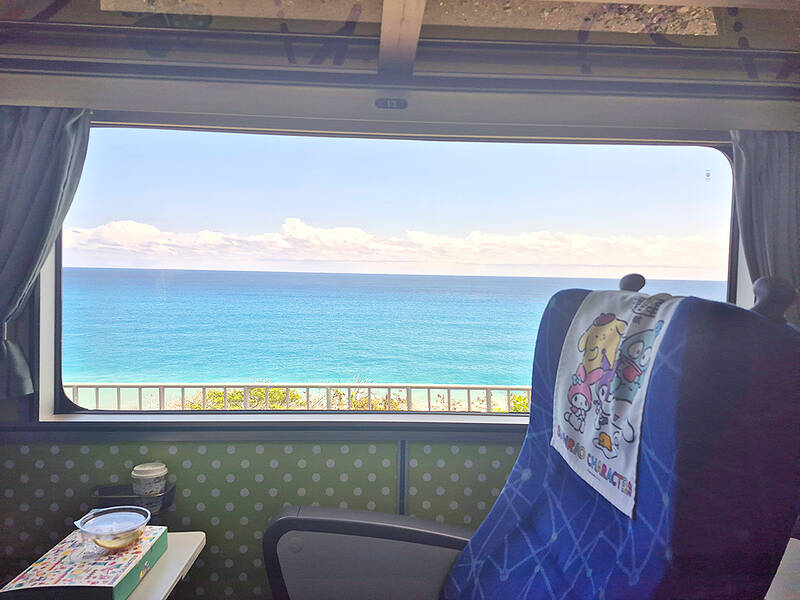
Photo: Tyler Cottenie
The people getting on or off at these intermediary stops were either on a day-trip doing only a partial loop, or were completing a full loop of the island over multiple days with some sightseeing and hotel stays along the way. The booking options for this train are quite flexible.
The operator offers multi-day tours that include a combination of train travel, hotel stays and optional city tours. After getting off at a certain city, you can enjoy a day of sightseeing and then get back on the same train at the same time the following day.
If you already need to travel from, say, Hsinchu to Taitung, you can also just book that section and enjoy a radically different experience than a standard TR train ride.
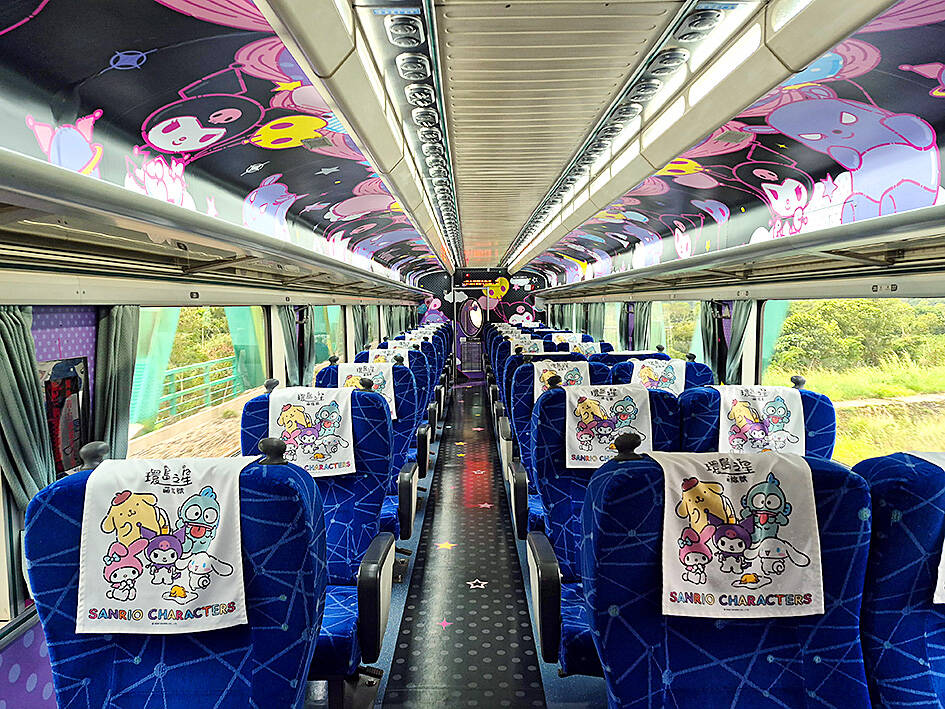
Photo: Tyler Cottenie
Regardless of how long you ride the train, you will get at least a meal or snack along the way and the opportunity to participate in DIY activities here in the activity carriage. I saw people beside me making pencil cases with embroidered patches in the morning, and then custom metal badges in the afternoon. The clockwise train offers Hakka pounded tea and floating oil vases at the moment. It’s great fun for children and provides everyone with a unique souvenir for the day.
As we approached southern Pingtung County, I headed back to my seat to enjoy the morning snack, and the view from my seat on the ocean side of the train. After Fangliao Station, lunch was delivered and the train finally met the coast of the Taiwan Strait, its gorgeous blue-green expanse filling my view on the right. After wrapping around to the east coast, the Taiwan Strait was replaced by the Pacific Ocean.
THE CLIMACTIC EAST COAST
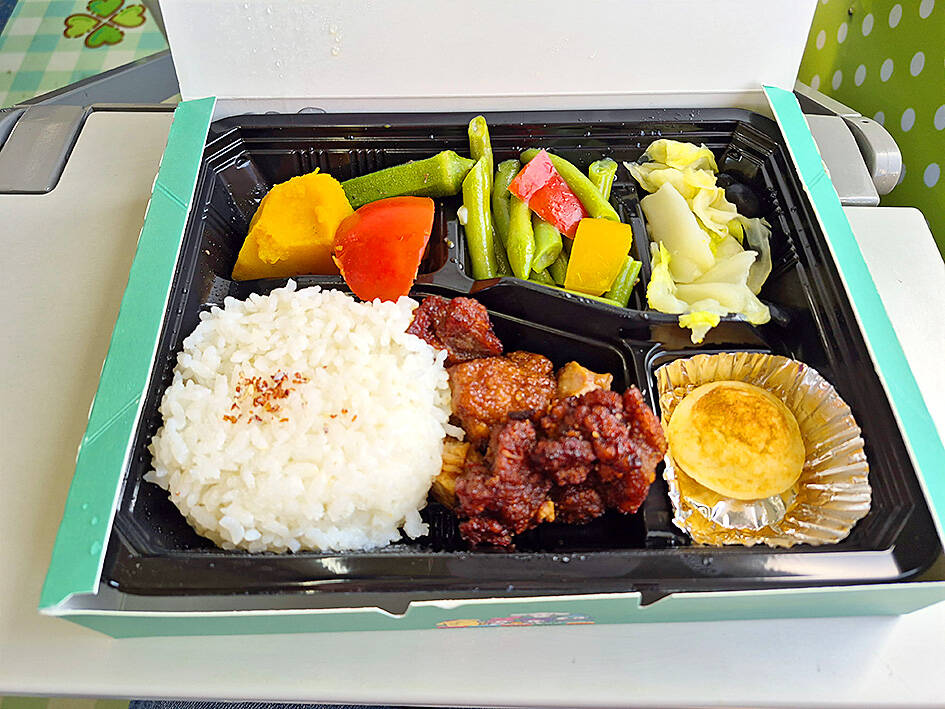
Photo: Tyler Cottenie
This is perhaps the most beautiful section of the railway, and because this is a tourist train, the engineer is able to slow it down far more than regular TR traffic, extending the time on this magical section. Miles and miles of sandy beach with palm trees line the coast, the ocean glows a rich blue on sunny days, and with good visibility, Green Island and Orchid Island can be seen on the horizon.
The longest stop the train makes is at Taitung Station, where passengers have a half-hour to get out and shop at the stalls in the station lobby. When we arrived, the clockwise Sanrio Fun Rail (which runs from 8:05am to 9:42pm) was parked here, as well as the Breezy Blue tourist train headed for Fangliao Station. For train lovers, seeing all three of these themed trains in one place is a worthy photo opportunity.
The remaining daylight is spent plying the East Rift Valley up to Hualien, with rice paddies and mountains on both sides of the train, complemented by an afternoon snack. Dinner after Hualien was attractively presented and used a variety of fresh, local ingredients. There were king oyster mushrooms, zucchini, shrimp, another fruit cup and a tube of bamboo rice.
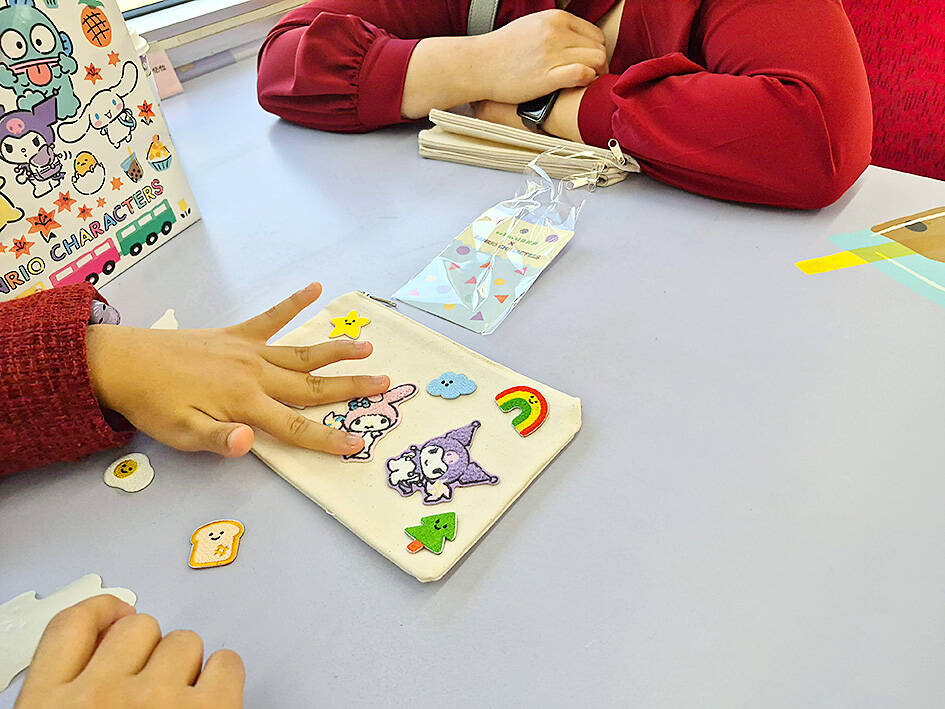
Photo: Tyler Cottenie
After dinner, the train slows to a crawl again for a view of the marble Cingshuei Cliffs (清水斷崖) and then it’s happy hour, when unlimited free beer is served in the bar carriage. The beer is served in the same paper cups as all the other drinks on the train, another area where they are clearly trying to cut corners, but free beer is not worth complaining about.
There were 117 passengers on the train throughout the day, including nine who did the entire loop in a day like me. Surprisingly, I saw no one else at all taking advantage of happy hour. The nine who completed the loop in a single day were also presented with a certificate celebrating this “achievement.” It was an inexpensive but thoughtful little gift to commemorate an unusual day of travel.
After a final stop in the hot spring town of Jiaosi (礁溪), the train made its way back to Taipei, stopping first at Nangang Station and then at Taipei Main Station at 7:33pm, just over 13 hours after departure. For NT$3,590, I had managed to travel absolutely nowhere, but got to experience Taiwan and its railways in a new and interesting way. For more information, visit: trip.eztravel.com.tw/activity/formosa/express/ (Chinese only).
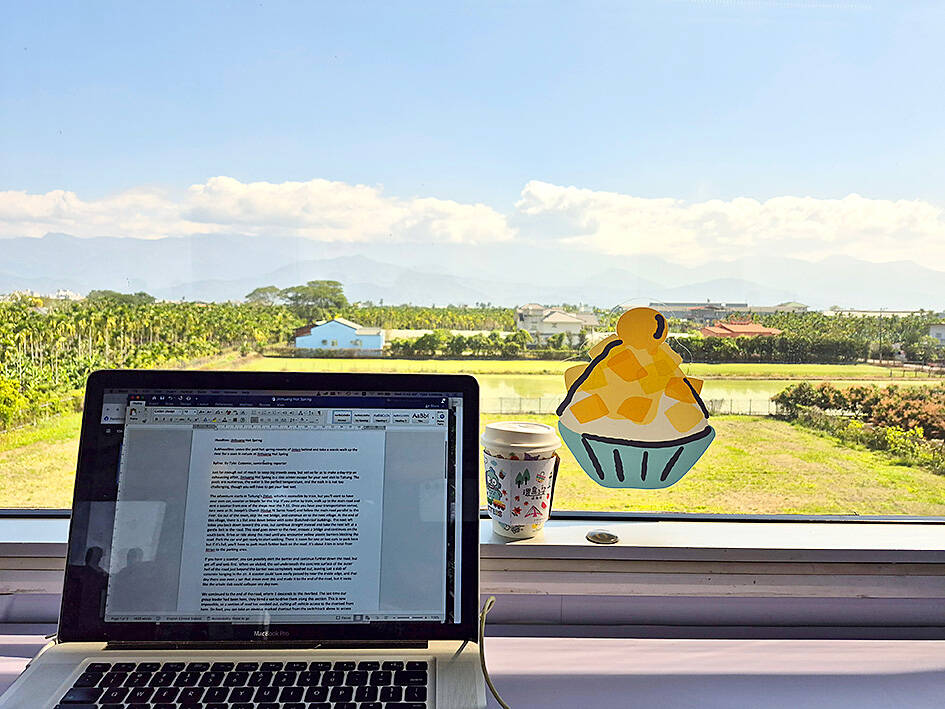
Photo: Tyler Cottenie
Taiwan’s renewable shortfall is a problem of execution, not resources. Japan’s long-cycle, joined-up energy planning is the model worth studying — but what Taiwan can borrow is the institutional machinery, not the politics. When Nvidia CEO Jensen Huang (黃仁勳) used his visit to Taipei last month to warn that the country needs far more electricity, he was naming a constraint its own planners already know well: Taiwan Power Co (Taipower, 台電) expects demand from the semiconductor and artificial intelligence (AI) sector alone to exceed 5 gigawatts (GW) by 2030. The harder question is not whether to build more capacity but which
In a projection room, visitors at the Re: Battle City exhibition at Kaohsiung’s Neiwei Arts Center are invited to sit and watch a 20-minute animated movie. Artist Chang Li-ren (張立人) created the movie with dolls he made by molding paper into crude, painted figurines. The dolls interact in a detailed and realistic Taiwanese cityscape. Outside the projection room, visitors can wander around a massive model of the city. A sizeable crowd happily takes pictures of what looks like the best dollhouse in Taiwan: the same props that were used to tell the story of the country’s descent into techno-dictatorship in the movie. The
This column has often observed that the purpose of government subsidy programs is to preserve the system that is causing the problem while still giving the appearance of doing something. In no area of public policy is this more obvious than in the birth rate collapse. Last week the Democratic Progressive Party (DPP) and the legislature’s two pro-China parties, the Chinese Nationalist Party (KMT) and the Taiwan People’s Party (TPP), were deadlocked over a subsidy program for children. The DPP’s proposal, a component of the 18-point plan to boost birth rates President William Lai (賴清德) announced last month, offers NT$5,000 a

The last time Taiwan’s foreign correspondents were invited to a special briefing with a sitting president was in 2015. That was two presidents ago under Ma Ying-jeou (馬英九). But Thursday morning, President William Lai (賴清德) welcomed the nation’s international press corps warmly, speaking specifically to the theme of press freedom. Lai addressed Taiwan’s foreign press corps saying, “You live, work and report in Taiwan.” “Thank you for your professionalism and upholding the spirit of press freedom,” he continued. “As you engage in your work of journalism, you let the world see Taiwan.” The timing of this event, hosted by the Taiwan Foreign


 RSS
RSS