


President William Lai (賴清德) on Nov. 25 last year announced in a Washington Post op-ed that “my government will introduce a historic US$40 billion supplementary defense budget, an investment that underscores our commitment to defending Taiwan’s democracy.” Lai promised “significant new arms acquisitions from the United States” and to “invest in cutting-edge technologies and expand Taiwan’s defense industrial base,” to “bolster deterrence by inserting greater costs and uncertainties into Beijing’s decision-making on the use of force.”
Announcing it in the Washington Post was a strategic gamble, both geopolitically and domestically, with Taiwan’s international credibility at stake. But Lai’s message was exactly what leaders wanted to hear in capitals from Washington to Canberra, from Tokyo to Ottawa and from Manila to Brussels. A steady stream of delegations from friendly nations have been encouraging the legislature to pass the budget, with varying degrees of bluntness.
The Americans have been the most vocal. Certainly, they are happy at “significant new arms acquisitions from the US,” but more crucially, they want to avoid a war with China, and if it comes to war, to be able to win it. Strong deterrence from Taiwan reduces the chances of war, and if Beijing attacks or blockades, the nation is in a better position to hold out until American forces arrive.
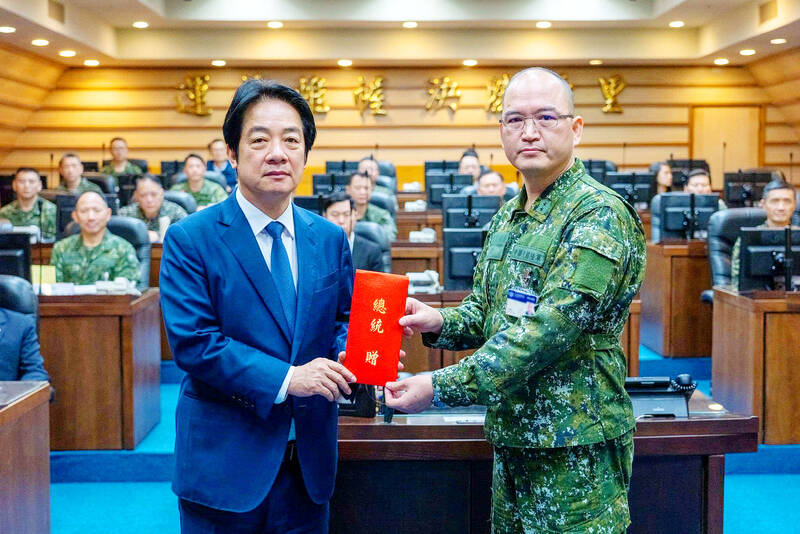
Photo: screen grab from William Lai’s Facebook
Taiwan has strong bipartisan support in Washington, but supporters are concerned about Taiwan’s ability to defend itself — and the unpredictability of US President Donald Trump.
At a tabletop exercise early last month organized by National Chengchi University and Chinese Nationalist Party (KMT) officials, former US Navy rear admiral — and noted Taiwan military expert — Mark Montgomery, expressed the concerns most bluntly: “You’re fiddling while Rome burns.”
At a Future Maritime Defense Symposium at the Legislative Yuan on April 7, Montgomery starkly warned lawmakers that US President Donald Trump could “collectively punish” Taiwan for not raising defense spending to 5 percent of GDP in the next few years. He said Trump doesn’t care about Taiwanese domestic politics and won’t make allowances for budgets being blocked by the opposition, saying “Trump wouldn’t know the DPP [the Democratic Progressive Party] from the KMT [the Chinese Nationalist Party] if his life depended on it.”
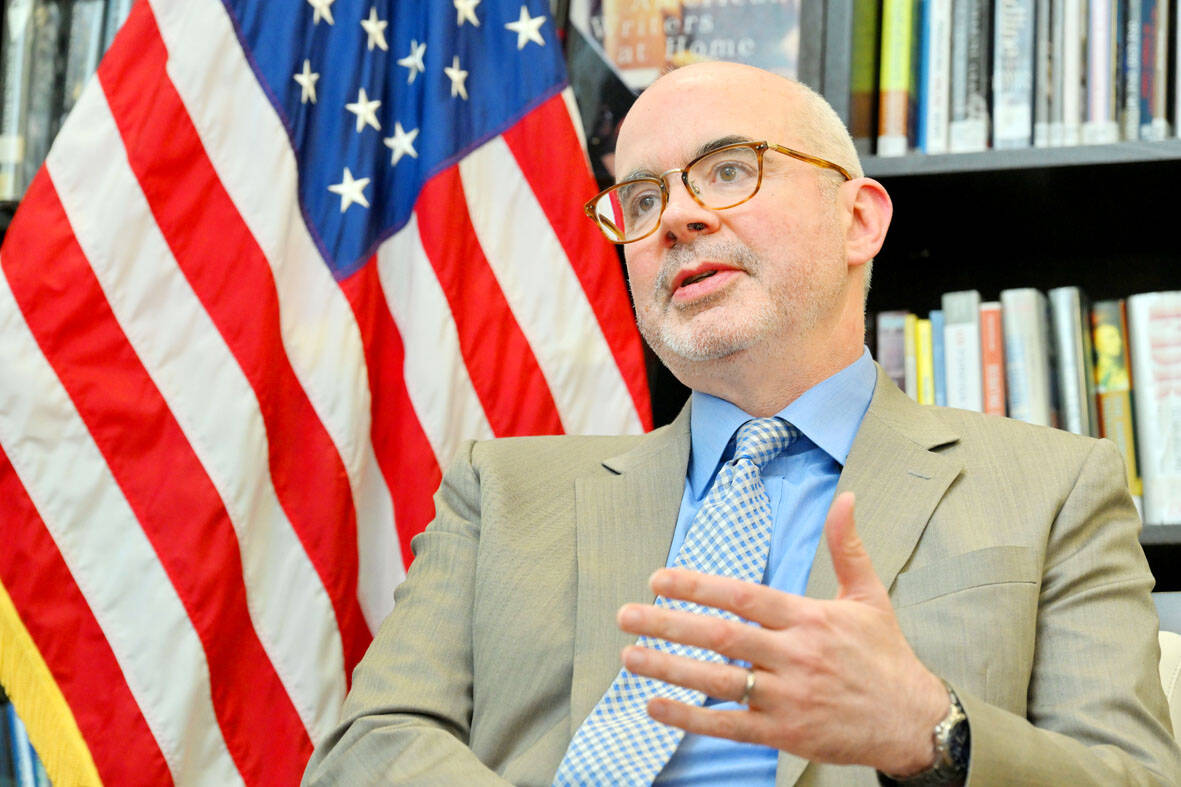
Photo: Tien Yu-hua, Taipei Times
DOMESTIC GAMBLE
Domestically, Lai was gambling that the public — which broadly supports the bill in polling — plus the sensitivity of Taiwan’s credibility internationally and broad-based international pressure would force the KMT and Taiwan People’s Party (TPP) alliance into supporting the bill, or some version of it. They hold a majority in the legislature, so he needs their buy-in.
It has been over five months, and no deal — not on the special military budget, nor on the annual general budget that includes regular military spending. The domestic political battle has been tense.
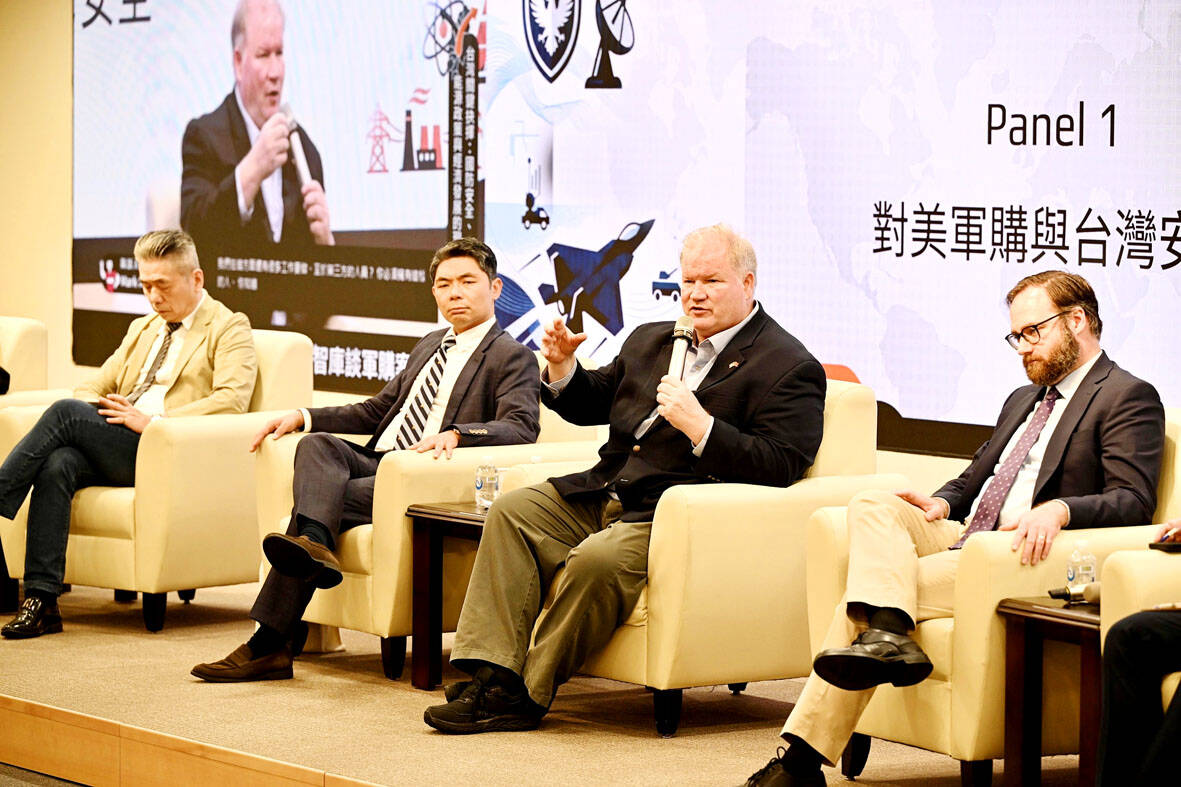
Photo: Luo Pei-der, Taipei Times
Right from the get-go, two of the most powerful people in the KMT opposed it: newly elected Chairwoman Cheng Li-wun (鄭麗文) and KMT caucus whip Fu Kun-chi (傅?萁), backed by a handful of allies. Initially, they opposed it entirely.
Public pressure mounted, and reportedly from within the KMT caucus, Legislator Hsu Chiao-hsin (徐巧芯) and some allies backed an NT$810 billion proposal. The TPP proposed an NT$400 billion package. Both are lower than Lai’s proposed NT$1.25 trillion.
The KMT-TPP alliance had some problems with Lai’s proposal that are not entirely without merit.
They are right that the budget is large by historical standards. However, spread out over eight years, that works out to US$5 billion a year, which is minuscule compared, for example, to TSMC’s projected US$52-56 billion capital expenditure for this year alone. Taiwan has low government debt and can easily afford it.
They are also correct that initially the plan lacked specifics on how the money was to be spent, and was essentially a “blank check” — though recently the administration has been rather reluctantly releasing more specifics.
Though the DPP would never admit it publicly, a “blank check” is what they are after as much as is feasible, for at least two reasons. First, they fear annual legislative deadlock, which stifles the ability to make long-term investments. Second, the nature of war and battlefield technology is evolving rapidly in places like Ukraine and Iran, while China continues to innovate; the ability to respond with flexibility and speed in a rapidly changing strategic environment is critical.
The KMT also wants to preserve legislative oversight to avoid corruption. Corruption certainly exists in the military, but there is no evidence it is systemic or condoned by any recent administration of either party.
CHENG RELENTS, A LITTLE
Cheng wants to present a negotiated “peace framework” with the CCP to voters in 2028. Blocking the defense budget entirely would open her and the KMT up to accusations of selling out Taiwan to Beijing, impacting those plans, and the party’s hopes for this year’s local elections.
So, she proposed an “NT$380 billion+N” plan that would fund already agreed upon American arms sales. The “+N” would be case-by-case approval of additional spending based on formal issuance of an official letters of offer and acceptance (LOA) by the US side.
Cheng insists she supports US arms sales to Taiwan, and to address concerns the KMT intends to stymie future spending in legislative gridlock, she promises that once an LOA is issued, it “will be promptly reviewed by the legislature without delay or obstruction.” Note that “reviewed” does not mean “passed.”
They also called for spending on domestic defense investment, both private and public, into the regular defense budget. Again, requiring an annual approval by the legislature, so the DPP administration does not have a “blank check.”
Fu backed the “NT$380 billion+N” plan, and Hsu backed off on her plan, deferring to party authorities.
Then party heavyweight and frontrunner to represent the KMT in the 2028 presidential election, Taichung Mayor Lu Shiow-yen (盧秀燕), then made a trip to the US.
Raymond Greene, the Director of the American Institute in Taiwan and de facto US ambassador, has been spending so much time in Taichung with Lu — both prior to and following her US trip — it would probably be cheaper and easier to rent an apartment there. Lu describes Greene as a “friend” and publicly refers to him as “ambassador.”
The Americans appear to be betting on Lu to save the day.
It appears she did not disappoint. Upon returning from her trip, she publicly called for a special defense budget of between NT$800 billion and NT$1 trillion. This was backed by key figures in the party, especially those running for office this year, such as Kaohsiung mayoral candidate Ko Chih-en (柯志恩).
Multiple local media outlets, citing unnamed “people in the know,” claim that the US side expects Taiwan to approve “at least NT$800 billion,” though this is hard to verify.
Cheng smiled when asked about Lu’s comments, and reminded everyone that the KMT is a democratic party with diverse opinions, but did not budge on the party’s stance. Neither did Fu.
Pressure continued to mount on all sides — and within the parties — as this impasse dragged on.
Legislative Speaker Han Kuo-yu (韓國瑜) of the KMT appeared to be doing his utmost to fulfill his constitutional duty to be a neutral arbiter between the legislative caucuses. He also tried his best to pacify foreign delegations with promises the process was ongoing. In reality, it remained deadlocked.
Then in the middle of last month, the impasse broke and the parties agreed to start negotiations.
Yet, all slides remain far apart and tensions are boiling over inside the KMT.
We will dive deep into that next.
Donovan’s Deep Dives is a regular column by Courtney Donovan Smith (石東文) who writes in-depth analysis on everything about Taiwan’s political scene and geopolitics. Donovan is also the central Taiwan correspondent at ICRT FM100 Radio News, co-publisher of Compass Magazine, co-founder Taiwan Report (report.tw) and former chair of the Taichung American Chamber of Commerce. Follow him on X: @donovan_smith.

If one asks Taiwanese why house prices are so high or why the nation is so built up or why certain policies cannot be carried out, one common answer is that “Taiwan is too small.” This is actually true, though not in the way people think. The National Property Administration (NPA), responsible for tracking and managing the government’s real estate assets, maintains statistics on how much land the government owns. As of the end of last year, land for official use constituted 293,655 hectares, for public use 1,732,513 hectares, for non-public use 216,972 hectares and for state enterprises 34 hectares, yielding
The March/April volume of Foreign Affairs, long a purveyor of pro-China pablum, offered up another irksome Beijing-speak on the issues and solutions for the problems vexing the People’s Republic of China (PRC) and the US: “America and China at the Edge of Ruin: A Last Chance to Step Back From the Brink” rang the provocative title, by David M. Lampton and Wang Jisi (王緝思). If one ever wants to describe what went wrong with US-PRC relations, the career of Wang Jisi is a good place to start. Wang has extensive experience in the US and the West. He was a visiting

One of the challenges with the sheer availability of food in today’s world is that lots of us end up spending many of our waking hours eating. Whether it’s full meals, snacks or desserts, scientists have found that it’s not uncommon for us to be mindlessly grazing at some point during all of our 16 or so waking hours. The problem? As soon as this food hits the bloodstream in the form of glucose, it initiates the release of the hormone insulin. This in turn activates a switch present in every one of our cells, which is responsible for driving cell
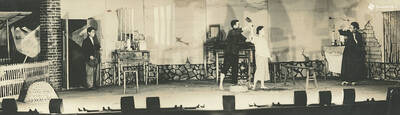
April 27 to May 3 Everything about Castrated Chicken (閹雞) followed the rules — until the Taiwanese folk songs began. As the male choir sang Diu Diu Deng (丟丟銅仔) and June Fields (六月田水), the audience danced and sang along, even calling for the songs to be repeated several times. It was a bold move by the Housheng Theater Research Group (厚生演劇研究會), formed on April 29, 1943 amid tightening Japanese colonial control over culture and growing concern over the direction of local theater. The next morning, troupe leader Wang Ching-chuan (王井泉) was summoned to the police station. He feared that the remaining performances


 RSS
RSS