


For many people, Bilingual Nation 2030 begins and ends in the classroom. Since the policy was launched in 2018, the debate has centered on students, teachers and the pressure placed on schools.
Yet the policy was never solely about English education.
The government’s official plan also calls for bilingualization in Taiwan’s government services, laws and regulations, and living environment.
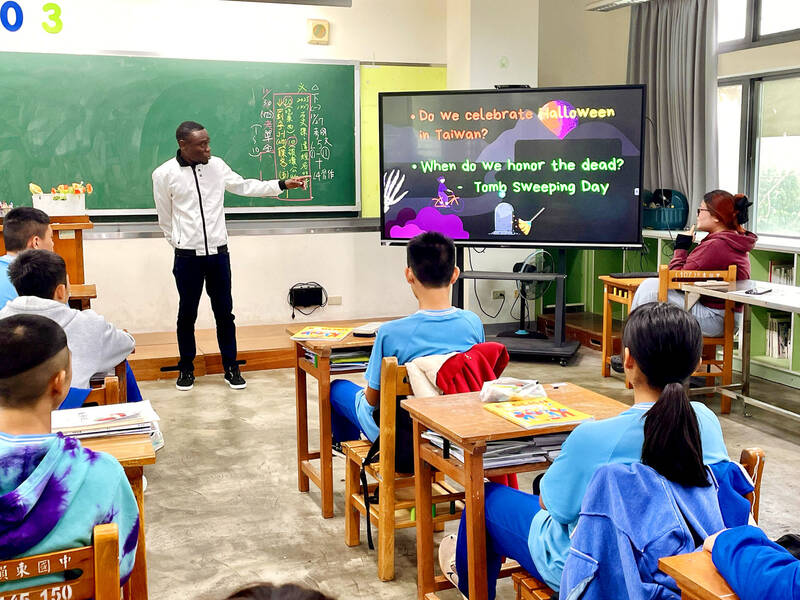
Photo courtesy of the Hualien County Government
The goal is to make Taiwan more inclusive and accessible to international enterprises and talent and better prepared for global economic and trade conditions.
After eight years, that grand vision is due for a pulse check.
RULES THAT CAN BE READ

Photo courtesy of the National Park Service
For Harper Chen (陳虹宇), an adviser on the Executive Yuan’s Youth Advisory Committee, the next test of Bilingual 2030 lies in Taiwan’s legal system that international users navigate.
Chen told the Taipei Times by Line that she saw the problem while helping foreign clients navigate Taiwan’s regulatory environment.
Clients looking at Taiwan’s geothermal sector, for example, found that much of the relevant regulatory framework, government programs and incentive information remained available only in Mandarin.

Photo courtesy of the Taipei Geotechnical Engineering Office
Even if Taiwan welcomes foreign investment and technical cooperation, international partners can still get lost in Mandarin-only rules, application procedures and policy incentives.
Taiwan already provides English translations for many major laws. But Chen said foreign companies often need something one level down: regulations, guidelines and application procedures issued by individual agencies.
Those “administrative regulations” tell people where to file, what to submit, which standards apply and how long a case might take.
For a company trying to invest, pay taxes, hire workers or get a license, that guidance can matter as much as the law itself.
Yet much of it remains hard to find in English.
Chris Cottorone, president of TriOrient Investments, said English access to Taiwan’s regulations matters for companies because English is the language of international business.
Cottorone is also co-chair of the Alternative Assets Committee of the American Chamber of Commerce in Taiwan and vice president of the Italian Chamber of Commerce in Taipei.
Foreign businesses are increasingly investing in Taiwan and need clarity on the regulations that affect them, Cottorone said in a Line interview with the Taipei Times.
Countries seeking more engagement with Taiwan through Taiwanese investment abroad would also welcome English access, he added.
Chen said the absence of thorough legal and regulatory bilingualization shows where Bilingual 2030 remains unfinished.
At a meeting chaired by Premier Cho Jung-tai (卓榮泰) on Dec. 16 last year, Chen proposed making such administrative regulations available in English.
She has since discussed the idea with the National Development Council for the next stage of Bilingual 2030.
Chen said the work would require more than translation by individual agencies.
The next step would need cross-agency coordination, so ministries can decide which rules foreign users need most and carry out the work under a shared framework.
ACCESS, NOT REPLACEMENT
Chen said Bilingual 2030 covers government-wide, everyday public services, from government officials using English to assist foreign residents to hospitals providing English support for immigrants.
With measures aiding newcomers, the policy is about making society more inclusive for the entire population.
Taiwan is already a multilingual society, where Mandarin, Hoklo (more commonly known as Taiwanese), Hakka and indigenous languages each carry cultural and political weight.
English is not meant to replace Mandarin, Chen said. The point is to make Taiwan’s system easier to use for the foreign workers, companies and professionals it wants to attract.
Bilingual 2030 has long been caught up in political debate. Critics have worried that it adds pressure on students and teachers, gives English too much space or leaves Taiwan’s own languages with less room.
The government’s plan says the policy should not reduce class time or resources for Taiwan’s national languages.
Even if Taiwan has a different government after the 2028 presidential election, foreign companies and residents would still run into the same problem of language barriers if the rules are not available in English.
The issue, she said, is not partisan. It is how Taiwan’s system works in daily life and how Taiwan can make its system and itself available to the world.
FROM TRANSLATION TO TRUST
Chen sees this side of Bilingual 2030 as part of Taiwan’s wider effort to meet international economic and trade standards.
The first agreement under the US-Taiwan Initiative on 21st-Century Trade, which entered into force in December 2024, includes a chapter on Good Regulatory Practices.
The chapter is about predictability for facilitating trade and investment. It says good regulations mean rules should be transparent, public, clear, searchable, open to comment and supported by explanations.
Comprehensive legal bilingualization, covering not only translated statutes but also administrative regulations, helps Taiwan meet that spirit.
That connection also matters for Taiwan’s greater trade ambitions. A Taiwan-US free-trade agreement has long been a sought-after goal in Taiwan’s economic diplomacy.
A 2025 Chicago Council survey found that 77 percent of Taiwanese respondents supported a free-trade agreement with the US.
Legal bilingualization would not by itself produce the Taiwan-US free-trade agreement. But Chen said it could help Taiwan strengthen the conditions that make deeper economic engagement possible with partners such as the US.
Clear, searchable and usable rules through legal bilingualization strengthen Taiwan’s regulatory transparency, predictability and investment readiness.
For Cottorone, the issue is also tied to Taiwan’s international position.
Building people-to-people ties has long mattered for Taiwan’s economic development and international relations, he said.
Taiwan’s diplomatic isolation has made communication with the world more difficult, making the policy important beyond schools and classrooms.
Bilingual 2030 would reduce long-standing language barriers that have made it harder for Taiwan’s people, businesses and government to communicate with their friends and partners around the world, Cottorone added.

If one asks Taiwanese why house prices are so high or why the nation is so built up or why certain policies cannot be carried out, one common answer is that “Taiwan is too small.” This is actually true, though not in the way people think. The National Property Administration (NPA), responsible for tracking and managing the government’s real estate assets, maintains statistics on how much land the government owns. As of the end of last year, land for official use constituted 293,655 hectares, for public use 1,732,513 hectares, for non-public use 216,972 hectares and for state enterprises 34 hectares, yielding

The small platform at Duoliang Train Station in Taitung County’s Taimali Township (太麻里) served villagers from 1992 to 2006, but was eventually shut down due to lack of use. Just 10 years later, the abandoned train station had become widely known as the most beautiful station in Taiwan, and visitors were so frequent that the village had to start restricting traffic. Nowadays, Duoliang Village (多良) is known as a bit of a tourist trap, with a mandatory, albeit modest, admission fee of NT$10 giving access to a crowded lane of vendors with a mediocre view of the ocean and the trains
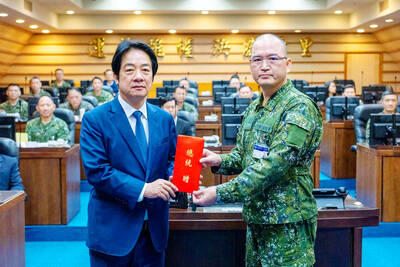
President William Lai (賴清德) on Nov. 25 last year announced in a Washington Post op-ed that “my government will introduce a historic US$40 billion supplementary defense budget, an investment that underscores our commitment to defending Taiwan’s democracy.” Lai promised “significant new arms acquisitions from the United States” and to “invest in cutting-edge technologies and expand Taiwan’s defense industrial base,” to “bolster deterrence by inserting greater costs and uncertainties into Beijing’s decision-making on the use of force.” Announcing it in the Washington Post was a strategic gamble, both geopolitically and domestically, with Taiwan’s international credibility at stake. But Lai’s message was exactly
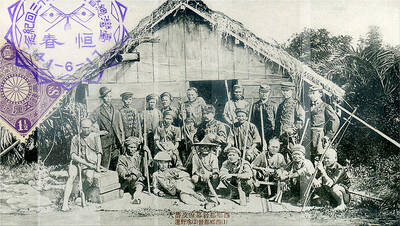
Traditionally, indigenous people in Taiwan’s mountains practice swidden cultivation, or “slash and burn” agriculture, a practice common in human history. According to a 2016 research article in the International Journal of Environmental Sustainability, among the Atayal people, this began with a search for suitable forested slopeland. The trees are burnt for fertilizer and the land cleared of stones. The stones and wood are then piled up to make fences, while both dead and standing trees are retained on the plot. The fences are used to grow climbing crops like squash and beans. The plot itself supports farming for three years.


 RSS
RSS