


The small platform at Duoliang Train Station in Taitung County’s Taimali Township (太麻里) served villagers from 1992 to 2006, but was eventually shut down due to lack of use. Just 10 years later, the abandoned train station had become widely known as the most beautiful station in Taiwan, and visitors were so frequent that the village had to start restricting traffic.
Nowadays, Duoliang Village (多良) is known as a bit of a tourist trap, with a mandatory, albeit modest, admission fee of NT$10 giving access to a crowded lane of vendors with a mediocre view of the ocean and the trains passing by the old station. However, the last time I visited, I was determined to see Duoliang in a new light, and this all began with how I approached it.
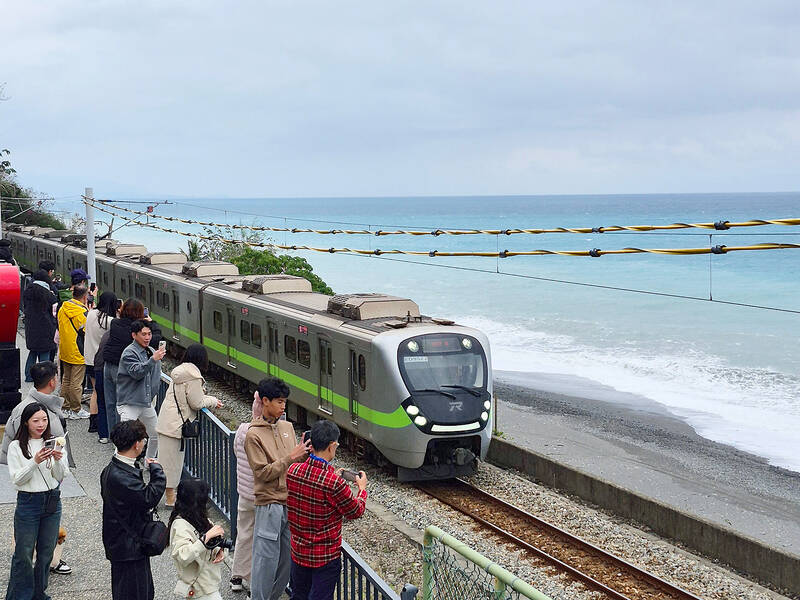
Photo: Tyler Cottenie
UP AND DOWN INTO DUOLIANG
Rather than parking at the bottom of the coastal highway and walking up to the old train platform, I decided to walk in from above the village along the mountain roads. This 9km walk from Jinlun Village (金崙) ended up being the most scenic part of the day.
From the Jinlun town center, I walked south out of town, crossed the bridge, and then took one of the dirt roads down to the riverbed. There was one on both the left and the right when I visited, but conditions are always changing. The original concrete road paralleling the power lines was buried in sand and stone by recent flooding, but a rough new road has been created leading upriver. Not far ahead, the road turns toward the mountain and begins to ascend via switchbacks.
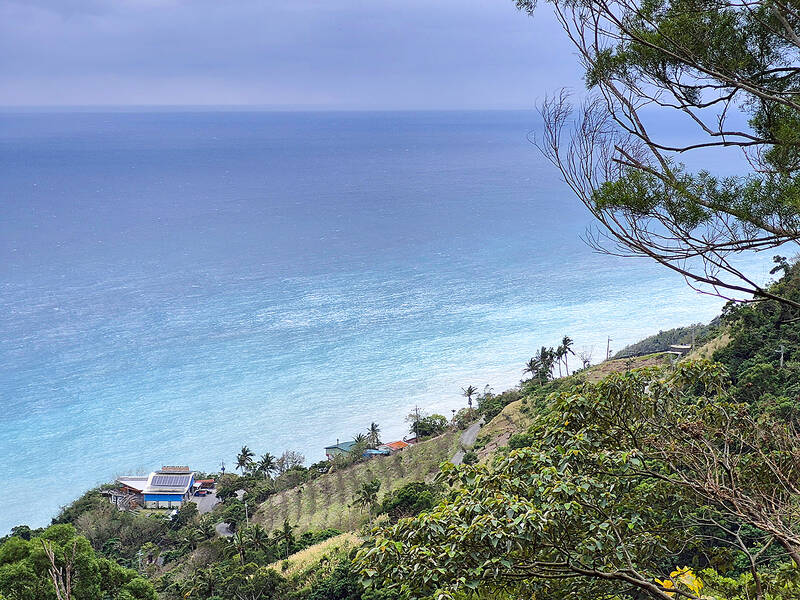
Photo: Tyler Cottenie
The views of Jinlun behind me got better and better and were a worthy reward for the effort required to ascend the steep, concrete path. Make sure to bring lots of water and to avoid the hottest part of the day for the uphill section. Once through the switchbacks, the road heads toward the Pacific coast and rounds the corner for Duoliang. Views of the river and Jinlun are exchanged for views of the Pacific and Duoliang just ahead.
As I passed through “Upper Duoliang,” now simply a few farmhouses and the ruins of an old church, I noticed the bright blue roof of the activity center below and my sense of anticipation grew. Next to this building is The Bulai Bulai Kitchen (芙瀨實驗廚房), a menuless restaurant that makes extensive use of fresh, local ingredients, and my main destination for the day.
About three hours after setting out from Jinlun, I made it down to the restaurant in the lower village. For those arriving by car from below, parking is available on the side of the road. You don’t have to walk up all the way from the coastal highway unless you are planning to complete the walk over to Jinlun.
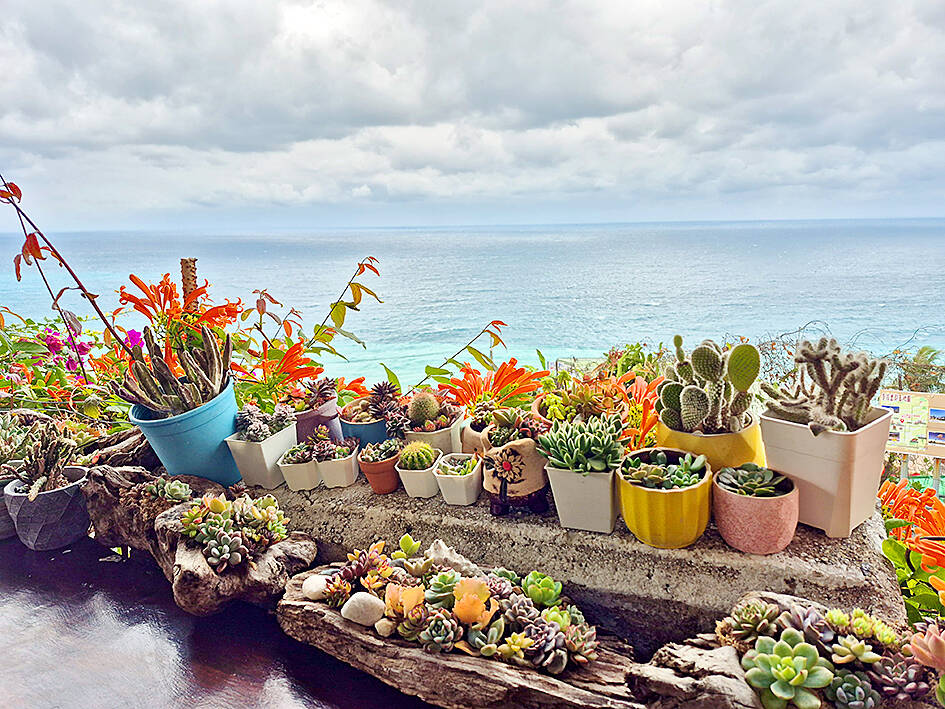
Photo: Tyler Cottenie
THE BULAI BULAI KITCHEN
A grassy entryway leads to a raised walkway at the back, where restaurant patrons can pose for photos with a gorgeous view of the Pacific while waiting to be seated. Walk-in service is not available: reservations should be made in advance by sending a message through the restaurant’s Facebook page (search the restaurant’s name in English). When my private dining room was ready, I was escorted into the beautifully decorated space by the server and given a few minutes to settle in.
Everything in the restaurant is designed to make the diner feel they are connected to Taitung County’s geography, flora, fauna and indigenous culture. The clean, modern, white and brown decor is soothing, but the greens and blues of the mountain and the Pacific visible through the window help connect patrons to the real world. Bamboo art, raw wooden coasters and beach rock for resting eating utensils are subtle touches that further anchor the diner to the surrounding natural world.
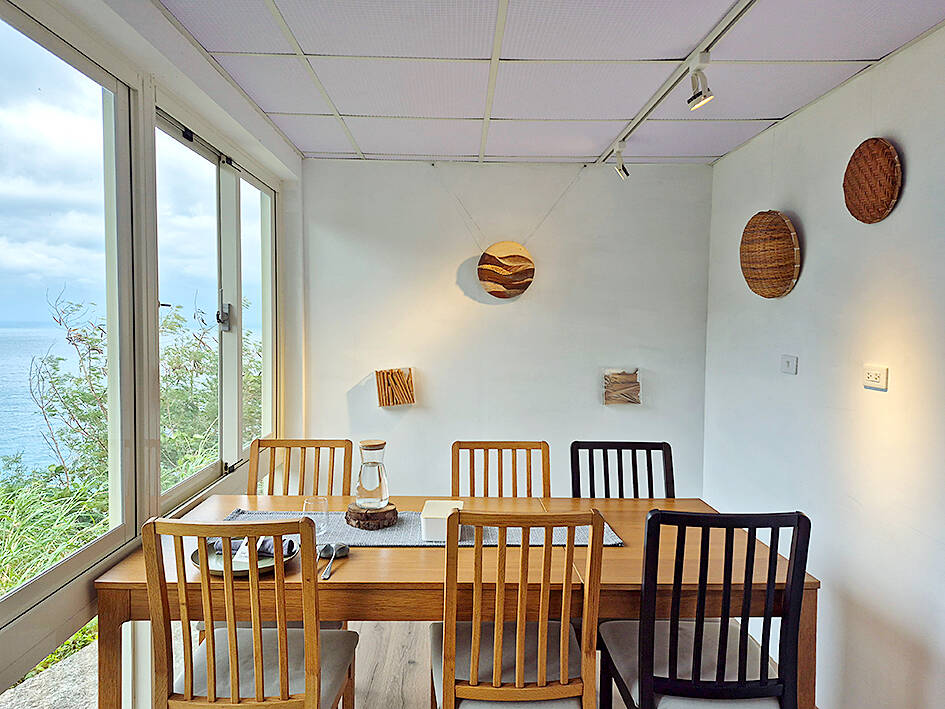
Photo: Tyler Cottenie
After each dish was served, the chef would come in and personally introduce the local ingredients, and the inspiration behind each dish. Many are inspired by the culture of the Paiwan, Amis or Beinan indigenous communities, connecting diners to the surrounding cultural landscape as well.
For instance, I was presented with a dish entitled “Mother’s Flower Headdress”. Many indigenous groups wear headdresses of colorful flowers to weddings, and this dish was an equally colorful array of roasted vegetables, fruit and dragon fruit sauce, attractively presented on a stone plate resembling local slate. Another dish contained locally harvested fish and clams, as well as locally grown prickly onion and daylilies, all carefully seasoned to create a delicious, balanced flavor profile.
Each dish surprised and delighted my taste buds, while the personal touch from the chef’s explanations also helped to justify the steep price tag of a meal here (around NT$1,200 per person). The meal was rounded out by a dessert and a pot of local red oolong tea.
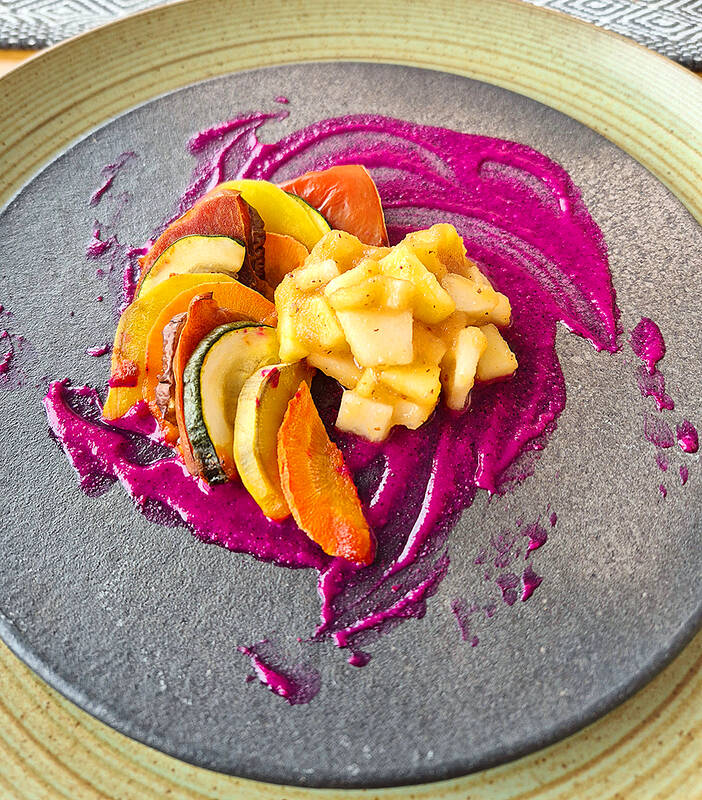
Photo: Tyler Cottenie
DUOLIANG VILLAGE AND STATION
After the relaxing, almost meditative experience at Bulai Bulai, it was time to continue walking down toward the old train station. There is a steeper, more direct road on the right as you exit the restaurant, and a gentler, longer road on the left that goes through the village. I opted for the latter, and along the way, passed a gorgeous wall covered in orange trumpet vine that marked the location of another village restaurant, the 5181 Cafe (5181聽海文創&咖啡).
For those who are unwilling or unable to shell out for Bulai Bulai, this is a great alternative. The interior is simply decorated with local stone and an abundance of plant life. Long benches and bar seating offer views of the Pacific coast below. The menu is fairly typical in its offerings, with a few set meals, some fried foods and a large selection of drinks.
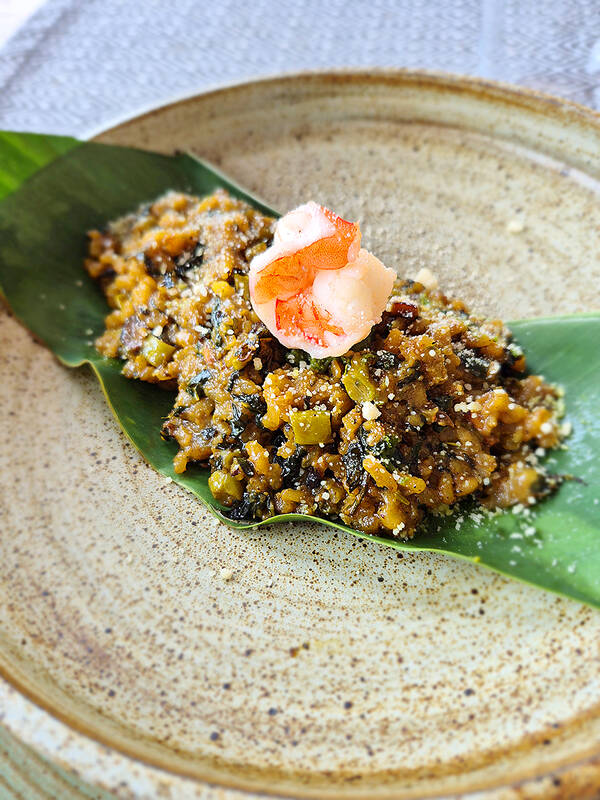
Photo: Tyler Cottenie
Continuing downhill, I reached the intersection with the alternative road leading down from Bulai Bulai. A white sign with an arrow indicates the way to Bulai Bulai, while another sign indicates the direction of the 5181 Cafe, helping visitors coming by car avoid getting stuck along the narrow roads. Just a little further downhill is a junction leading to the general store straight ahead, or down toward the old train station on the left.
Finally, I reached the area around the old platform, crowded with tourists. As I was already full from my restaurant meal, I didn’t buy anything from the vendors but there appeared to be a variety of options to satisfy different tastes. The grounds were also well maintained, including the toilets, seemingly justifying the entry fee. After a few hours out exploring, I finally caught sight of a train passing by the old Duoliang Station, perched above the ocean. It was a fitting end to my long and winding trip to Duoliang.
GETTING THERE AND AWAY
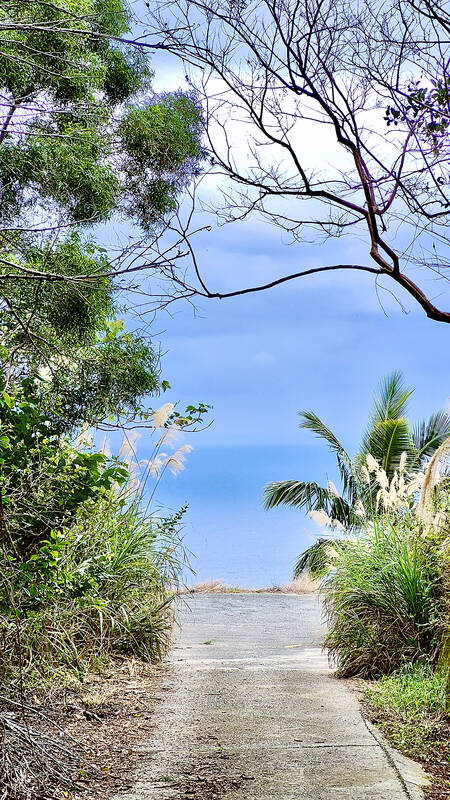
Photo: Tyler Cottenie
I walked a few more minutes down to the highway and got on Bus 8135, which took me back through Jinlun and onward to the Taitung Bus Station. For those wanting to do the trek in reverse, take Bus 8135, 8136, or 8137 from the Taitung Bus Station (not the train station) to Duoliang, and then finish the walk at Jinlun, where both bus and train are available for the return trip to Taitung. The bus runs approximately 10 times a day, less than once an hour. Whichever direction you choose to walk, consider spending a night in a hot spring hotel in Jinlun the night before or the night after.

Taiwan’s overtaking of South Korea in GDP per capita is not a temporary anomaly, but the result of deeper structural problems in the South Korean economy says Chang Young-chul, the former CEO of Korea Asset Management Corp. Chang says that while it reflects Taiwan’s own gains, it also highlights weakening growth momentum in South Korea. As design and foundry capabilities become more important in the AI era, Seoul risks losing competitiveness if it relies too heavily on memory chips. IMF forecasts showing Taiwan widening its lead over South Korea have fueled debate in Seoul over memory chip dependence, industrial policy and

And so, in the wake of US President Donald Trump’s trip to the People’s Republic of China (PRC), all the experts on the Strait of Hormuz suddenly became experts on US-China-Taiwan relations. The Internet has certainly expanded human knowledge. Lots of these sudden experts made noise this week about Trump’s words after the meeting with PRC dictator Xi Jin-ping (習近平). Trump is going to sell out Taiwan! Longtime Taiwan commentator J. Michael Cole summed the situation up neatly in the Guardian: “We need to keep in mind that he has a tendency to say many things — sometimes contradicting himself within

There is considerable frustration and confusion among many, both in Taiwan and abroad — including in Washington — as to why the Chinese Nationalist Party (KMT) seems so dead set on using their legislative leverage to slash defense spending and disrupt the ability of the ruling Democratic Progressive Party (DPP) administration to function. Are they pawns of the Chinese Communist Party (CCP)? Are they traitors? In reality, there are multiple reasons. In the first column in this series on this subject, “Donovan’s Deep Dives: How and why the TPP and KMT help Beijing” (Sat May 16, page 12), we examined three

It took 12 years and months of standing in the same mountain location for director Liang Chieh-te (梁皆得) to capture a few seconds of footage: Taiwan’s largest resident raptor locking talons with its mate and spinning through the air in a courtship ritual. With only about 1,000 left in the wild and very short flight windows, the mountain hawk-eagle remains among Taiwan’s most elusive birds. The species generally produces only one offspring per year. Using forest cameras, the film crew and research teams document the arduous process the monogamous pairs go through for the chick to hatch and grow up, weathering


 RSS
RSS