


After Jurassic Park premiered in 1993, people began to ask if scientists could really bring long-lost species back from extinction, just like in the hit movie. The idea has triggered “de-extinction” debates in several countries, including Taiwan, where the focus has been on the Formosan clouded leopard (designated after 1917 as Neofelis nebulosa brachyura).
National Taiwan Museum’s (NTM) Web site describes the Formosan clouded leopard as “a subspecies endemic to Taiwan…it reaches a body length of 0.6m to 1.2m and tail length of 0.7m to 0.9m and weighs between 15kg and 30kg. It is entirely covered with beautiful cloud-like spots which become round or irregular black spots near the legs and tail. It is usually gray or yellow ocher. Normally the male is larger than the female.”
The museum’s use of present tense notwithstanding, the cat was — the NTM Web site concedes — declared extinct in 2013. Nevertheless, from time to time there are reports of sightings.
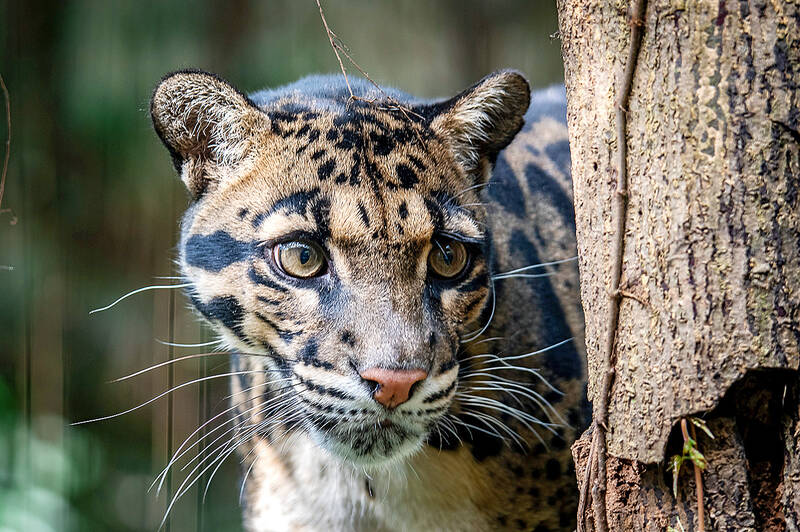
Photo courtesy of Wang Yi-feng
Several years ago, it was claimed that a clouded leopard had been spotted near Alanyi (阿塱壹), a Paiwan indigenous community in Taitung County’s Daren Township (達仁鄉). However, the Liberty Times reporter who attended a press conference in the village came away unconvinced (Feb. 27, 2019; Liberty Times is the Chinese-language sister newspaper of the Taipei Times).
It’s understandable if some still believe that clouded leopards roam Taiwan’s mid-elevation woodlands. The carnivore holds a special position in the spiritual and cultural landscape of Austronesian Taiwan. In the mythology of the Rukai people, a clouded leopard led their ancestors to the site that became the settlement of Kucapungane (舊好茶, Jiuhaocha; see “The hunter’s tale” in the March 12, 2020 issue of this newspaper). In gratitude, the Rukai — in whose language the species is known as lrikulau — observed a taboo against hunting or harming the cat. Among Paiwan people, who call the animal likuljaw, clouded leopard skins and teeth were reserved for tribal chiefs and senior nobles. Wearing these items indicates authority and prestige.
Despite occasional rumors and some sensationalist media coverage, University of Oxford doctoral student Wang Yi-feng (王逸峰) says he’s reached a “painful but clear” conclusion: research led by Chiang Po-jen (姜博仁) — founder of the Formosan Wild Sound Conservation Science Center (台灣野望自然保育科學篩選中心) — indicates that clouded leopards have been “functionally extirpated” from Taiwan. In other words, if they’ve not disappeared altogether, the population is so tiny that the species no longer performs its apex predator function within the ecosystem.
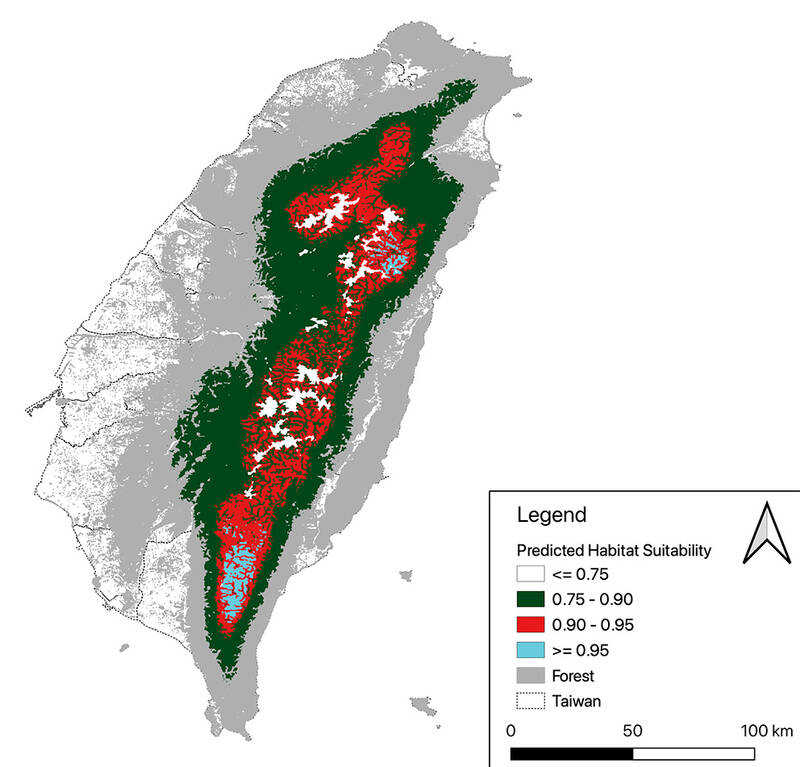
Photo courtesy of Wang Yi-feng
UNVERIFIED SIGHTINGS
The Clouded Leopard Association of Taiwan (CLAT, 雲豹復育研究會), of which Wang is a long-time member, “would be the first to celebrate if these sightings were proven true,” he says. In none of the recent cases, however, has the association’s offer to provide manpower and camera traps for scientific validation been taken up.
“Nonetheless, we remain open and eager to collaborate with anyone who can provide verifiable data,” he says.
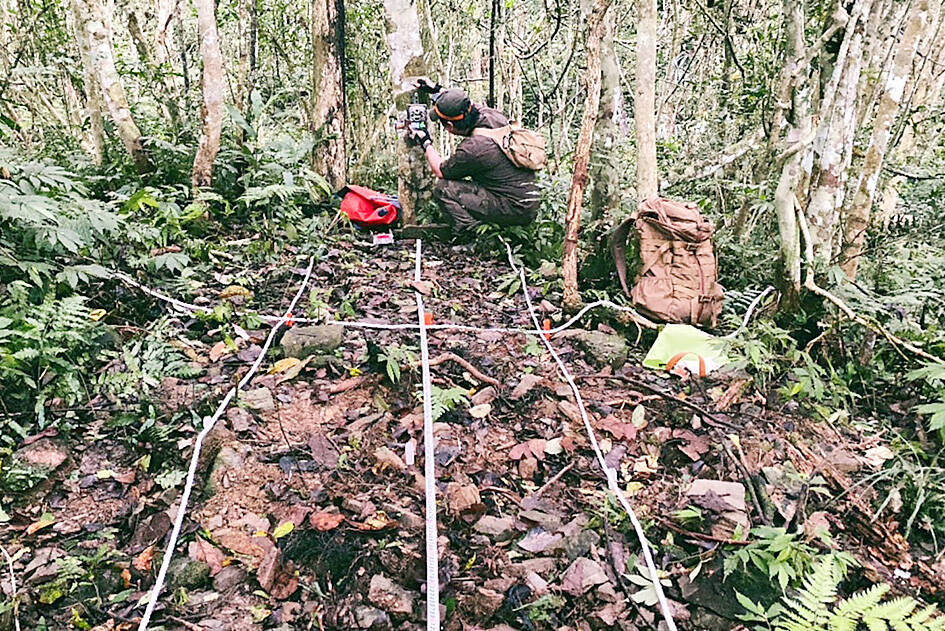
Photo courtesy of Wang Yi-feng
Over the past 25 years, Wang explains, at least 10,000 camera traps throughout Taiwan have accumulated more than a million hours of monitoring. Compared to other parts of Asia where clouded leopards still thrive, Taiwan’s wild areas have an abundance of species on which the cat could prey. So if a population still existed in Taiwan, “it’s statistically improbable that not a single photograph or video would have been captured across such an extensive survey effort,” Wang says.
Local admirers of the clouded leopard have mixed feelings about another scientific finding. Wang points to a 2006 study which, after applying molecular genetic methods, recommended against partitioning the species into subspecies.
“Genetic analysis suggests the divergence between Taiwan’s population and Neofelis nebulosa on the Asian mainland isn’t significant enough to justify a separate ‘Formosan’ designation,” he says.
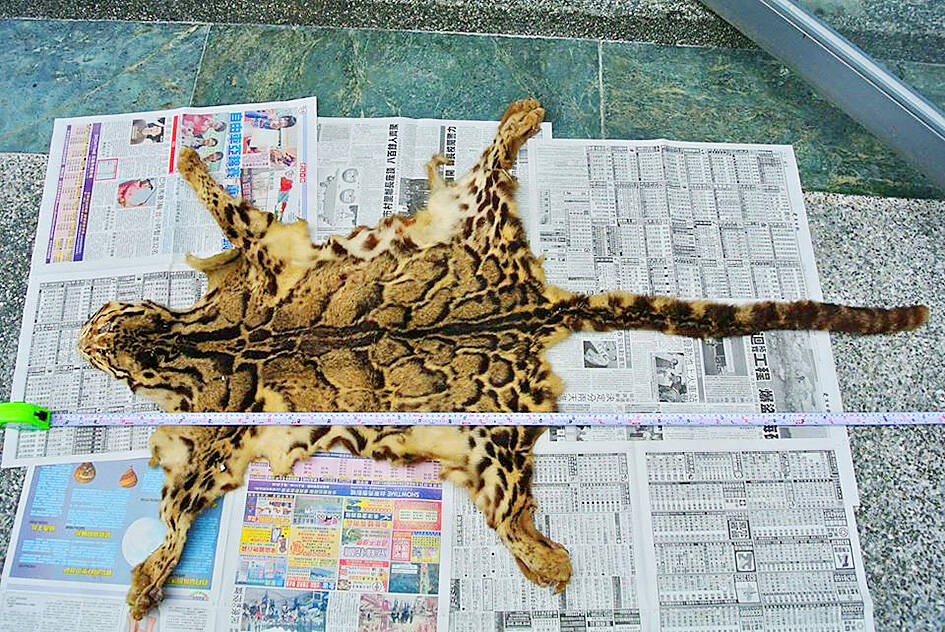
Photo: Hua Meng-ching, Liberty Times
At the same time, the Sunda clouded leopard (Neofelis diardi) of Borneo and Sumatra was declared to be a species in its own right. Both the mainland and the Sunda clouded leopards are classified as “vulnerable” by the IUCN due to habitat loss, illegal poaching and prey depletion. The combined wild populations of Neofelis nebulosa and Neofelis diardi may not exceed 10,000.
Taiwanese officials (including those at the NTM) have yet to update how they categorize the local clouded leopard.
“Administrative caution, perhaps because of concerns regarding the cultural significance of the endemic label,” may lie behind this reluctance, Wang says.
Photo: Steven Crook
THE HOW AND THE WHY
Sadness that the uniqueness of one of Taiwan’s iconic creatures has been eroded is tempered, however, by a realization that restoring the clouded leopard to its place in mountain ecosystems is much more feasible than previously thought. Rather than retrieve DNA fragments from the dried or fluid-preserved tissues of museum specimens, then using CRISPR gene editing to “cut and paste” specific genes into the DNA of the closest living relative — an approach that’s been successful with the black-footed ferret, the dire wolf and Przewalski’s horse — the authorities could obtain clouded leopards from elsewhere in Asia and release them into suitable environments around Taiwan.
If the same species still exists, “DNA cloning should be the last step we’d consider… and even if we follow the old thinking that the Formosan clouded leopard was a different, endemic, unique species, there’s no available specimen we can use,” says Wang, explaining that storing specimens in formalin often destroys genetic data. What’s more, he says, we can’t be absolutely certain that what’s labeled as a Formosan clouded leopard in a museum was actually caught in Taiwan.
“Perhaps the best option is importing clouded leopards from other places. It’d be easier, cheaper and more reasonable,” he says.
There’s strong evidence that the disappearance or decline of an apex predator — such as sharks around coral reefs or cougars in Zion National Park in the US — can knock an ecosystem out of kilter by allowing prey populations to skyrocket.
Arguing that the return of the apex predator is always beneficial to the wider ecosystem, Wang outlines why two extant forest-dwelling creatures aren’t qualified to fulfill that role. The Formosan black bear is the country’s largest land animal, but it hardly ever hunts living prey, preferring plants, fruits, nuts and carrion. The mountain hawk-eagle takes some prey, but not enough to balance the ecosystem.
“Compared to these two, the clouded leopard would be the most suitable and dominant predator,” Wang says.
Formosan macaques, Reeves’ muntjac, sambar deer and wild boars “are everywhere today, inducing frequent wildlife-human conflicts,” Wang adds. However, the fact that macaques and boars plague local farms isn’t by itself a definitive argument for bringing back the clouded leopard, as it’s hard to be sure of the ecological functions of a species that went extinct decades ago.
When interviewed for a March 20, 2025 report in Wuo Wuo (窩窩, wuo-wuo.com), Lin Liang-kung (林良恭), a distinguished professor at Tunghai University’s Center for Tropical Ecology and Biodiversity, warned that, if clouded leopards were released into Taiwan’s forests, they might not eat only the creatures humans want them to eat. If wild animal populations grow too big, he said, hunting and culling might be better ways to control them.
Before imported clouded leopards can be translocated to Taiwan, scientists must assess potential food sources, and whether stray dogs (see “Four-legged friends?” in the March 27, 2024 Taipei Times) might pose a threat.
“A successful reintroduction requires a cautious, science-based approach that includes both ecological and social feasibility assessments. This must be paired with strong collaboration with local communities, a comprehensive release strategy, and a clear ‘exit mechanism’ to ensure we can stop if undesirable consequences arise. Taking these steps incrementally is the best way to maximize the project’s success,” Wang says.
Steven Crook, the author or co-author of four books about Taiwan, has been following environmental issues since he arrived in the country in 1991. He drives a hybrid and carries his own chopsticks. The views expressed here are his own.

Ajay Verma, a consultant gastroenterologist at Kettering general hospital in Northamptonshire, says our gut is a “complex machine.” “It is constantly providing us with the nutrition we need, initially to grow and develop, and then for us to survive, thrive and repair from injury and illness.” How can we keep it functioning well? Put simply: “Make sure what you put into it is balanced, and that you clear out its waste products adequately,” Verma says. “In a general gastroenterology clinic, the most common conditions we see are irritable bowel syndrome (IBS), gastroesophageal reflux disease, inflammatory bowel disease and constipation,” says Nisha
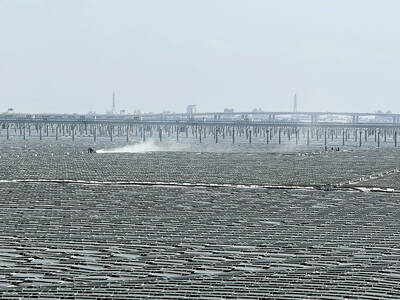
The arithmetic is straightforward and uncomfortable. By the end of 2025, Taiwan had committed itself to a 50-30-20 electricity mix — half natural gas, 30 per cent coal, 20 per cent renewables. The Ministry of Economic Affairs’s (MOEA) own monthly energy reports tell a different story. Natural gas reached 47.8 per cent of generation last year. Coal stood at 35.4 per cent, comfortably above its target ceiling. Renewables came in at 13.1 per cent, well short of the 20 per cent Taipei had pledged a decade earlier. Installed renewable capacity reached roughly half of the 12 gigawatts (GW) the government

Last week US President Donald Trump was asked by a reporter whether he would speak on the phone to the President of Taiwan. “l’ll speak to him. I speak to everybody. We have that situation very well in hand,” Trump said. This marked the second time in a couple of weeks he had said he would talk to the President of Taiwan. In 2016 he famously took a call from then-president Tsai Ing-wen (蔡英文), when he was president-elect. Despite warnings that the apocalypse was nigh because of a phone call, the world quickly forgot about the conversation between two democratically-elected presidents.
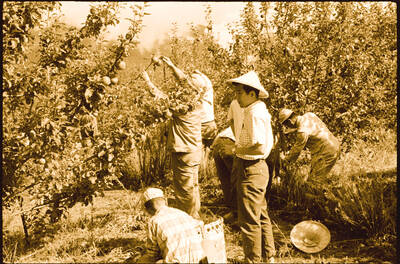
May 25 to May 31 Few believed that apples could be cultivated on a commercial scale in Taiwan’s high mountains. When horticulturalist Cheng Chao-hsiung (程兆熊) first proposed the idea in 1955, both American and Taiwanese colleagues dismissed it as implausible, arguing that temperate fruit could not be reliably grown on a subtropical island, especially on rugged terrain. However, it was this terrain in the Central Mountain Range where many Chinese Civil War veterans were resettled in the late 1950s. With limited job prospects and no family in Taiwan, they were placed on cooperative farms aimed toward self-sufficiency. Some say the conditions


 RSS
RSS