


The race for New Taipei City mayor is being keenly watched, and now with the nomination of former deputy mayor of Taipei Hammer Lee (李四川) as the Chinese Nationalist Party’s (KMT) candidate, the battle lines are drawn. All polling data on the tight race mentioned in this column is from the March 12 Formosa poll.
On Christmas Day 2010, Taipei County merged into one mega-metropolis of four million people, making it the nation’s largest city. The same day, the winner of the mayoral race, Eric Chu (朱立倫) of the Chinese Nationalist Party (KMT), took office and insisted on the current translated English name over the initially proposed Pinyin transliteration of Xinbei. The loser in that race was future president Tsai Ing-wen (蔡英文) of the Democratic Progressive Party (DPP).
After Taipei City, New Taipei City mayor is a top jumping-off point for a presidential run, or future premiership. It is also a curious place politically; it was a DPP stronghold from 1989 to 2005, but has been reliably KMT ever since.
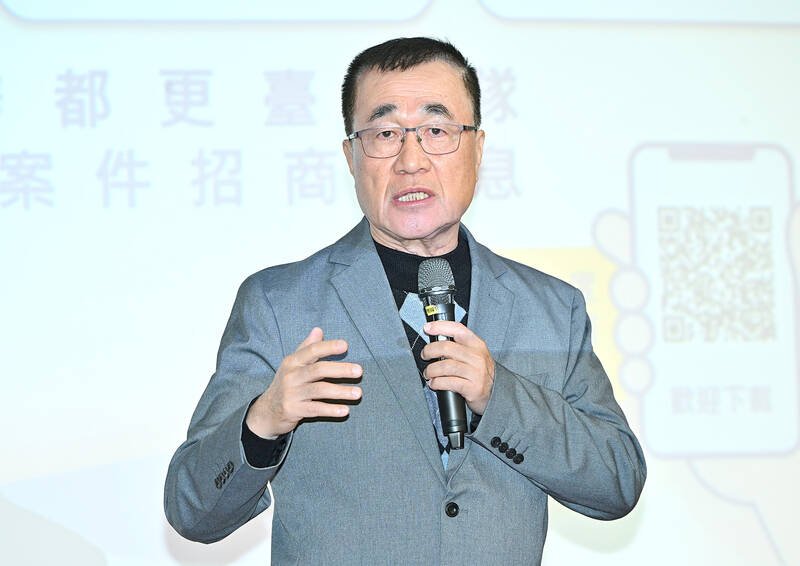
Photo: Tien Yu-hua, Taipei Times
A possible explanation for the shift is the influx of people from KMT stronghold Taipei City. However, in the last three presidential elections it delivered majorities for the DPP, though by margins roughly one to two percentage points lower than the national average.
The stakes for the three parties contesting this election are high, but in very different ways. They have also put forward three very different candidates, adding to the drama.
HUANG KUO-CHANG

Photo: Hsieh Wu-hsiung, Taipei Times
The Taiwan People’s Party (TPP) nominee is party Chairman Huang Kuo-chang (黃國昌). He is the only local in the race. His opponents are both from Pingtung County, though both have long histories in New Taipei City.
Huang was a cofounder of the pro-Taiwan New Power Party (NPP) and ran as an NPP candidate for a legislative seat in New Taipei City in 2016, and won. However, in 2017 a recall campaign was launched against him over issues such as his support for marriage equality.
A majority voted to recall him, but failed to reach the required minimum threshold. At the time, my impression was that his efforts to defend his seat were lackadaisical, an impression that deepened when he did not bother to run for re-election. Though this is speculation, it appears he was already becoming disenchanted with the pro-Taiwan camp, an impression bolstered by his subsequent jump to the Beijing friendly TPP.
He is clearly happier in the TPP and his enthusiasm has returned for campaigning, but it has not gone well. Only 9.8 percent of voters intend to vote for him, and, even more embarrassingly, only 20.4 percent consider him suitable for the job.
Not all is lost for the TPP, however. Negotiations are underway with the KMT to run jointly supported tickets of whichever party puts forward the “strongest candidate,” a determination likely to be made by opinion polling.
Hammer Lee is currently behind in a three-way race, but edges slightly ahead in a two-way. That puts the TPP in a good negotiating position to extract benefits for the party elsewhere, including for more government positions, or even potentially for future legislative races.
SU CHIAO-HUI
The DPP candidate is energetic lawmaker Su Chiao-hui (蘇巧慧), who has served her constituents since 2016. Popular and accomplished in her own right, her fortunes are boosted by her even more accomplished father, twice former premier and importantly, former Taipei County Commissioner Su Tseng-chang (蘇貞昌).
Her father returned to run for mayor of New Taipei City in 2018, but lost to the then-hugely popular Hou You-yih (侯友宜), who is term-limited out this year. Satisfaction with Hou remains high at 67.8 percent, of which 52.9 percent were “somewhat satisfied.”
Su Chiao-hui got in the race early, and while initially far behind in the polls, she has now roughly drawn even with Lee. In a three-way race she beats Lee with 35.7 percent to 32.1 percent, but in a two-way race she trails slightly with 38 percent to Lee’s 39.1 — well within the 3 percent margin of error.
For the DPP to win Taiwan’s biggest city after two decades in the wilderness would be a huge win. If Su can maintain her momentum and pull ahead in the polls, her popularity could boost other DPP candidates, especially in the north.
HAMMER LEE
The stakes are high for the KMT, but especially for party Chairwoman Cheng Li-wun (鄭麗文). She has a bold but highly controversial agenda of negotiating peace with China and convincing Taiwanese to be “proud Chinese.”
To carry this agenda forward into the 2028 election, she needs to get the party fully behind her, and to do that she must be perceived as having successfully won this year’s elections. A loss in New Taipei City would be catastrophic, a disaster that would likely need the KMT to win in both Tainan and Kaohsiung to overcome. For more, see Thursday’s column “Cheng tightens her grip over the KMT, but challenges remain” (March 12, page 12).
Cheng scored a big win in convincing New Taipei City Deputy Mayor Liu Ho-jan (劉和然) to step aside, allowing Lee to run unopposed. Now she needs to convince Huang to step aside and the TPP to back Lee. There are reports of some of Huang’s campaign billboards coming down.
Initially ahead in the polls, Lee’s popularity slid as he hemmed and hawed about entering the race. It is common in Taiwan for politicians to initially refuse to run, waiting for enough people to come forward to push the candidate forward, who finally accepts “reluctantly,” for the “good of the party.”
I highly doubt this was the case with Lee, I think his reticence was genuine. Lee is a technocrat, not a politician.
He views himself as a civil engineer first and foremost, choosing his English name “Hammer” because, as he likes to remind people, he feels more comfortable with a hammer in his hand than a microphone. To honor his service when he retired as deputy mayor of Taipei City, they released a rap video titled “Hammer Lee” touting his many successful city infrastructure projects.
After gaining experience as a deputy mayor of then Taipei County (now New Taipei City) he was sent to Kaohsiung to serve under newly elected Kaohsiung mayor Han Kuo-yu (韓國瑜), and finally under Taipei Mayor Chiang Wan-an (蔣萬安). He is the guy the KMT taps when they want a competent technocrat to support their elected politicians.
His reputation for competence will help his campaign, and his expressive bushy eyebrows make him instantly recognizable. However, his reluctance to enter the race cost him between 10 and 15 points of support depending on the poll. He will now need to convince voters he really wants the job and is as dedicated as Su.
Lee has also never run for office, so his skills as a campaigner are unknown. He has extensive experience speaking in front of the press, but revving up crowds in a campaign requires different skills.
There are also allegations of corruption and other misbehavior by his younger brother, though whether this is a factor remains to be seen.
WINNERS AND LOSERS
For Huang, he needs to leverage his support to get maximum benefits for his party in negotiations with the KMT.
For Su, a win would be huge, potentially putting her on a path to the presidency. However, a strong, respectable loss would not be catastrophic — after all, Tsai Ing-wen lost in New Taipei City, but won the presidency six years later.
For Lee, he gives the impression that a loss would not be catastrophic for him personally; he’d probably be happy to go back to hammering.
The biggest potential loser is Cheng Li-wun and her ambitious agenda.
Donovan’s Deep Dives is a regular column by Courtney Donovan Smith (石東文) who writes in-depth analysis on everything about Taiwan’s political scene and geopolitics. Donovan is also the central Taiwan correspondent at ICRT FM100 Radio News, co-publisher of Compass Magazine, co-founder Taiwan Report (report.tw) and former chair of the Taichung American Chamber of Commerce. Follow him on X: @donovan_smith.
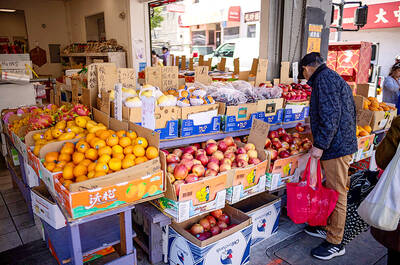
Ajay Verma, a consultant gastroenterologist at Kettering general hospital in Northamptonshire, says our gut is a “complex machine.” “It is constantly providing us with the nutrition we need, initially to grow and develop, and then for us to survive, thrive and repair from injury and illness.” How can we keep it functioning well? Put simply: “Make sure what you put into it is balanced, and that you clear out its waste products adequately,” Verma says. “In a general gastroenterology clinic, the most common conditions we see are irritable bowel syndrome (IBS), gastroesophageal reflux disease, inflammatory bowel disease and constipation,” says Nisha
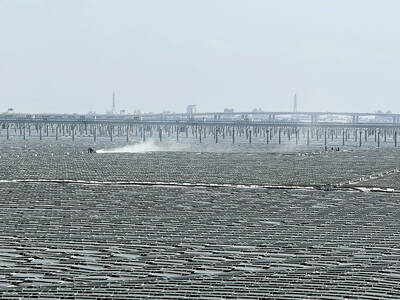
The arithmetic is straightforward and uncomfortable. By the end of 2025, Taiwan had committed itself to a 50-30-20 electricity mix — half natural gas, 30 per cent coal, 20 per cent renewables. The Ministry of Economic Affairs’s (MOEA) own monthly energy reports tell a different story. Natural gas reached 47.8 per cent of generation last year. Coal stood at 35.4 per cent, comfortably above its target ceiling. Renewables came in at 13.1 per cent, well short of the 20 per cent Taipei had pledged a decade earlier. Installed renewable capacity reached roughly half of the 12 gigawatts (GW) the government

Last week US President Donald Trump was asked by a reporter whether he would speak on the phone to the President of Taiwan. “l’ll speak to him. I speak to everybody. We have that situation very well in hand,” Trump said. This marked the second time in a couple of weeks he had said he would talk to the President of Taiwan. In 2016 he famously took a call from then-president Tsai Ing-wen (蔡英文), when he was president-elect. Despite warnings that the apocalypse was nigh because of a phone call, the world quickly forgot about the conversation between two democratically-elected presidents.
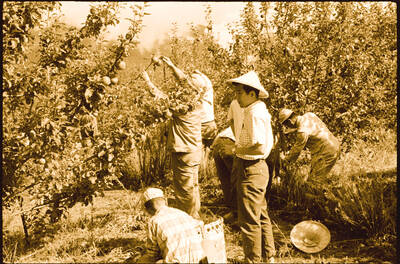
May 25 to May 31 Few believed that apples could be cultivated on a commercial scale in Taiwan’s high mountains. When horticulturalist Cheng Chao-hsiung (程兆熊) first proposed the idea in 1955, both American and Taiwanese colleagues dismissed it as implausible, arguing that temperate fruit could not be reliably grown on a subtropical island, especially on rugged terrain. However, it was this terrain in the Central Mountain Range where many Chinese Civil War veterans were resettled in the late 1950s. With limited job prospects and no family in Taiwan, they were placed on cooperative farms aimed toward self-sufficiency. Some say the conditions


 RSS
RSS