


When my friend invited me to take a tour of a wooden house hand-built by a Pingtung County resident, my curiosity was instantly piqued and I readily agreed to join him. If it was built by a single person, it would surely be quite small. If it was made of wood, it would surely be cramped, dingy and mildewy. If it was designed by an amateur, it would surely be irregular in shape, perhaps cobbled together from whatever material was easily available.
I was wrong on all counts.
As we drove up to the house in Fangliao Township (枋寮鄉), I was surprised to see that it was two stories high, with an immaculate white-and-brown exterior, perfectly straight lines and a clean tiled roof. It looked more like a professionally restored historic monument than someone’s hobby project.
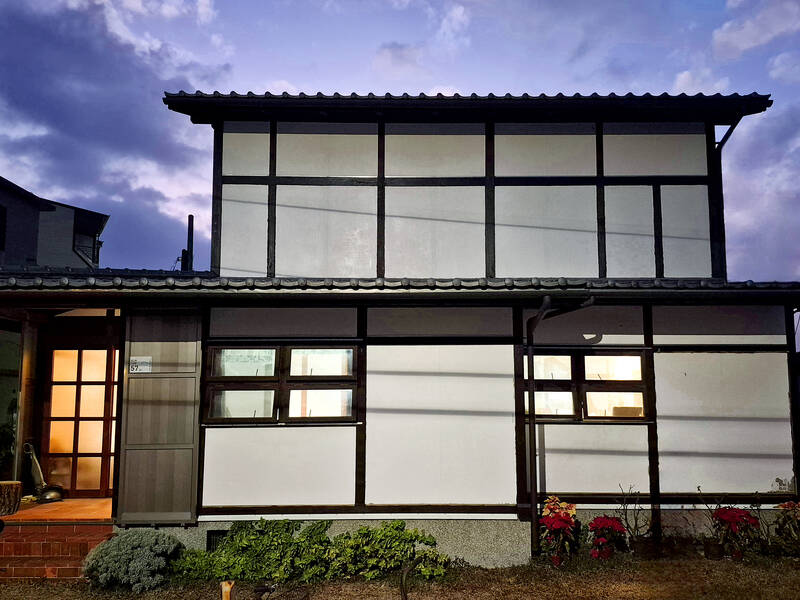
Photo: Tyler Cottenie
During the tour, I came to understand that such a feat was only possible due to the intelligence and perfectionism of the home’s designer and builder, Master Yang San-Er (楊三 二), and the unwavering support of his family throughout the process.
A WARM HOME AND A WARM WELCOME
We were greeted at the front door by Master Yang’s daughter and primary promoter of the family’s achievement, Sue Yang (楊季淑). She has been giving tours of the home for years and is now able to deliver a highly informative and personal rendition of the home’s history with warmth and seemingly effortless ease. What sets this place apart from a museum is the personal touch — Sue was personally involved every step of the way and knows the builder, her father, intimately.
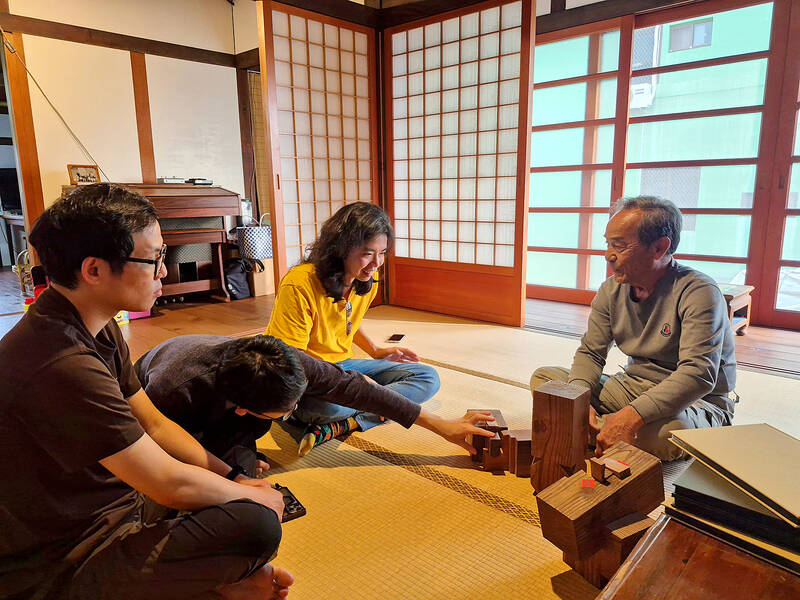
Photo: Tyler Cottenie
My initial impression upon walking in was of how different this space felt from the average Taiwanese home. The simple white of the walls was broken up by the thick horizontal and vertical lines of the pillars, beams and window trim. This wood’s soft, dark brown color came from natural aging of the Canadian Douglas fir — none of the timber used in the home’s construction has been painted. The wooden planks on the ceiling and floor were of different shades of brown and added to the overall cozy, inviting atmosphere while imbuing it with just a hint of natural fragrance.
The second floor is a loft that only covers part of the home’s total area, leaving a space between the living room and the kitchen that is open all the way up to the roof. With exterior windows on all four sides allowing sunlight in and the rather open design, the home feels expansive yet protected, warm yet fresh, carefully crafted yet natural.
Sue had us sit on wicker sofas in the living room and set out a simple spread of local snacks and drinks for us to enjoy as she began introducing her family’s background and how it influenced the creation of this wooden home.
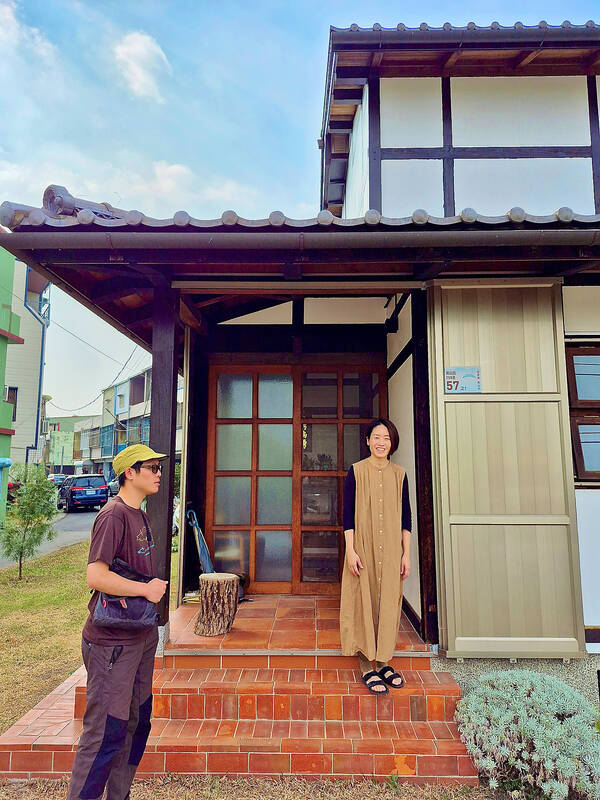
Photo: Tyler Cottenie
Her father had a difficult upbringing, having lost his own father for many years to imprisonment during the White Terror, and having had to start working to support himself after completing elementary school. This lack of a stable home as a young man later became part of his motivation to leave a lasting legacy in the form of a permanent abode for his own children and later generations.
A LONG JOURNEY
Once he delved into the design and construction of the home, Sue’s mother, Chen Huei-Jyuan (陳慧娟), became the main breadwinner for the family, operating a restaurant while taking care of the children. The process dragged on for years, with the groundbreaking ceremony only taking place after 12 years of planning, timber selection, timber sorting and joint cutting.
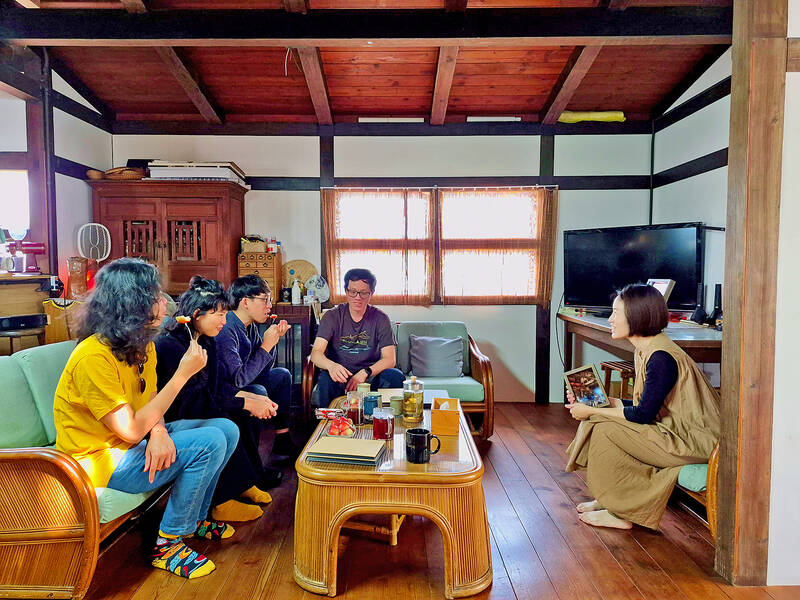
Photo: Tyler Cottenie
Five years later, once the main structure was complete and the roof was tiled, Sue’s parents finally moved into their house — in a tent. It would take another year for the flooring and stairs to be installed, and even longer for water and electricity to be set up.
The process took so long because Sue’s father worked alone, carefully considering every cut, every groove, every joint and how these would affect the long-term life of the wood. The shape of each joint was drawn ahead of time and cut to millimeter precision. What’s more, he did this without any formal training in the trade.
All his knowledge came from a Japanese book on wooden construction that he happened across, a book that he could not even read properly. By picking through the kanji he could recognize and study the diagrams, he was able to master the skills required to cut and join beams using complicated mortise and tenon joints. From this feat comes the name they have chosen for their home, “A Book House” (一冊大木家屋).
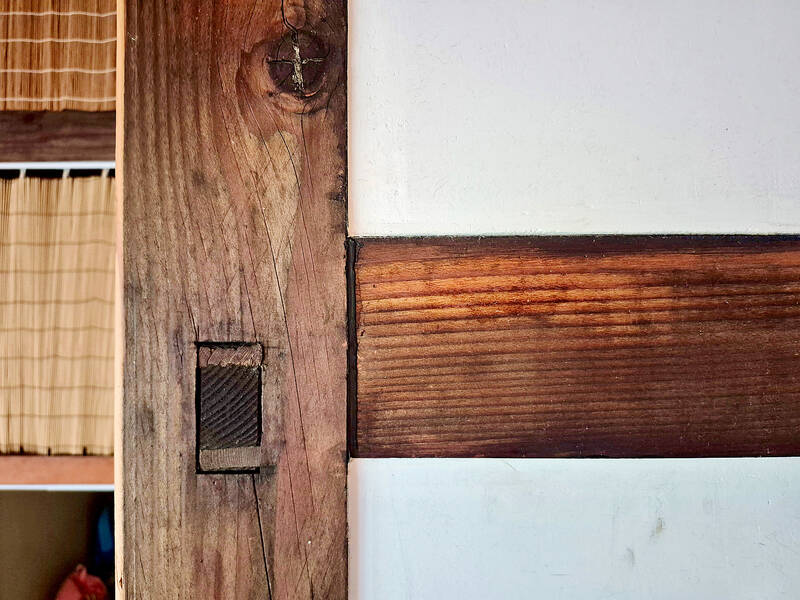
Photo: Tyler Cottenie
We were invited to get up from the sofas and move into the adjacent tatami room to meet the architect himself, styled “Master Yang” by visiting Japanese carpenters who found his work to be on par with the best tradesmen in Japan.
MEETING THE MASTER
Despite being in his 70s, Master Yang is full of enthusiasm for his craft and modesty about his achievements. He shared his thoughts on the design of the house, including why he prefers wood over concrete, remaining challenges such as water seepage along joints in the exterior walls and how modern touches like electrical wires and plumbing were included without affecting the aesthetic of the house.
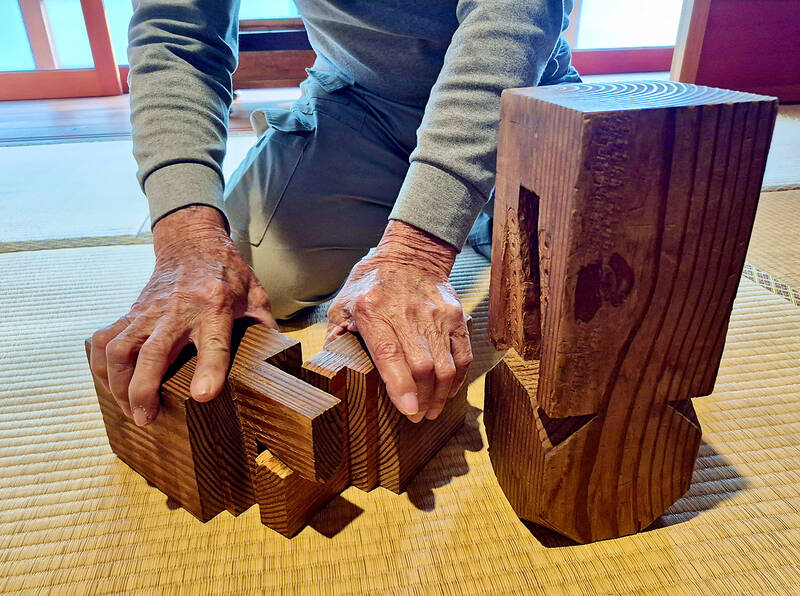
Photo: Tyler Cottenie
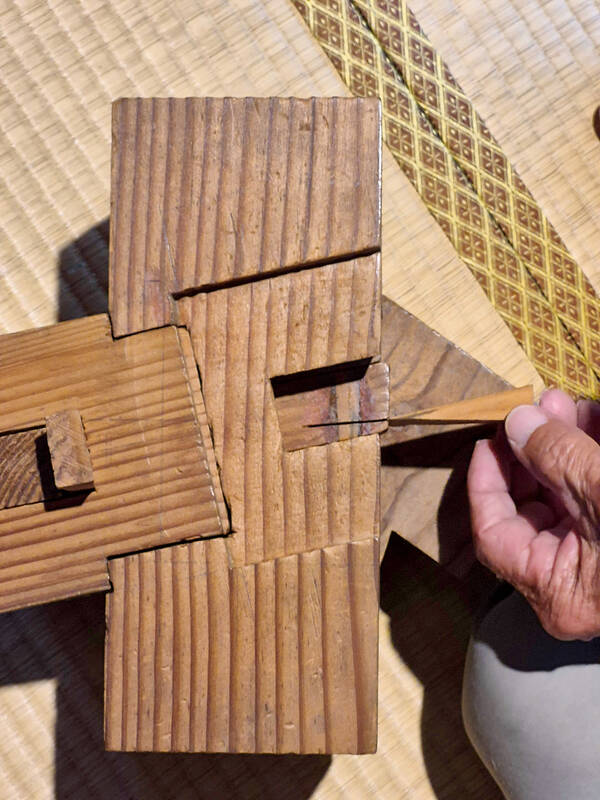
He demonstrated how his mortise and tenon joints worked using 1:1 replicas and let us try our hands at assembling them. Each joint has different angles to ensure that forces on the building from different directions could all be countered and that any water would not get trapped inside. Reassembling these proved too difficult for the members of our group. Designing these in the first place must have taken a level of spatial intelligence far above the average person.
Master Yang took us on a tour of the rest of the house, including the second-floor attic space, accessed via a retractable staircase of his own design. Up here, we were able to see the slats that could be opened for ventilation of warm rising air in the summer, and the plaque placed on the main roof beam during the beam-raising ceremony.
We spent what felt like an hour up here learning about how he designated different timber for different parts of the house, how the natural grain affects each beam’s placement and how future repairs may be carried out. After over two decades of work, he is now an endless source of knowledge that he hopes to share with others who may be considering wooden construction in Taiwan.
It was getting late in the afternoon already, so we decided to leave, though we still had so much more we could have discussed with the Yangs. In hindsight, it would have been worth it to book the full package that includes a meal at their beautiful cypress dining table. After all, Chen ran her own restaurant for years, and the family had been such gracious hosts; there is no doubt that a meal together in the wooden house with just a little more time to discuss their journey would have been a worthwhile experience.
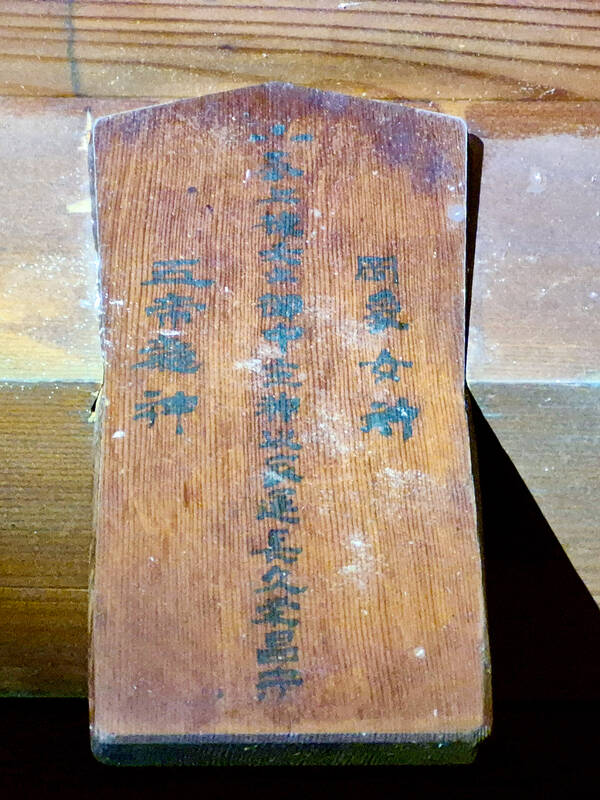
Photo: Tyler Cottenie

Michael slides a sequin glove over the pop star’s tarnished legacy, shrouding Michael Jackson’s complications with a conventional biopic that, if you cover your ears, sounds great. Antoine Fuqua’s movie is sanctioned by Jackson’s estate and its producers include the estate’s executors. So it is, by its nature, a narrow, authorized perspective on Jackson. The film ends before the flood of allegations of sexual abuse of children, or Jackson’s own acknowledgment of sleeping alongside kids. Jackson and his estate have long maintained his innocence. In his only criminal trial, in 2005, Jackson was acquitted. Michael doesn’t even subtly nod to these facts.

The March/April volume of Foreign Affairs, long a purveyor of pro-China pablum, offered up another irksome Beijing-speak on the issues and solutions for the problems vexing the People’s Republic of China (PRC) and the US: “America and China at the Edge of Ruin: A Last Chance to Step Back From the Brink” rang the provocative title, by David M. Lampton and Wang Jisi (王緝思). If one ever wants to describe what went wrong with US-PRC relations, the career of Wang Jisi is a good place to start. Wang has extensive experience in the US and the West. He was a visiting
If one asks Taiwanese why house prices are so high or why the nation is so built up or why certain policies cannot be carried out, one common answer is that “Taiwan is too small.” This is actually true, though not in the way people think. The National Property Administration (NPA), responsible for tracking and managing the government’s real estate assets, maintains statistics on how much land the government owns. As of the end of last year, land for official use constituted 293,655 hectares, for public use 1,732,513 hectares, for non-public use 216,972 hectares and for state enterprises 34 hectares, yielding

The January 2028 presidential election is already stirring to life. In seven or eight months, the primary season will kick into high gear following this November’s local elections. By this point next year, we will likely know the Democratic Progressive Party (DPP) candidate and whether the Taiwan People’s Party (TPP) will be fielding a candidate. Also around this time, the Chinese Nationalist Party (KMT) will either have already completed their primary, or it will be heading into the final stretch. By next summer, the presidential race will be in high gear. The big question is who will be the KMT’s


 RSS
RSS