


Jessica Chastain takes on one of her most daring roles in Dreams, a torrid erotic thriller about power, obsession, art and immigration. Re-teaming with filmmaker Michel Franco (Memory), she plays a San Francisco socialite entangled in a tempestuous affair with a talented Mexican ballet dancer, played by Isaac Hernandez. Her character Jennifer, the well-heeled daughter of a powerful man, is like Shiv Roy before she went to the dark side; Or, rather, realized she was there all along.
Dreams creatively explores ideas about US relations with Mexican immigrants through the ever-shifting power dynamics between Fernando and Jennifer. It’s both captivating and bleak, with a series of sexual encounters that can only be described as feral — Wuthering Heights wishes it could have hit the ravenous peaks of Fernando and Jennifer together.
Franco opens his film not on these two, but on a semitruck in the middle of the night, in the middle of nowhere. All we can hear are chilling screams and pounding from those inside. When the doors are later opened, migrants pour out of the truck including the man who we’ll come to know is Fernando, who simply walks away. He walks and walks and walks: Through the night, through the day, in a machinelike trance until he’s forced to stop for water.

Photo: AP
Eventually we learn where he’s going with such purpose when we hear him speak for the first time, asking drivers at a gas station, in perfect English, if he can get a ride to San Francisco. When he arrives, he goes straight to a fancy townhouse; After the doorbell goes unanswered, he finds the spare keys, enters and gets himself a snack out of the fridge with all the casualness of someone who has not only been there before, but who’s comfortable there as well. We understand this is not a break in — but what is it? Later that night Jennifer arrives and does not look that surprised to see him in her bed.
The film keeps exposition sparse, challenging the audience to figure it out as they go along. These two have a history that seems to have started in Mexico where Jennifer oversees a dance foundation. Her brother (a perfectly smug society brat played by Rupert Friend) makes fun of her interest in Mexico and her frequent trips there, scoffing that their money should go to Americans. She calls him a jerk but laughs too as a Mexican woman cleans up around them in a plush boardroom. Those juxtapositions between the invisible workers and the wealthy are everywhere in Dreams.
In San Francisco, Fernando is Jennifer’s secret. In private, they’re inseparable. In public, he’s something to be hidden from anyone who knows her or her father. After a little bit of this dance, Fernando decides he’s had enough and disappears. Jennifer goes a bit mad trying to find him; flying to visit his parents in Mexico City (who tell her to leave him alone), hiring a private investigator. Then he reappears one day in front of the San Francisco Ballet. He’s dancing for a ticket to the show and ends up with a job in the company after catching the right eye. Suddenly he’s found not just a place in Jennifer’s rarefied world, but a starring role, purely on talent and without her help at all.

Photo: AP
For a brief moment, they find their way back to one another, and she attempts to be more public with their relationship. But still, she defaults to calling him anything but her boyfriend; Then her family gets wind of what’s happening and that fantasy comes crashing down. Not too long after US Immigration and Customs Enforcement come for Fernando while he’s in rehearsal as the ballet company’s lead.
Hernandez in his film debut is a beguiling presence as an actor and utterly transcendent as a dancer, which we get to see a lot of. The film lets the audience bask in their elegant weightlessness as they rehearse the thematically apt Swan Lake.
The story takes on an even more sinister air when Jennifer and Fernando reunite in Mexico. She wants to keep him there, as her plaything, to visit. All he wants to do is get back into the US. And the power balance shifts and shifts again to dizzying, horrific ends.
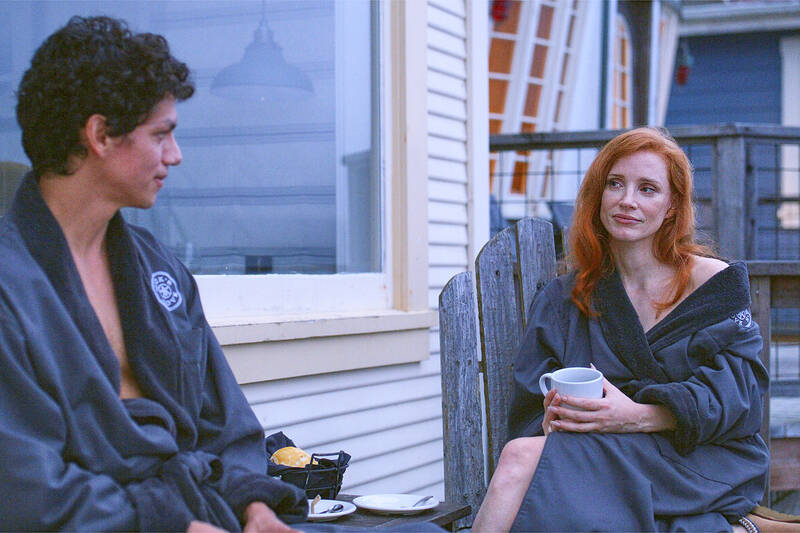
Photo: AP
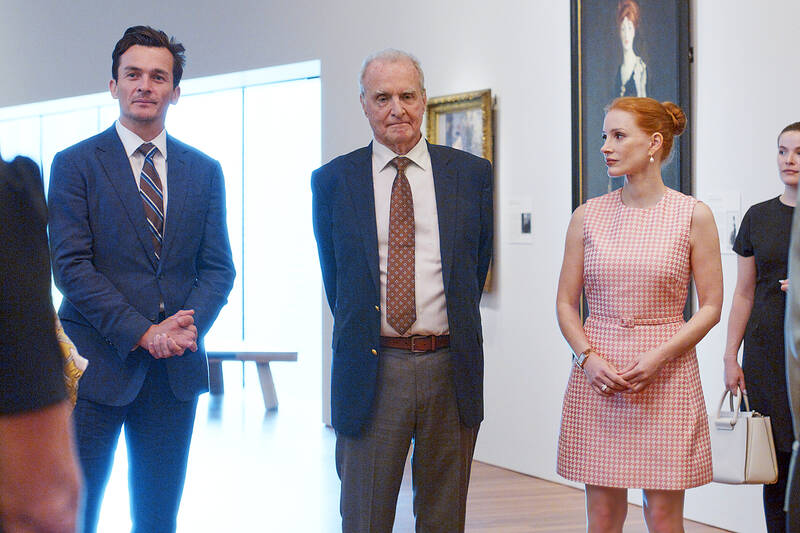
Photo: AP

Ajay Verma, a consultant gastroenterologist at Kettering general hospital in Northamptonshire, says our gut is a “complex machine.” “It is constantly providing us with the nutrition we need, initially to grow and develop, and then for us to survive, thrive and repair from injury and illness.” How can we keep it functioning well? Put simply: “Make sure what you put into it is balanced, and that you clear out its waste products adequately,” Verma says. “In a general gastroenterology clinic, the most common conditions we see are irritable bowel syndrome (IBS), gastroesophageal reflux disease, inflammatory bowel disease and constipation,” says Nisha
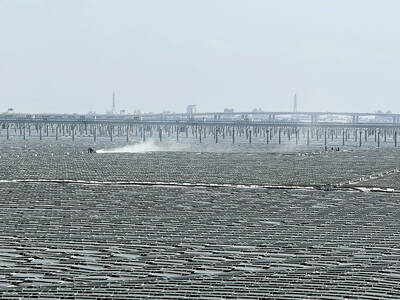
The arithmetic is straightforward and uncomfortable. By the end of 2025, Taiwan had committed itself to a 50-30-20 electricity mix — half natural gas, 30 per cent coal, 20 per cent renewables. The Ministry of Economic Affairs’s (MOEA) own monthly energy reports tell a different story. Natural gas reached 47.8 per cent of generation last year. Coal stood at 35.4 per cent, comfortably above its target ceiling. Renewables came in at 13.1 per cent, well short of the 20 per cent Taipei had pledged a decade earlier. Installed renewable capacity reached roughly half of the 12 gigawatts (GW) the government

Last week US President Donald Trump was asked by a reporter whether he would speak on the phone to the President of Taiwan. “l’ll speak to him. I speak to everybody. We have that situation very well in hand,” Trump said. This marked the second time in a couple of weeks he had said he would talk to the President of Taiwan. In 2016 he famously took a call from then-president Tsai Ing-wen (蔡英文), when he was president-elect. Despite warnings that the apocalypse was nigh because of a phone call, the world quickly forgot about the conversation between two democratically-elected presidents.

May 25 to May 31 Few believed that apples could be cultivated on a commercial scale in Taiwan’s high mountains. When horticulturalist Cheng Chao-hsiung (程兆熊) first proposed the idea in 1955, both American and Taiwanese colleagues dismissed it as implausible, arguing that temperate fruit could not be reliably grown on a subtropical island, especially on rugged terrain. However, it was this terrain in the Central Mountain Range where many Chinese Civil War veterans were resettled in the late 1950s. With limited job prospects and no family in Taiwan, they were placed on cooperative farms aimed toward self-sufficiency. Some say the conditions


 RSS
RSS