


The second-hand market for smartphones has surged in recent years, borne up by lower prices as well as interest in eco-friendly consumption even as some still fear buying a dud.
The success of refurbished phones is a reminder that flashy new gadgets and cutting-edge capabilities, on show this week at Barcelona’s Mobile World Congress (MWC) telecoms trade fair, are not the only engines of the sector.
Around 46 percent of Europeans have already taken the plunge by buying a second-hand device, marketplace Recommerce found in a survey last year commissioned from pollsters Kantar.

Photo: AFP
But the picture varies around the world, as “mature markets in Europe and parts of North America tend to show higher refurbished uptake,” according to a report from analysis firm Mordor Intelligence, which estimates the second-hand market at 10 percent of worldwide phone purchases annually.
Western consumers “are increasingly aligning with circular-economy principles, prioritizing lifecycle extension and reducing electronic waste” as environmental concerns permeate public debate, the authors wrote.
PRICE AND PLANET
Price remains the killer argument for refurbished phones, with second-hand models sometimes half as expensive as a factory-fresh alternative, attracting consumers who have seen purchasing power ground down by inflation.
Almost twice as many respondents to Recommerce’s survey named price as a factor in their choice, compared to the environment.
“It gives citizens and consumers yet another reason to not go out and buy a product that’s too expensive,” said Thibaud Hug de Larauze, co-founder of refurbished tech marketplace Back Market.
Although smartphone sales remain dominated by new devices from hardware giants such as Apple and Samsung, his company achieved profitability for the first time in its 12-year history last year.
Meanwhile the environmental impact of buying a second-hand phone can be significantly lower, avoiding the use of new materials and the carbon emissions that go into producing each device.
“A refurbished phone can have an 87-percent lower climate impact compared to a new phone,” said Steven Moore, head of climate action at the GSMA global mobile operators’ group.
NT$100 BILLION MARKET?
But such arguments do little to allay the fears of prospective buyers who fear they could find they’ve handed over hundreds for a lemon.
“There’s still a perception that the phones will break sooner,” Moore said.
Hug de Larauze said refurbishing companies are trying to “counter the skepticism,” including with offers for “premium” devices with a like-new finish and fresh batteries — now accounting for around 20 percent of Back Market’s sales.
Recommerce chief Augustin Becquet said the company had turned to “transparency” to win over consumers, offering an externally audited quality label and warranties for one or two years.
“Warranties are critical,” said Claire Gillies, head of BT Group’s consumer division, at the Mobile World Congress (MWC) in Barcelona.
Buyers want “standardisation... some understanding of what quality I’ll be getting,” she added.
Forecast to be worth around US$70 billion this year, the refurbished device market is set to grow to US$100 billion in five years’ time, according to Mordor Intelligence.
But like many other tech fields, it could fall victim to the geopolitical and trade tensions that have re-emerged since US President Donald Trump returned to the White House.
“It’s definitely not helping... it’s a shame that things are being slowed when we really need things to be accelerated,” said the GSMA’s Moore.
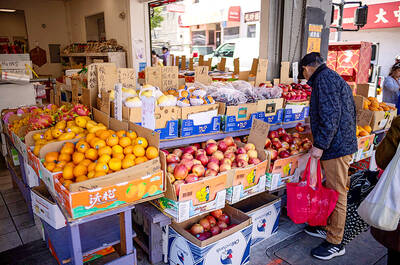
Ajay Verma, a consultant gastroenterologist at Kettering general hospital in Northamptonshire, says our gut is a “complex machine.” “It is constantly providing us with the nutrition we need, initially to grow and develop, and then for us to survive, thrive and repair from injury and illness.” How can we keep it functioning well? Put simply: “Make sure what you put into it is balanced, and that you clear out its waste products adequately,” Verma says. “In a general gastroenterology clinic, the most common conditions we see are irritable bowel syndrome (IBS), gastroesophageal reflux disease, inflammatory bowel disease and constipation,” says Nisha
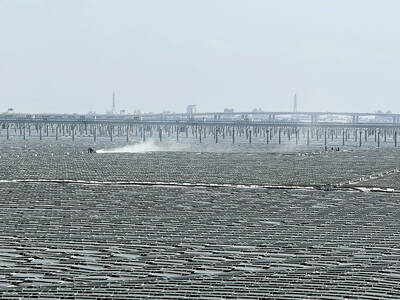
The arithmetic is straightforward and uncomfortable. By the end of 2025, Taiwan had committed itself to a 50-30-20 electricity mix — half natural gas, 30 per cent coal, 20 per cent renewables. The Ministry of Economic Affairs’s (MOEA) own monthly energy reports tell a different story. Natural gas reached 47.8 per cent of generation last year. Coal stood at 35.4 per cent, comfortably above its target ceiling. Renewables came in at 13.1 per cent, well short of the 20 per cent Taipei had pledged a decade earlier. Installed renewable capacity reached roughly half of the 12 gigawatts (GW) the government
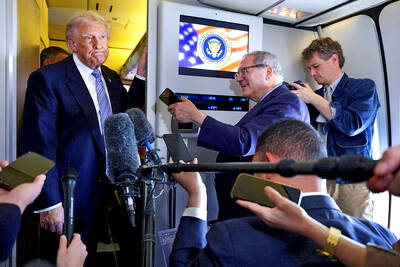
Last week US President Donald Trump was asked by a reporter whether he would speak on the phone to the President of Taiwan. “l’ll speak to him. I speak to everybody. We have that situation very well in hand,” Trump said. This marked the second time in a couple of weeks he had said he would talk to the President of Taiwan. In 2016 he famously took a call from then-president Tsai Ing-wen (蔡英文), when he was president-elect. Despite warnings that the apocalypse was nigh because of a phone call, the world quickly forgot about the conversation between two democratically-elected presidents.
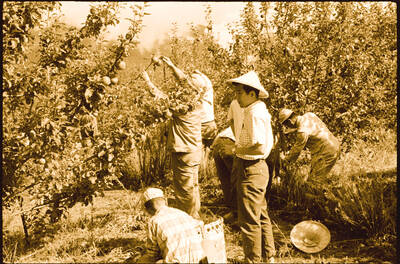
May 25 to May 31 Few believed that apples could be cultivated on a commercial scale in Taiwan’s high mountains. When horticulturalist Cheng Chao-hsiung (程兆熊) first proposed the idea in 1955, both American and Taiwanese colleagues dismissed it as implausible, arguing that temperate fruit could not be reliably grown on a subtropical island, especially on rugged terrain. However, it was this terrain in the Central Mountain Range where many Chinese Civil War veterans were resettled in the late 1950s. With limited job prospects and no family in Taiwan, they were placed on cooperative farms aimed toward self-sufficiency. Some say the conditions


 RSS
RSS