


If Peter Jackson’s The Beatles: Get Back was the supreme document of the Beatles’ final moments together and of their dissolution, Morgan Neville’s Man on the Run is a kind of sequel.
It begins in late 1969, just months after Savile Row rooftop concert. The Beatles have broken up. Paul McCartney has seemingly disappeared. There are even rumors that he’s dead. On a remote farm in Scotland, a confused and distraught McCartney wonders whether he’ll write “another note, ever.”
But the most surprising thing about revisiting this tumultuous, tabloid-ready period of McCartney’s life is a simple fact. When the Beatles broke up, McCartney was 27 years old. To say he had lived a lifetime by then would be an understatement. By just the sheer enormity of their production and colossal cultural impact, you might easily mistakenly put McCartney in middle age by then.
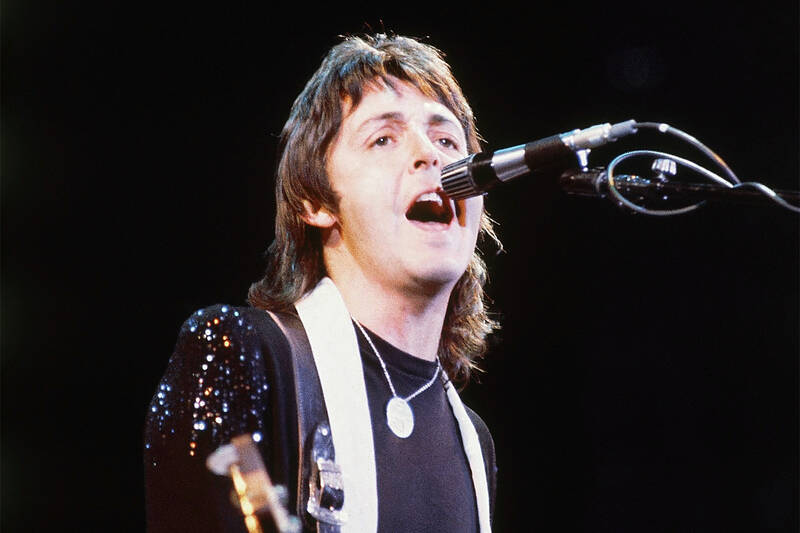
Photo: AP
Man on the Run is the story of everything that came after. McCartney, an executive producer, is never seen sitting for an interview, but his off-camera musings mark the movie, a chronicle of self renewal. For McCartney, kept boyish by the Beatles, the band’s end meant a sudden coming of age.
“I had to look inside myself and find something that wasn’t the Beatles,” McCartney says in the film.
How you feel about McCartney’s post-Beatles career might inform how you feel about Man on the Run. For Neville, the celebrated documentary filmmaker of Won’t You Be My Neighbor, Piece by Piece and 20 Feet From Stardom, it’s a period that offers no neat narrative, but — quite unlike the mythic Beatles years — something more like the ups and down of life, with regrets and triumphs along the way.

Photo: AP
It didn’t get off to a good start. McCartney, blamed for the Beatles breakup, was guilt-ridden. His first records were a disappointment. Singing with Linda McCartney, his wife, wasn’t greeted well. A 1973 TV special that included a rendition of Mary Had a Little Lamb was, to put it a mildly, a misjudgment. A curious feature of McCartney’s largely sunny disposition is a nagging self-loathing.
“If I hear someone damning Paul McCartney, I tend to believe them,” he says, referencing the Beatles split.
Get Back offered a revelatory window into the group’s dynamics that put many of the old views of McCartney to bed. Comparisons are tough — Get Back is one of the greatest docs of the century — but Jackson’s film, drawn largely from footage shot by Michael Lindsay-Hogg, was also incredibly intimate. It captured not only the band’s individual relationships but the songwriting process in real time. (The emergence of Get Back from McCartney’s strumming and humming stands as one of the great sequences in documentary film.)
Man on the Run lacks that sense of closeness. By keeping the film in archival — the documentary is full of family photos and home movies — and without present-day talking heads, Neville lets us experience McCartney’s post-Beatles years as he did. It comes as a sacrifice, though, to a nearness to McCartney — and to the creation of his solo songs — that might have deepened the film.
The real arc of Man on the Run is building toward the creation of McCartney’s first post-Beatles band, Wings. It’s in some ways an unlikely centerpiece. In the revolving makeup of the band, Denny Laine was the only permanent member outside Paul and Linda. On the other hand, Wings’ Band on the Run is the best album McCartney produced after the Beatles, and the clear culmination of years of struggle. If you needed one, this is your cue to go play Jet loud.
It turns out, to no one’s surprise, it’s hard to move on after being in the Beatles — especially for someone like McCartney who believed so sincerely in the band. Like its subject, Man on the Run inevitably pales next to films of the Beatles heyday. But it’s a meaningful companion piece about the end of an era and the start of a long and winding road.

Ajay Verma, a consultant gastroenterologist at Kettering general hospital in Northamptonshire, says our gut is a “complex machine.” “It is constantly providing us with the nutrition we need, initially to grow and develop, and then for us to survive, thrive and repair from injury and illness.” How can we keep it functioning well? Put simply: “Make sure what you put into it is balanced, and that you clear out its waste products adequately,” Verma says. “In a general gastroenterology clinic, the most common conditions we see are irritable bowel syndrome (IBS), gastroesophageal reflux disease, inflammatory bowel disease and constipation,” says Nisha
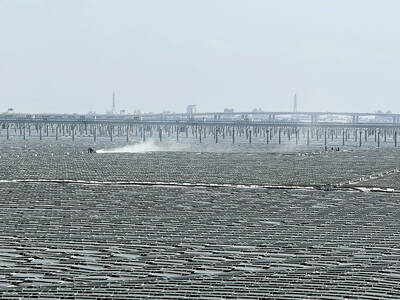
The arithmetic is straightforward and uncomfortable. By the end of 2025, Taiwan had committed itself to a 50-30-20 electricity mix — half natural gas, 30 per cent coal, 20 per cent renewables. The Ministry of Economic Affairs’s (MOEA) own monthly energy reports tell a different story. Natural gas reached 47.8 per cent of generation last year. Coal stood at 35.4 per cent, comfortably above its target ceiling. Renewables came in at 13.1 per cent, well short of the 20 per cent Taipei had pledged a decade earlier. Installed renewable capacity reached roughly half of the 12 gigawatts (GW) the government

Last week US President Donald Trump was asked by a reporter whether he would speak on the phone to the President of Taiwan. “l’ll speak to him. I speak to everybody. We have that situation very well in hand,” Trump said. This marked the second time in a couple of weeks he had said he would talk to the President of Taiwan. In 2016 he famously took a call from then-president Tsai Ing-wen (蔡英文), when he was president-elect. Despite warnings that the apocalypse was nigh because of a phone call, the world quickly forgot about the conversation between two democratically-elected presidents.
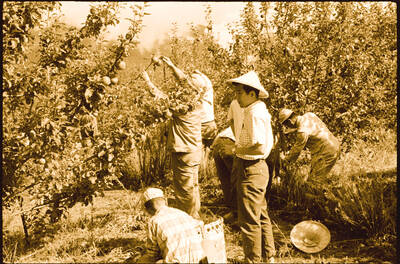
May 25 to May 31 Few believed that apples could be cultivated on a commercial scale in Taiwan’s high mountains. When horticulturalist Cheng Chao-hsiung (程兆熊) first proposed the idea in 1955, both American and Taiwanese colleagues dismissed it as implausible, arguing that temperate fruit could not be reliably grown on a subtropical island, especially on rugged terrain. However, it was this terrain in the Central Mountain Range where many Chinese Civil War veterans were resettled in the late 1950s. With limited job prospects and no family in Taiwan, they were placed on cooperative farms aimed toward self-sufficiency. Some say the conditions


 RSS
RSS