


For many centuries from the medieval to the early modern era, the island port of Hirado on the northwestern tip of Kyushu in Japan was the epicenter of piracy in East Asia. From bases in Hirado the notorious wokou (倭寇) terrorized Korea and China. They raided coastal towns, carrying off people into slavery and looting everything from grain to porcelain to bells in Buddhist temples. Kyushu itself operated a thriving trade with China in sulfur, a necessary ingredient of the gunpowder that powered militaries from Europe to Japan.
Over time Hirado developed into a full service stop for pirates. Booty could be disposed of, slaves sold off, ships repaired and maintained and even, as the Dutch found later to their delight, constructed to buyer specifications. Most importantly, men could be recruited.
“The Dutch were interested in Japanese recruits because they were cheap, because they carried with them a formidable reputation for reckless violence, and because there was a seemingly inexhaustible supply of them available in Hirado,” writes Adam Clulow, a key scholar of East Asian piracy.
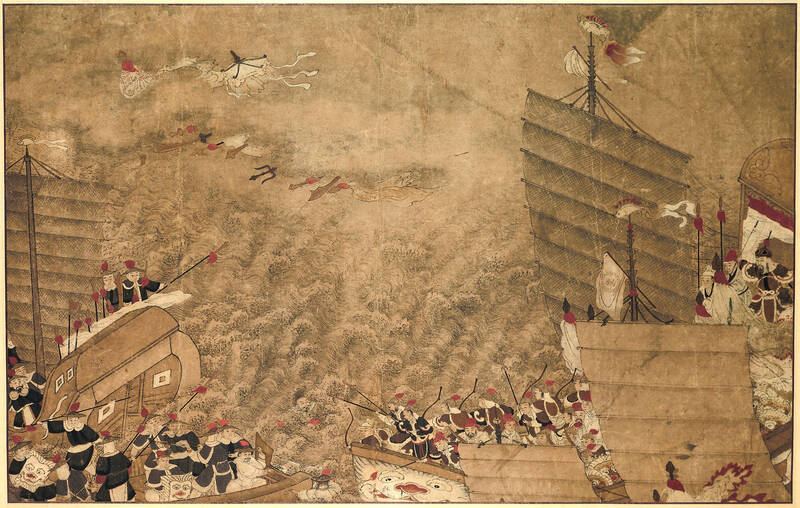
Photo courtesy of Wikimedia Commons
Although the wokou are often defined as Japanese pirates because their men were Japanese, the leadership was generally Chinese in origin.
The Matsura clan, which governed Hirado, provided political cover for the pirates, much as the Dutch carried papers from their government to act as privateers. Or, as the locals in East Asia called them, pirates.
The Dutch (along with the English) received permission from shogun Tokugawa Ieyasu to set up in Hirado in 1609.
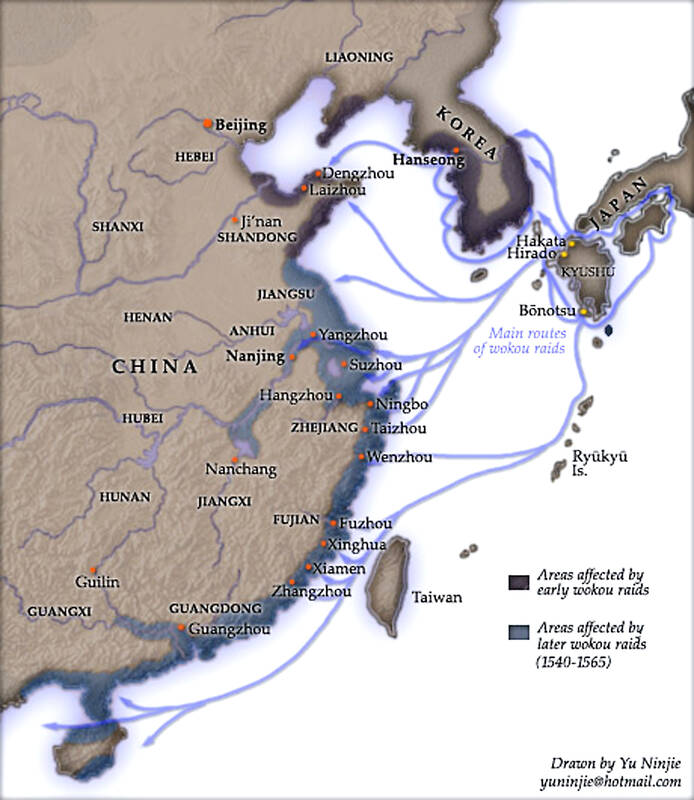
Photo courtesy of Wikimedia Commons
“Scholars agree that during the first twenty years of its existence” explains Jurre Knoest of the University of Leiden, “the Dutch factory at Hirado functioned as a base of operations for Dutch privateering activities in East and Southeast Asian waters, rather than as a profitable trading post.”
From 1619 to 1622 Hirado also hosted a joint English-Dutch squadron that targeted ships of the Iberian states, Spain and Portugal, and neutrals who traded with them. The English, unable to make money, closed their Hirado base in 1625.
In that period the Dutch generated wealth more by plundering than trading, enabling them to “cover more than half of the operating costs in Asia,” Knoest writes. It was only after they established the base at Anping (modern Tainan) on Formosa that they were able to obtain goods (deer hides) in high demand in Japan and enter the lucrative Japan-China trade regime.
The Dutch represented an innovation in piracy in the area. Dutch violence was, as Clulow points out, bureaucratized. Dutch leaders must have secretly envied the Chinese and Japanese pirates, who did not have to file reports or respond to Company audits. The trade-off was that the Dutch privateers were far better capitalized, using vessels mounting heavy ship-destroying cannon, something none of the pirate ships of East Asia then possessed. The gigantic fleets of hundreds of ships operating by famous pirate leaders such as Wang Zhi (王直), who was based in Hirado in the latter half of the 16th century, were simply transports for marauding warriors who conducted their attacks on land. The Dutch, by contrast, picked off ships, 150-200 of them during their years at Hirado, according to Knoest. They would lie in wait for Spanish ships out of Manila, seize Chinese ships attempting to trade with Manila and hunt down Portuguese ships trading with Macao and Japan.
The Dutch could wave papers from their government at ships of enemy powers, but Chinese pirates in East Asian waters also operated with some sort of official sanction. Moreover, like other pirates, their activities encompassed not merely violent appropriation of other people’s goods, but also peaceful trading, along with occasional attempts to establish independent statelets. The Dutch base in Anping should be seen in that context. It had official support from home, it traded all sorts of goods across its geopolitical sphere, and it raided Iberian ships incessantly.
The Dutch line of communications ran from Batavia in Indonesia, the main Dutch base in Asia, up to Anping in Taiwan and thence to Hirado. If the Dutch blockade attempts of Manila are included, inherent in this conception of Dutch operating space is the modern idea of the first island chain. The Dutch had grasped that control of that space yielded control of the waters off China. For the Dutch, because they had ship-killing cannon, sea space was something they could aim at controlling, whereas for the earlier wokou it was simply something they moved through on their way to somewhere else. The first island chain came into existence only when the technology necessary to control it was invented.
Like all the local pirates, the Dutch often worked with other pirate-merchants, including, famously, the Zheng (鄭) clan, to whom a majority of Chinese merchants and diaspora across maritime East Asia rendered allegiance. Lead by Zheng Zhilong (鄭芝龍), the Zheng fleets traded goods from China and SE Asia to Japan to obtain silver. This gave the family a unique relationship with the government of Japan, the bakufu, beginning in the 1630s and lasting until the Zheng base at Anping fell to the Manchu (Qing) Empire in 1683. Though Japan had ostensibly withdrawn from the outside world, the bakufu continued to adjudicate between the Dutch and the Chinese, and worked closely with Zheng Zhilong, who was based — where else? — in Hirado. Zheng Zhilong’s son by his Japanese wife was Koxinga (Cheng Cheng-kung 鄭成功), who threw the Dutch out of Anping.
The bakufu used the Zhengs to counter the Dutch, and they enjoyed joint administration of Hirado. This happy arrangement lasted until the 1660s. With Koxinga’s son Cheng Jing (鄭經) their relationship began to weaken, especially as Japanese silver mines became depleted. Still the Zheng maintained their position of privilege by means of economic sanctions, predation at sea, and illicit collusion with the municipal authorities.
After 1625 Zheng Zhilong launched attacks on China from bases on Taiwan just north of the Dutch base, which the Ming stopped only by giving Zheng an official appointment in 1628. As many scholars have described, this official appointment and his connections with the bakufu formed the basis of an immensely lucrative trade network that made him one of the richest men on earth. At first he ran silk to the Dutch in Anping, who sold it in Nagasaki for silver in order to obtain naval and military technology from the Dutch. Later he cut the Dutch out of that trade. From his base in Penghu he forced ships transiting the Taiwan Strait to pay him for a pass or be plundered. Though the Dutch repeatedly asked the Japanese government for permission to plunder Zheng’s vessels, the Shogunate refused.
Zheng Zhilong was seized in 1646 by the Manchus during negotiations and taken to Beijing (where he remained until his execution in 1661). Years of turbulence followed, until Koxinga emerged as the ruler in 1650. He restored his family’s good relationship with the Japanese by skillful use of formal and informal connections, in part because the Japanese were deeply sympathetic to all Ming loyalists. Between 1650 and 1662, Japanese research shows, Koxinga exported goods worth roughly 65,000 kilograms of silver, or two and half times what the Dutch were making.
Although in modern Chinese propaganda Koxinga is often represented as “recovering” Taiwan for China, in reality he was merely removing the competition. How Koxinga thought of the Hirado-Taiwan-Manila connection seems clear from the fact that he moved on Luzon almost immediately after taking the base at Anping.
What is interesting is how, repeatedly, pirate leaders from Europe and Asia operating across that sea space eventually came to understand the connection between the ports and island chains and the coast of China, but land-focused Chinese imperial governments themselves were never able to see it, and never grabbed that future “core interest,” Taiwan.
Notes from Central Taiwan is a column written by long-term resident Michael Turton, who provides incisive commentary informed by three decades of living in and writing about his adoptive country. The views expressed here are his own.

Ajay Verma, a consultant gastroenterologist at Kettering general hospital in Northamptonshire, says our gut is a “complex machine.” “It is constantly providing us with the nutrition we need, initially to grow and develop, and then for us to survive, thrive and repair from injury and illness.” How can we keep it functioning well? Put simply: “Make sure what you put into it is balanced, and that you clear out its waste products adequately,” Verma says. “In a general gastroenterology clinic, the most common conditions we see are irritable bowel syndrome (IBS), gastroesophageal reflux disease, inflammatory bowel disease and constipation,” says Nisha
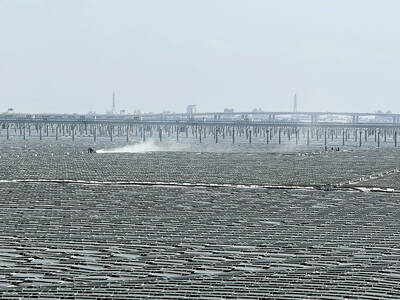
The arithmetic is straightforward and uncomfortable. By the end of 2025, Taiwan had committed itself to a 50-30-20 electricity mix — half natural gas, 30 per cent coal, 20 per cent renewables. The Ministry of Economic Affairs’s (MOEA) own monthly energy reports tell a different story. Natural gas reached 47.8 per cent of generation last year. Coal stood at 35.4 per cent, comfortably above its target ceiling. Renewables came in at 13.1 per cent, well short of the 20 per cent Taipei had pledged a decade earlier. Installed renewable capacity reached roughly half of the 12 gigawatts (GW) the government

Last week US President Donald Trump was asked by a reporter whether he would speak on the phone to the President of Taiwan. “l’ll speak to him. I speak to everybody. We have that situation very well in hand,” Trump said. This marked the second time in a couple of weeks he had said he would talk to the President of Taiwan. In 2016 he famously took a call from then-president Tsai Ing-wen (蔡英文), when he was president-elect. Despite warnings that the apocalypse was nigh because of a phone call, the world quickly forgot about the conversation between two democratically-elected presidents.
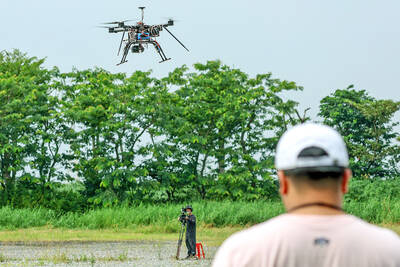
Taiwan’s drone exports are taking off, fuelled by the war in Ukraine, as Taiwanese companies seek a stake in the fast-growing global market for unmanned aerial vehicles (UAV). Low-cost drones used for reconnaissance and strikes are in high demand as governments around the world boost defense spending in the face of intensifying conflicts. A relative new player in the increasingly competitive industry, Taiwan’s pitch is to be an “Asian hub” for the production of UAVs and components free of Chinese materials, or “non-red.” That means its UAVs can be up to three times more expensive than their Chinese competitors, like the world’s biggest


 RSS
RSS