


The Chinese Nationalist Party (KMT) is entering the Year of the Horse with reasonable expectations of riding to victory in November’s nine-in-one elections, but there are concerns within the party that they could instead ride off a cliff. We cannot be sure what “unknown unknowns” are out there, but there are several key wildcards in the “known unknowns” category.
As explored in the last column, “The ugly math facing the DPP this election year” (Feb. 7, page 12), the KMT has significant advantages over the Democratic Progressive Party (DPP) in local elections. The DPP won only five chief executive posts of the 22 administrative regions in 2022, and of those, due to term limits in only Pingtung and Penghu are their incumbents allowed to run again.
The KMT won the last two local election cycles in landslides, winning 14 top spots in 2022. Currently, they hold 15 after the Miaoli County Commissioner was readmitted into the party last year, after having been kicked out for running as an independent against the party’s nominated candidate.
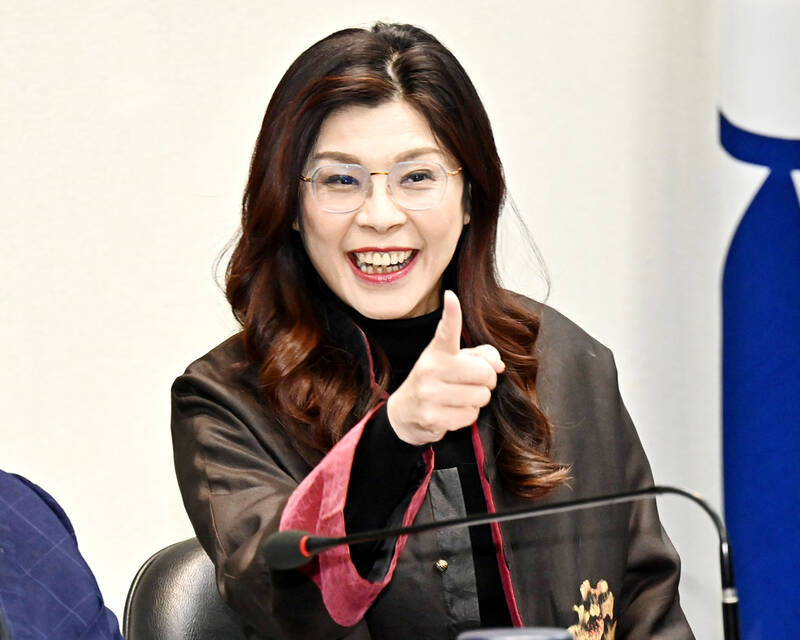
Photo: Tu Chien-jung, Liberty Times
Though it is never a certainty, more often than not incumbents are re-elected. The KMT is running six incumbents this year, and look strong in all of them. They are Lienchang County (aka Matsu), Nantou, Miaoli, Keeling and the big prizes of Taoyuan and Taipei cities.
WILDCARD ONE: INTERNAL SPLITS
The KMT also has a deep bench of local political talent, which is generally a good thing for the party, but conflicts are common as strong, ambitious and qualified politicians with a reasonable chance of winning vie to be the party’s nominee. Sometimes, as happened in Miaoli in 2022, these candidates bolt the party to run as independents. In places like Kinmen and Matsu the DPP will likely not bother running candidates, and in places like Miaoli and Nantou the DPP is at a serious disadvantage, so the more likely threat to the KMT is defectors from their own pan-blue camp.
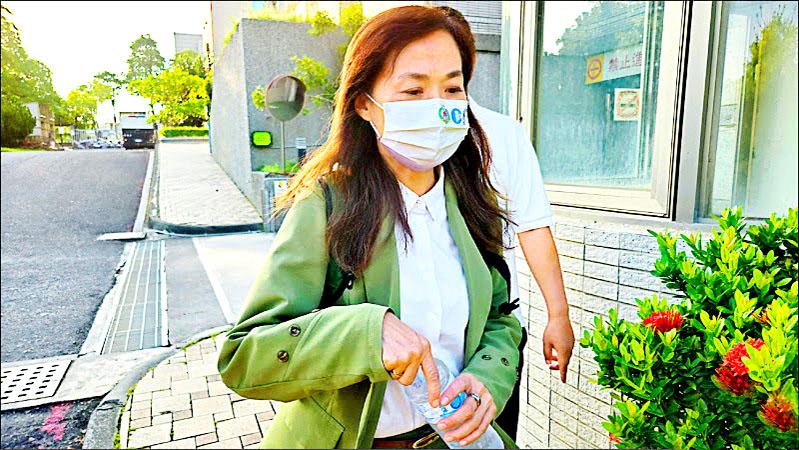
Photo: Wang Chieh, Taipei Times
This time around, Taichung, Hsinchu County and Hualien are facing bitter and contested primaries. While a split in Taichung looks less likely, Hsinchu County and Hualien are far less certain, and candidates running as independents in either, or both, would surprise no one.
There is little news coming out of Kinmen, but often independents or even smaller party candidates from deep blue/red parties like the New Party do well there. The “Tank of Kinmen (金門坦克),” Jennifer Chen (陳玉珍), declared she intended to run as county commissioner in 2024, but it is unclear if that is still the case.
WILDCARD TWO: THE TPP
There is also the Taiwan People’s Party (TPP) problem. They are running candidates in New Taipei City, Yilan, Chiayi City and possibly Hsinchu City if Ann Kao (高虹安) rejoins the TPP. The KMT has already indicated that they will likely back Kao, and they might even get her to join the KMT, but that would sour the relationship with the TPP.
The two parties have recently been closely aligned in the legislature and in their messaging on issues. TPP voter support could be crucial in securing KMT victories in tight races. The leaders of both parties have pledged to enter “sincere” negotiations on running jointly backed candidates for city mayors and county commissioners.
That is easier said than done. It is not hard to see the KMT stepping aside for TPP candidates in Yilan or Chiayi City or even both, but New Taipei City is another matter. It is the nation’s most populous city and the mayorship is a viable stepping stone to running for president.
KMT Chairwoman Cheng Li-wun (鄭麗文) has already declared that the KMT cannot be absent from the New Taipei City race, but the TPP’s candidate is TPP Chairman Huang Kuo-chang (黃國昌), and he has already established his campaign headquarters and shows no interest in stepping aside.
The negotiations between the KMT and TPP will likely take place next month or April. Huang has been very pro-KMT, but complicating matters is the reappearance of TPP founder Ko Wen-je (柯文哲). Ko has leaned KMT, but has been more prickly and tougher with the KMT, and openly prefers the party keep something of an independent identity and not a “little blue” junior partner. Even more complicated, both Huang and Ko are facing legal problems, so it is not impossible one or the other may be in jail by the time negotiations are due.
WILDCARD THREE: ARRESTED CADRES
One potentially big challenge for the KMT in this cycle is that across the country, many of the leaders and top cadres in local party chapters are under investigation for voter fraud, including many who have pled guilty. During their attempts to recall DPP lawmakers last year, some copied party membership rolls and forged signatures, but were caught when it turned out many of those people were inconveniently deceased. The KMT has historically had the best get-out-the-vote machine, but how many of those key experienced cadres will be out of action? Will these fraud cases deter others from taking their place? These questions are too early to answer, but bear watching.
WILDCARD FOUR: CHINESE PROPAGANDA
Another variable is Chinese influence via organizations like the United Front Work Department (UFWD). In previous elections they have funneled campaign contributions through intermediaries, bought off local DJs and flooded social media with propaganda. The question is: has this helped the KMT? Most Taiwanese, especially those swing voters who decide elections, could easily see through the generally clumsy propaganda. It likely helped boost voter turnout among the deep blue base that already agrees with them by ginning up anger against the DPP, but only a truly gullible few were swayed by it.
This time, artificial intelligence (AI) capabilities are far more advanced, making it harder for average voters to distinguish what is real and what is not. This will be a problem across the political spectrum from domestic sources, but could the UFWD use these tools far more effectively this time? Or will they overplay their hand and cause a backlash?
WILDCARD FIVE: NATIONAL POLITICS
Broadly speaking, national politics plays a relatively minor role in local elections. In 2022, the DPP used the slogan “resist China, protect Taiwan” (抗中保台) to “smear red” (抹紅) KMT politicians as too close to China. Voters rejected this. Local politics is about potholes and playgrounds, not national identity.
However, national politics can tarnish a party’s brand, as happened in 2014. If the legislative deadlock continues, will this sway voters? This could cut both ways, depending on which side voters blame. If the US trade deal is rejected by the KMT-led legislature and local factories start closing, the KMT will be blamed.
The biggest wildcard in the “known unknowns” category is Cheng Li-wun herself. She is an ideological hardliner who proudly and unapologetically holds opinions far outside of the mainstream. Even powerful figures in the party have come out to disagree with her on certain points, and many in the party openly fret she is toxic for the party’s brand. She also has limited electoral experience and is juggling complicated primary politics, provoking concerns among the rank-and-file.
She deserves an entire column on her own.
Donovan’s Deep Dives is a regular column by Courtney Donovan Smith (石東文) who writes in-depth analysis on everything about Taiwan’s political scene and geopolitics. Donovan is also the central Taiwan correspondent at ICRT FM100 Radio News, co-publisher of Compass Magazine, co-founder Taiwan Report (report.tw) and former chair of the Taichung American Chamber of Commerce. Follow him on X: @donovan_smith.

As mega K-pop group BTS returns to the stage after a hiatus of more than three years, one major market is conspicuously missing from its 12-month world tour: China. The omission of one of the group’s biggest fan bases comes as no surprise. In fact, just the opposite would have been huge news. China has blocked most South Korean entertainment since 2016 under an unofficial ban that also restricts movies and the country’s popular TV dramas. For some Chinese, that means flying to Seoul to see their favorite groups perform — as many were expected to do for three shows opening
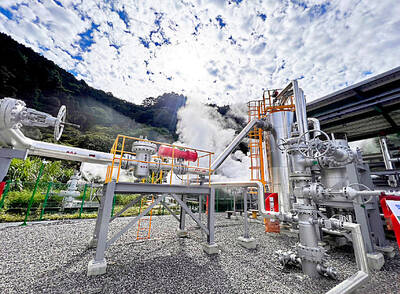
Taiwan’s semiconductor industry consumes electricity at rates that would strain most national grids. Taiwan Semiconductor Manufacturing Co (TSMC) alone accounted for more than 9 percent, or 2,590 megawatts (MW), of the nation’s power demand last year. The factories that produce chips for the world’s phones and servers run around the clock. They cannot tolerate blackouts. Yet Taiwan imports 97 percent of its energy, with liquefied natural gas reserves measured in days. Underground, Taiwan has options. Studies from National Taiwan University estimate recoverable geothermal resources at more than 33,000 MW. Current installed capacity stands below 10 MW. OBSTACLES Despite Taiwan’s significant geothermal potential, the

In our discussions of tourism in Taiwan we often criticize the government’s addiction to promoting food and shopping, while ignoring Taiwan’s underdeveloped trekking and adventure travel opportunities. This discussion, however, is decidedly land-focused. When was the last time a port entered into it? Last week I encountered journalist and travel writer Cameron Dueck, who had sailed to Taiwan in 2023-24, and was full of tales. Like everyone who visits, he and his partner Fiona Ching loved our island nation and had nothing but wonderful experiences on land. But he had little positive to say about the way Taiwan has organized its
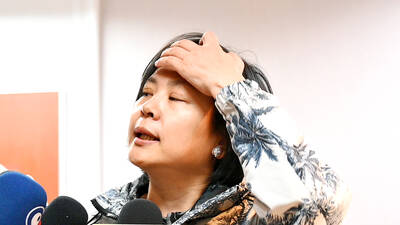
The entire Li Zhenxiu (李貞秀) saga has been an ugly, complicated mess. Born in China’s Hunan Province, she moved to work in Shenzhen, where she met her future Taiwanese husband. Most accounts have her arriving in Taiwan and marrying somewhere between 1993 and 1999. She built a successful career in Taiwan in the tech industry before founding her own company. She also served in high-ranking positions on various environmentally-focused tech associations. She says she was inspired by the founding of the Taiwan People’s Party (TPP) in 2019 by Ko Wen-je (柯文哲), and began volunteering for the party soon after. Ko


 RSS
RSS