


The collection on temporary display at the Neiwei Art Center in Kaohsiung bears the subtitle How He Learned to Stop Conventional Art Style and Love to Draw the Girls. This is indeed what the Japanese artist known solely by the nickname “Mr” is expressing: letting go of traditional art and its norms to embrace an ultra-modern, urban, streetwise form of expression.
“The spirit of rebellion is still very present in his artistic creation,” says Lily Hsu (徐柏涵), the assistant researcher in charge of the exhibition. “He is not the academic kind.”
Hsu says that Mr was a yanki in his youth, the Japanese subculture of young men who hang out in the streets, do street art, ride motorbikes, and so on.
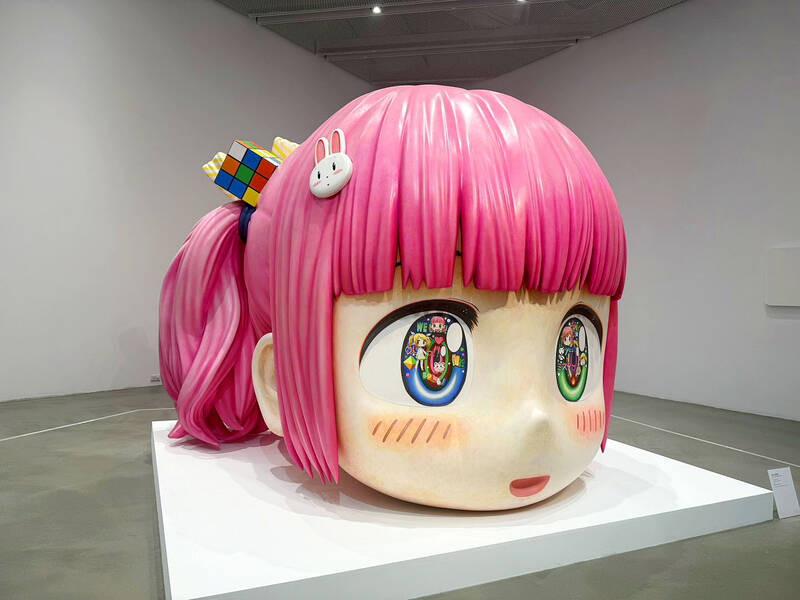
Photo: Julien Oeuillet
“He also refers to himself as an otaku,” she adds, meaning he was one of many young people obsessed with manga and anime culture.
This blend is what turned the bad boy into an artist.
“His memories of being both a yanki and an otaku in his youth still inspire his creation today,” Hsu says.
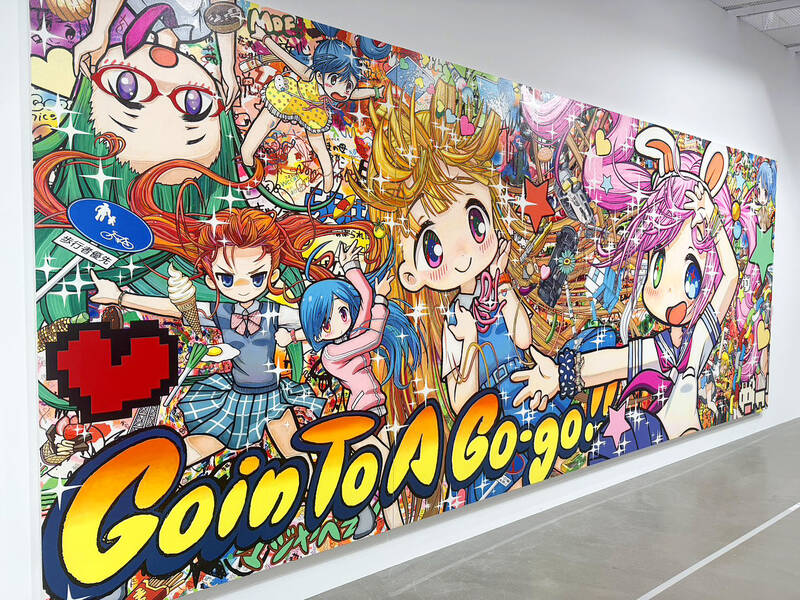
Photo: Julien Oeuillet
Indeed, the large canvases and installations displayed at the art center are more reminiscent of Roy Lichtenstein than Dragon Ball Z.
Wide and shiny paintings present large overlays of anime culture, street art and famous brands, creating a kaleidoscope that reflects urban life in East Asia today.
Mr uses silk screen to create layers and layers of color, Hsu says. “You will notice new things each time you look — material you are familiar with. He wants the audience to find clues to their own stories behind the paintings. He also listens to the radio while painting, so many Japanese words appear in the works as he hears them. It’s like a sketch of contemporary life.”
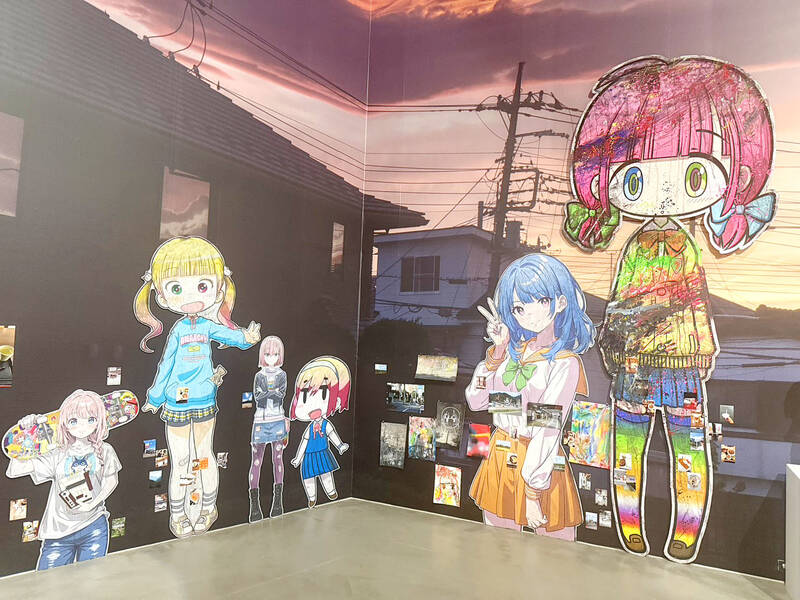
Photo: Julien Oeuillet
Mr cheekily includes familiar brands such as Line or 7-Eleven, but disguises them under monikers like Iine or 5 Five.
This resonates in Taiwan, where such brands are also a cornerstone of daily life, and where Japanese urban lifestyle is often seen as a model for development.
“The artist and curator felt at home when they came to Kaohsiung,” Hsu says. “That similarity was part of our considerations in making this exhibition.”
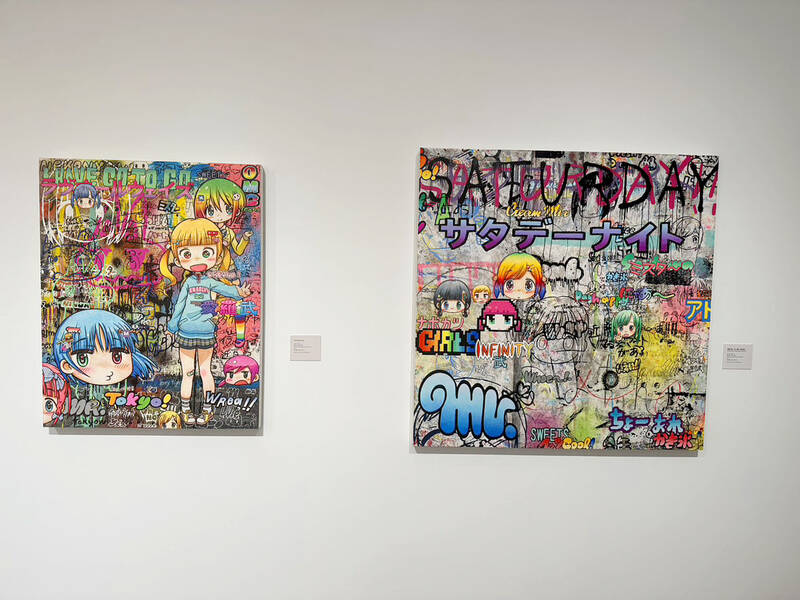
Photo: Julien Oeuillet
Most of the artworks on display were borrowed from local Taiwanese collectors, while a few were shipped from Japan.
Some were also made specifically for the occasion. Mr sketched them back home, and the venue cut large wooden silhouettes on which the artwork was printed.
“He doesn’t like things to be too neat, and when he arrived he found them too clean, so he purposely made them a bit dirtier,” Hsu says.
On another large canvas, beneath the many layers of vivid color, a gray background remains visible. “He wanted it to look like a concrete wall covered with graffiti and stickers,” Hsu says.
Mr’s emphasis on street art, and his deliberate creation of a sense of dirtiness — a concrete jungle mixed with neon-like pop art — is a perfect match for Kaohsiung, the harbor city increasingly known for its large mural paintings on former industrial buildings.
Despite his rejection of academism, there is a great deal of hard work behind Mr’s artistry.
Mr started out as an assistant to Takashi Murakami, a prominent contemporary artist who coined the concept of “superflat,” an aesthetic that deliberately flattens depth and hierarchy, blending high art and commercial imagery to reflect the consumer-saturated surface of contemporary Japanese culture. “Murakami encouraged him to use his otaku passion and his past as a yanki bad boy to create art,” Hsu says. “So he started by working on small pieces of paper such as receipts and bills,” some of which are now displayed at the center.
One highlight of the exhibition is an enormous sculpture of a girl’s head. Her eyes resemble mirrors reflecting icons of urban life. “One of her ponytails alone weighs 200 kilograms,” Hsu says. “So it was a challenge to bring it here.”
The same girl, who Mr nicknamed Hikari, appears in several sculptures and artworks. Much like the gyaru fashion style — which exaggerates girlish attire — these works act as a rebellion against patriarchal norms that expect young women to be conservative and proper. It is closer to a punk movement in Japan, despite often being misunderstood abroad as mere objectification.
Mr’s Hikari is another variation on this theme: she reflects an orgy of postmodern consumerism that she has reappropriated for her own enjoyment, outside social expectations.
Mr creates art that remains deeply personal and introspective.
“He is very quiet, really,” Hsu says of the artist. “Very much inside his own head, but full of ideas. When we took him around Kaohsiung, he was taking lots of pictures. He is not fancy at all. When you imagine such a successful artist, you might picture him holding champagne — but he’s not that kind. He just asked to eat street food or at convenience stores.”
Another room features large, wall-sized snapshots of his neighborhood. “That’s his environment — he is inviting the audience to step into his universe,” Hsu says. “He celebrates the little things in everyday life. It includes photographs of his routine, at home or eating out. It feels like entering his brain.”
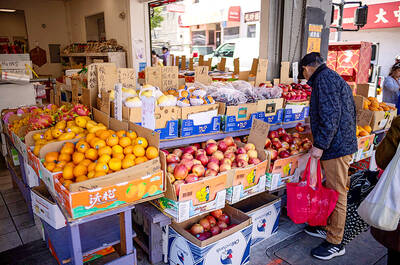
Ajay Verma, a consultant gastroenterologist at Kettering general hospital in Northamptonshire, says our gut is a “complex machine.” “It is constantly providing us with the nutrition we need, initially to grow and develop, and then for us to survive, thrive and repair from injury and illness.” How can we keep it functioning well? Put simply: “Make sure what you put into it is balanced, and that you clear out its waste products adequately,” Verma says. “In a general gastroenterology clinic, the most common conditions we see are irritable bowel syndrome (IBS), gastroesophageal reflux disease, inflammatory bowel disease and constipation,” says Nisha
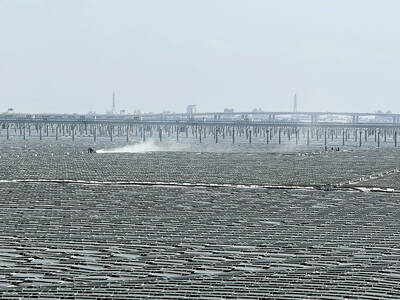
The arithmetic is straightforward and uncomfortable. By the end of 2025, Taiwan had committed itself to a 50-30-20 electricity mix — half natural gas, 30 per cent coal, 20 per cent renewables. The Ministry of Economic Affairs’s (MOEA) own monthly energy reports tell a different story. Natural gas reached 47.8 per cent of generation last year. Coal stood at 35.4 per cent, comfortably above its target ceiling. Renewables came in at 13.1 per cent, well short of the 20 per cent Taipei had pledged a decade earlier. Installed renewable capacity reached roughly half of the 12 gigawatts (GW) the government
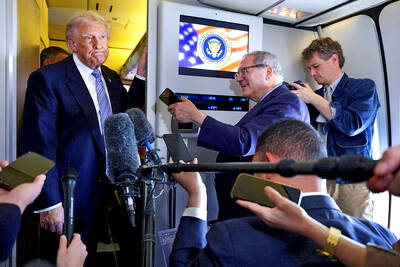
Last week US President Donald Trump was asked by a reporter whether he would speak on the phone to the President of Taiwan. “l’ll speak to him. I speak to everybody. We have that situation very well in hand,” Trump said. This marked the second time in a couple of weeks he had said he would talk to the President of Taiwan. In 2016 he famously took a call from then-president Tsai Ing-wen (蔡英文), when he was president-elect. Despite warnings that the apocalypse was nigh because of a phone call, the world quickly forgot about the conversation between two democratically-elected presidents.
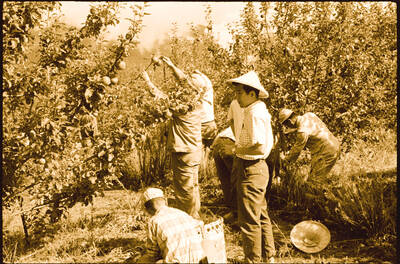
May 25 to May 31 Few believed that apples could be cultivated on a commercial scale in Taiwan’s high mountains. When horticulturalist Cheng Chao-hsiung (程兆熊) first proposed the idea in 1955, both American and Taiwanese colleagues dismissed it as implausible, arguing that temperate fruit could not be reliably grown on a subtropical island, especially on rugged terrain. However, it was this terrain in the Central Mountain Range where many Chinese Civil War veterans were resettled in the late 1950s. With limited job prospects and no family in Taiwan, they were placed on cooperative farms aimed toward self-sufficiency. Some say the conditions


 RSS
RSS