


You know what zombie movies never seem to have enough of? Dancing. They’ve got gore and screaming and lots of guttural snarling, but no boogie. That all changes with 28 Years Later: The Bone Temple and the dancing here is to — naturally off-kilter — 1980s heroes Duran Duran.
The fourth entry in an ever-more engrossing franchise is absolutely bonkers — and a triumph. It mixes dark, queasy disembowelment and laugh-out-loud humor in a way that both subverts the genre and leads a way out of it, too.
Nia DaCosta directs from a returning Alex Garland script and it starts right where last year’s 28 Years Later — directed by Danny Boyle — left off. If this is your first encounter with the series, you don’t necessarily need to go back to 2002’s 28 Days Later but at least to last year’s entry.
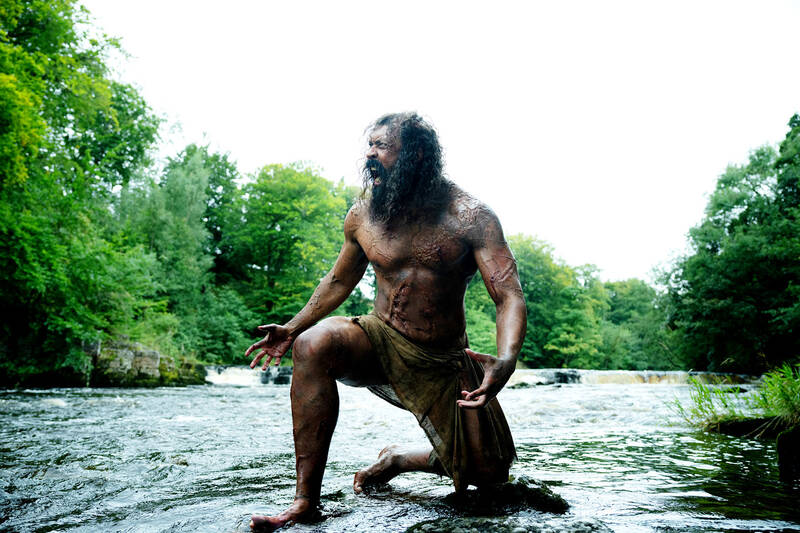
Photo: AP
Garland’s script crackles with jokes about Britain’s National Health Service and “Teletubbies” as it sets up an ultimate showdown between good and evil across a flower-and-meadow countryside. DaCosta is fabulous, leaning into the dark and the light with assurance, nailing the twisted tone and celebrating the weirdness.
We pick up immediately after Alfie Williams’ Spike is rescued from a gang of zombies — excuse me, a gang of infected — by another gang of predators led by Sir Jimmy Crystal, whom we first met as an 8-year-old orphan in the last movie. He’s all grown up and become a sadistic satanist, which happens sometimes without good adulting.
Jimmy — played by a diabolical Jack O’Connell in a tracksuit and gold chains, like a low-level Mafia lieutenant from The Sopranos — leads a band of young psychopaths, as deadly to both virus survivors as the snarling, semi-human infected. They don blond wigs and each is named Jimmy. There’s a whiff of A Clockwork Orange about them — menacing, prone to ultraviolence, gleeful in destruction. “Does that sound like normal screaming, Jimmy?” one asks. Spike, bless his heart, doesn’t belong here.
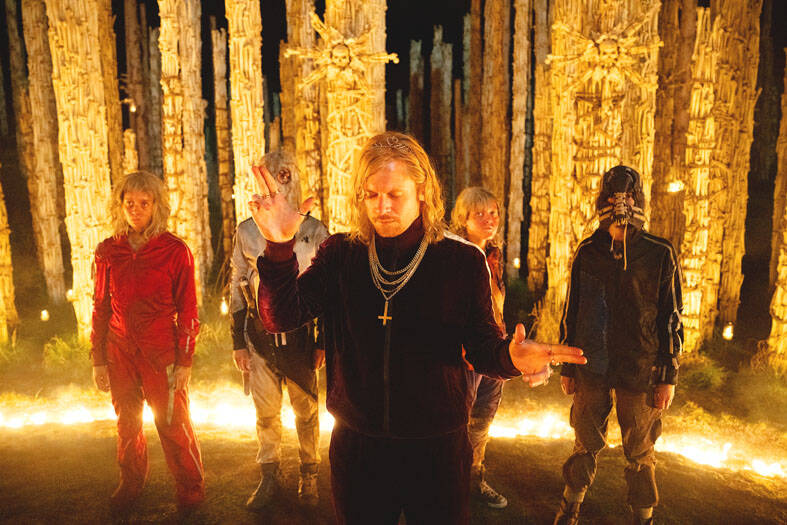
Photo: AP
Sir Jimmy’s opposite number is also out there, the scientist-doctor Dr Ian Kelson, who hopes to find a cure for the virus. He’s a humanist, with a huge heart and open arms, even if he does construct tall pillars out of the bleached bones of the dead. That sounds bad, but he does it to memorialize them, an in memoriam segment made out of calcium.
Kelson is played by a returning Ralph Fiennes, who is magnificent, totally committed, even going full Monty. There’s no winking in anything he does, just pure soul. People are people, no matter how damaged, he believes. “There’s just us,” he says. Bright orange due to the iodine he paints on his skin to ward off the virus, Kelson is alone in his bone temple, which, with a few tea lights, really pulls the look together.
In perhaps a twist no one was expecting, Kelson gingerly reaches out to an infected Alpha — played by former MMA fighter Chi Lewis-Parry — who seems to enjoy being drugged by the doctor’s blowgun. It turns out they both like a hit or two of morphine and looking up at the sky, all blissed out. Or dancing.
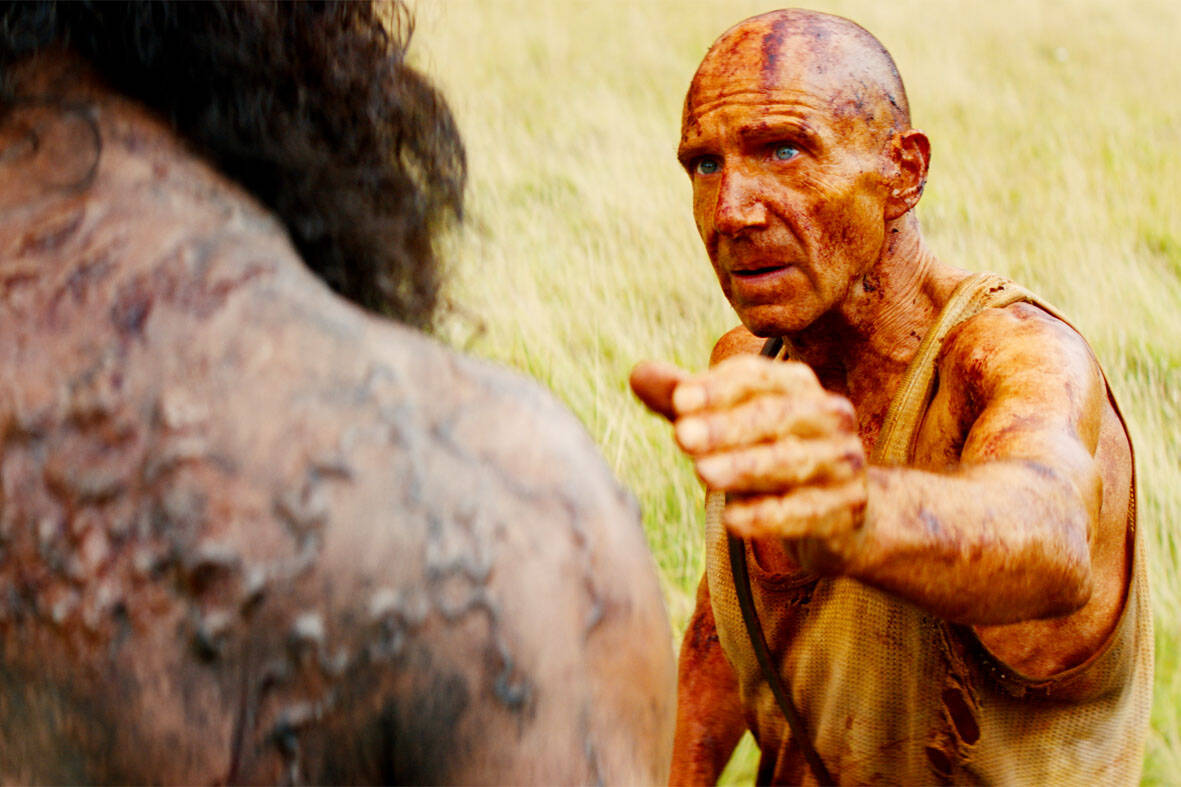
Photo: AP
That’s when Duran Duran comes in, supplying Ordinary World, Girls on Film and Rio to a sight rare in zombie movies: Two whacked-out guys — one an eye-bulging monster who rips heads off with the spines still attached, the other a skinny Englishman who starred in The English Patient — swaying hand-in-hand to pop synth. (My money was on Save a Prayer, but it’s OK.)
There’s plenty of good music in 28 Years Later: The Bone Temple, including Radiohead’s Everything in Its Right Place and one of the most gloriously unhinged uses of Iron Maiden’s The Number of the Beast ever conceived. If the previous film had a Fellini-esque vibe, this one has punky, anarchic feel.
Who will emerge victorious on this blighted island? Sir Jimmy or Dr. Kelson? And have you noticed that the hallmark of every zombie movie — the constant running away from the snarling undead — has been quietly replaced by examinations of cults and mortality, the long-term effects of trauma and what it means to be human? Call it almost post-zombie.
There’s a fifth movie in this franchise in the works, with some clues that this nightmarish world may yet produce a happy ending. But they’re getting better and better and, as insane as it sounds, it’s going to be sad to see it go. Long may the zombies dance. Perhaps we should take advice from the great poets of our time, Duran Duran: I will learn to survive.
If one asks Taiwanese why house prices are so high or why the nation is so built up or why certain policies cannot be carried out, one common answer is that “Taiwan is too small.” This is actually true, though not in the way people think. The National Property Administration (NPA), responsible for tracking and managing the government’s real estate assets, maintains statistics on how much land the government owns. As of the end of last year, land for official use constituted 293,655 hectares, for public use 1,732,513 hectares, for non-public use 216,972 hectares and for state enterprises 34 hectares, yielding

The small platform at Duoliang Train Station in Taitung County’s Taimali Township (太麻里) served villagers from 1992 to 2006, but was eventually shut down due to lack of use. Just 10 years later, the abandoned train station had become widely known as the most beautiful station in Taiwan, and visitors were so frequent that the village had to start restricting traffic. Nowadays, Duoliang Village (多良) is known as a bit of a tourist trap, with a mandatory, albeit modest, admission fee of NT$10 giving access to a crowded lane of vendors with a mediocre view of the ocean and the trains

For many people, Bilingual Nation 2030 begins and ends in the classroom. Since the policy was launched in 2018, the debate has centered on students, teachers and the pressure placed on schools. Yet the policy was never solely about English education. The government’s official plan also calls for bilingualization in Taiwan’s government services, laws and regulations, and living environment. The goal is to make Taiwan more inclusive and accessible to international enterprises and talent and better prepared for global economic and trade conditions. After eight years, that grand vision is due for a pulse check. RULES THAT CAN BE READ For Harper Chen (陳虹宇), an adviser

Traditionally, indigenous people in Taiwan’s mountains practice swidden cultivation, or “slash and burn” agriculture, a practice common in human history. According to a 2016 research article in the International Journal of Environmental Sustainability, among the Atayal people, this began with a search for suitable forested slopeland. The trees are burnt for fertilizer and the land cleared of stones. The stones and wood are then piled up to make fences, while both dead and standing trees are retained on the plot. The fences are used to grow climbing crops like squash and beans. The plot itself supports farming for three years.


 RSS
RSS