


The primaries for this year’s nine-in-one local elections in November began early in this election cycle, starting last autumn. The local press has been full of tales of intrigue, betrayal, infighting and drama going back to the summer of 2024.
This is not widely covered in the English-language press, and the nine-in-one elections are not well understood.
The nine-in-one elections refer to the nine levels of local governments that go to the ballot, from the neighborhood and village borough chief level on up to the city mayor and county commissioner level.
Photo: Lo Kuo-chia, Taipei Times
The main focus is on the 22 special municipality mayors and county commissioners, but the two are different. Below the county level there are city and township mayoral elections. For example, under Changhua County, there are elections for Changhua City mayor and city councillors, but above those are the elections for county commissioner and county councillors taking place simultaneously.
In the “big six” special municipalities, all those sublevel cities and townships have been reorganized into districts, with their leaders appointed by the city mayor. Previously, cities like Banciao, Fengyuan and Fengshan had their own elections, but since 2011, they no longer do. These “big six” mayors are more powerful and lead the six biggest local governments by population, which are (in order of population), New Taipei City, Taichung City, Kaohsiung City, Taipei City (yes, it is only fourth), Taoyuan and Tainan. They also have bigger budgets.
City and county councils are important, but outside of Taipei, only colorful individuals get much press coverage. There is very little analysis done on these races because — like the legislature was prior to 2008 — these are multi-member districts. This makes predicting the outcomes extremely difficult because often the difference between the councillors who barely scrape by enough votes to win and those who do not is tiny.
Photo: TT file photo
PARTY BUILDING
One upside of this is that it is at the councillor level that small parties can win, and sometimes hold out locally when the party has collapsed on the national level. There are still councillors from the New Party, People’s First Party, the Non-partisan Solidarity Union and New Power Party (NPP), years or even decades after they lost national representation.
A key goal for up-and-coming parties, like the Taiwan People’s Party (TPP), is to secure at least three seats in these councils so they can form a caucus. This allows them more representation on committees and the ability to propose legislation.
Photo: Liao Yao-tung, Taipei Times
In this election, the TPP has set a goal of winning enough seats to form caucuses in every one of the 22 city and county councils. This is unlikely; in 2022, they only won enough seats to form a single caucus — in Taipei City — but there is a good chance they could form more after this year’s elections.
It is often unappreciated how critical this can be for a new party. It is at this level that party talent is cultivated and can be groomed for future higher office. Growing numbers of council seats also indicates that momentum is on the side of the party, which is important for both internal morale and public perception. The formerly up-and-coming NPP has lost so much momentum they are resorting to advertising on online job banks for candidates.
With long historical roots and extensive experience cultivating local talent, the KMT dominates at the local level. They usually win — often with the support of allied independents — council speakerships in cities and counties that are considered the domain of the Democratic Progressive Party (DPP). Following the 2022 elections, 16 speakerships were won by the KMT, and only four by the DPP (they won one in 2018 and two in 2014).
In 2022, the DPP improved its councilor tally to 277, picking up 39 seats despite a landslide loss at the mayor/commissioner level. The KMT lost 27 seats, but still held 367. However, that understates the KMT’s full strength — independents traditionally are more likely to ally with the KMT.
To illustrate how hard third parties struggle, the TPP only managed to win 14 of 910 available seats despite polling suggesting public support for the party as high as 20 percent. They simply lacked candidates.
The TPP is well aware of this shortcoming and have been actively recruiting, but the tricky part is that without an existing pipeline and ability to cultivate and train their own people like the big parties do, they often have to rely on blank slate candidates lacking name recognition.
These candidates can be unreliable, erratic, or sometimes outright liabilities. Of the hundreds of candidates the big parties can field, most are known quantities within their parties, and only a handful turn out to be big mistakes. Third parties rely on unknown people showing up on their doorstep, often rejected by other parties, and with checkered pasts and dubious motivations.
MESSAGES FROM VOTERS
Often these elections are compared to American mid-term elections, which are held at the mid-point of the American president’s term and elect representatives to the House of Representatives and some Senate seats. Because those are national elections, often they reflect the mood of the public and serve as something resembling a referendum on the president’s administration.
Comparing Taiwan’s local elections to the American midterms is at best inelegant, at worst misleading. Sometimes the analogy works; the 2014 elections did reflect a political backlash against then-President Ma Ying-jeou (馬英九), and the Democratic Progressive Party (DPP) won in a landslide at the city mayor and county commissioner level.
Yet what should one make of the 2018 local elections that saw the KMT win in a landslide, but was bracketed between two landslide DPP victories in 2016 and 2020 at the national level?
In the last few election cycles a pattern emerged of the DPP winning nationally, but the KMT locally. Partially, this is due to the KMT’s traditional strength at the local level.
It also does appear to be, like the midterms, a message to the ruling DPP from voters that national victories do not necessarily mean voters like them, and especially do not want to see them have a monopoly on power.
There is a widespread perception that KMT politicians are better at cutting through bureaucracy and getting things done, though it comes with risks of corruption. The perception of the DPP is they are more idealistic, but easily distracted and bogged down in procedural issues and lack strong leadership abilities. These are crude generalizations with many exceptions, but there is a grain to truth to them.
Voters often reward the KMT for their can-do capabilities at the local level, and often, KMT leaders deliver. For example, here in Taichung, Mayor Lu Shiow-yen (盧秀燕) is widely popular for delivering improvements while maintaining fiscal discipline. Imagine my surprise when the lanes in my unfashionable neighborhood were recently freshly paved, and it was not even an election year.
Nationally, the DPP did well in the last three national elections. Much of the electorate trusts the DPP to defend Taiwan’s sovereignty, both in foreign affairs and in relations with China. This matters at the national level, but is far less relevant at the local level.
The DPP’s loss of the legislative majority in 2024 and trouncing in last year’s recall elections may dampen the desire by swing voters to counterbalance the weakened DPP’s national strength with local KMT dominance. Or, alternatively, 10 years of DPP rule may encourage them to double down on delivering them another trouncing, keeping the status quo of the last few election cycles. Another possibility is no message at all, and voters pick candidates on local issues with mixed results.
We shall see.
Donovan’s Deep Dives is a regular column by Courtney Donovan Smith (石東文) who writes in-depth analysis on everything about Taiwan’s political scene and geopolitics. Donovan is also the central Taiwan correspondent at ICRT FM100 Radio News, co-publisher of Compass Magazine, co-founder Taiwan Report (report.tw) and former chair of the Taichung American Chamber of Commerce. Follow him on X: @donovan_smith.

Yesterday, the Democratic Progressive Party (DPP) nominated legislator Puma Shen (沈伯洋) as their Taipei mayoral candidate, the Chinese Nationalist Party (KMT) put their stamp of approval on Wei Ping-cheng (魏平政) as their candidate for Changhua County commissioner and former legislator Tsai Pi-ru (蔡壁如) of the Taiwan People’s Party (TPP) has begun the process to also run in Changhua, though she has not yet been formally nominated. All three news items are bizarre. The DPP has struggled with settling on a Taipei nominee. The only candidate who declared interest was Enoch Wu (吳怡農), but the party seemed determined to nominate anyone
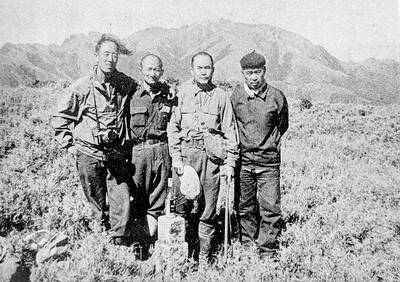
May 18 to May 24 Gathered on Yangtou Mountain (羊頭山) on Dec. 5, 1972, Taiwan’s hiking enthusiasts formally declared the formation of the “100 Peaks Club” (百岳俱樂部) and unveiled the final list of mountains. Famed mountaineer Lin Wen-an (林文安) led this effort for the Chinese Alpine Association (中華山岳協會). Working with other experienced climbers, he chose 100 peaks above 10,000 feet (3,048m) that featured triangulation points and varied in difficulty and character. The list sparked an alpine hiking craze, inspiring many to take up mountaineering and competing to “conquer” the summits. A common misconception is that the 100 Peaks represent Taiwan’s 100 tallest
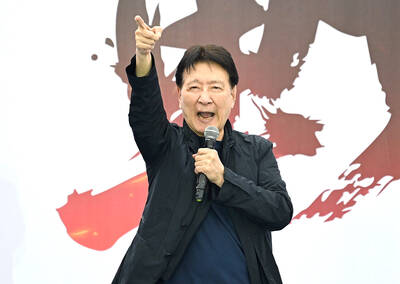
In a sudden move last week, opposition lawmakers of the Chinese Nationalist Party (KMT) and Taiwan People’s Party (TPP) passed a NT$780 billion special defense budget as a preemptive measure to stop either Chinese leader Xi Jinping (習近平) or US President Donald Trump from blocking US arms sales to Taiwan at their summit in Beijing, said KMT heavyweight Jaw Shaw-kong (趙少康), speaking to the Taipei Foreign Correspondents Club on Wednesday night in Taipei. The 76-year-old Jaw, a political talk show host who ran as the KMT’s vice presidential candidate in 2024, says that he personally brokered the deal to resolve
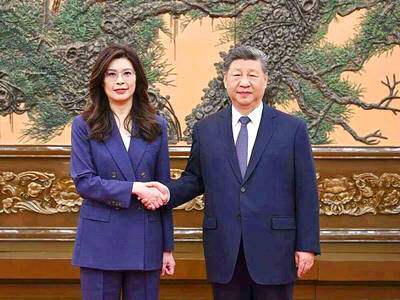
The Chinese Nationalist Party (KMT), alongside their smaller allies the Taiwan People’s Party (TPP), are often accused of acting on behalf of the Chinese Communist Party (CCP). Some go so far as to call them “traitors.” It is not hard to see why. They regularly pass legislation to stymie the normal functioning of the ruling Democratic Progressive Party’s (DPP) administration, and they have yet to pass this year’s annual budget. They slashed key elements of the government’s proposed NT$1.25 trillion (US$40 billion) special military budget, and in the smaller NT$780 billion package they did pass, it is riddled with provisions that


 RSS
RSS