


The People’s Republic of China (PRC) invaded Vietnam in 1979, following a year of increasingly tense relations between the two states. Beijing viewed Vietnam’s close relations with Soviet Russia as a threat. One of the pretexts it used was the alleged mistreatment of the ethnic Chinese in Vietnam.
Tension between the ethnic Chinese and governments in Vietnam had been ongoing for decades. The French used to play off the Vietnamese against the Chinese as a divide-and-rule strategy. The Saigon government in 1956 compelled all Vietnam-born Chinese to adopt Vietnamese citizenship. It also banned them from 11 trades they had previously dominated. Since Taipei was the internationally recognized government of China, it attempted to intervene, and ended up taking in 3,000 ethnic Chinese refugees. Beijing chimed in on the issue as well. The local Chinese themselves rioted in 1957 and terminated the program, withdrawing their money from banks and closing their shops, bringing the economy to a halt.
Beginning in January of 1976, the Vietnamese government began requiring ethnic Chinese in the south to register their citizenship. The results of this program were kept secret, since large numbers of local Chinese registered as “Chinese,” signaling the clear failure of the policies adopted in the 1950s. In February a second registration was announced. Those Chinese who insisted on retaining their Chinese citizenship received reduced food rations. Chinese-language newspapers and schools were closed. In 1977 the government announced a “purification” program to keep Chinese on the PRC side of the border. In 1978 the government carried out raids with police, cadres and students, on areas in Ho Chi Minh city and elsewhere, cordoning off entire districts and systematically plundering them.
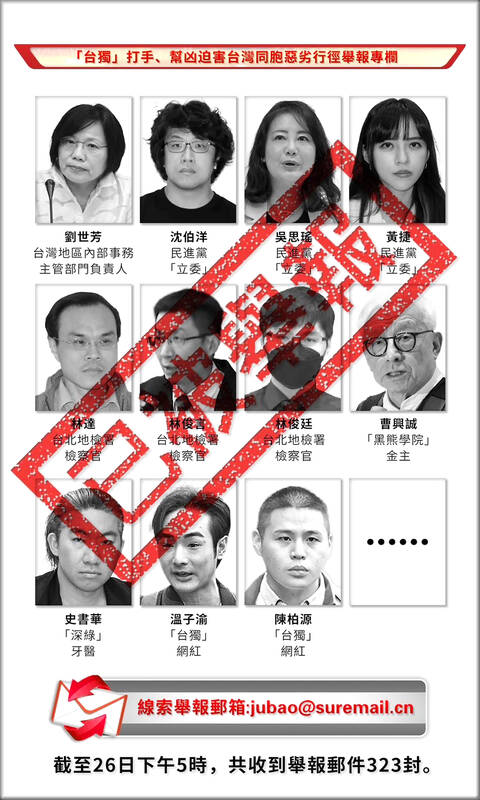
Photo: Chen Yu-fu, Taipei Times
Other polices disproportionately affected ethnic Chinese property holders, prompting the first wave of boat people out of Vietnam and tens of thousands of ethnic Chinese to flee into the PRC.
This occurred at the same time that in the PRC, the Zhou Enlai (周恩來) government had emerged after the fall of the “gang of four” in 1976. To speed economic growth, Zhou envisioned closer relations with Chinese communities abroad. Early in 1977 the People’s Daily and Red Flag published a joint editorial on the Lunar New Year calling for a “revolutionary united front of all patriotic parties, people and overseas Chinese.” This led, inevitably, to worsened tensions with Vietnam as Beijing assumed responsibility for an overseas community that was highly loyal to it. The refugee flight across the border worsened the ongoing territorial disputes between the two nations.
The Taiwanese government is unlikely to engage in such systematic mass mistreatment of any ethnic community in Taiwan, but that will not stop the PRC from using incidents or claims of incidents to furnish a pretext for invasion. Many of the things the current administration has been doing superficially resemble the things that Vietnam did.
PRC SPOUSES
In discussions of this possibility, there has been much focus on Taiwan’s treatment of PRC spouses as potential pretexts. The PRC has helpfully highlighted this by criticizing President William Lai’s (賴清德) program to get PRC spouses to bring their visa registrations up to speed last year. Chen Binhua (陳斌華), a spokesman for Beijing’s Taiwan Affairs Office, described the program as “a typical case of illegal abuse of power” and said that the government was engaging in “discriminatory treatment and deliberate suppression that expose the nature of separatists.” The PRC’s propaganda closely tracks the noises of the Chinese Nationalist Party (KMT).
Another group useful as an invasion pretext, though less well known, also exists. A Global Insights piece by Lee Sze-fung (李紫楓) observes that according to Taiwanese influencer Wen Tzu-yu (溫子渝), whose online moniker is Pa Chiung (八炯) and who has published a documentary on PRC influence programs, approximately 200,000 Taiwanese have obtained PRC passports. An entire ecosystem of processes, services and fixers exist to help Taiwanese with this process. Once they have obtained a PRC ID, they can then access greater levels of convenience and financial support.
Wen published a video in August last year showing that in some cases acquisitions of PRC IDs were more or less compelled. Taiwanese who borrowed money from PRC banks were told they could get better loan conditions if they held PRC IDs. Wen was one of two YouTubers, along with Chen Po-yuan (陳柏源), who had a bounty placed on them by PRC police.
It is easy to see how a government program to strip Taiwanese holding PRC IDs of their Taiwan citizenship, as required by Taiwan’s Cross-Strait Act, could be used as a pretext for a punitive attack or invasion, especially if the PRC can frame Taiwan military responses as “provocations.”
Recall the PRC bluster after a Taiwanese vessel locked onto a PRC vessel with its fire control radar. In a clip circulated by a local civilian page that monitors PRC military activity, the PRC vessel responded with: “Your provocative intent is extremely clear and poses a serious threat to safety. You must immediately cease your provocative actions; otherwise, I will regard them as hostile acts.”
The word “provocative” is used twice there. Similar verbal tactics have been used against Philippine vessels defending territories in the South China Sea.
Another worrying pretext is the criminal charges and bounties that the PRC puts on pro-democracy Taiwanese. The PRC has already kidnapped and detained several booksellers from Hong Kong in the notorious Causeway Bay Books cases.
For those readers who might point to the seizure of Venezuelan President Nicolas Maduro by the US as creating a precedent, the PRC has already gone down that road and worse. In 2024 in Prague a PRC official attempted to ram Vice President Hsiao Bi-khim’s (蕭美琴) vehicle. It has already kidnapped Taiwanese citizens, including activist Lee Ming-che (李明哲), whom it sent to prison for years.
The PRC as a matter of policy treats its desire to annex Taiwan as a domestic matter, not subject to international law. Its “criminal” charges against Taiwanese citizens were assigned to local police stations. It is not difficult to see how extracting “criminals” from Taiwan could be used as a pretext for a military intervention that could then be blown up to a full-scale invasion when the government inevitably responds.
Do pretexts matter? In 1979, when Beijing moved on Vietnam, it was motivated by Hanoi’s recent inking of a treaty with Soviet Russia, and by Vietnam’s 1978 invasion of Cambodia. The ethnic issues, though serious, were just the pretext and would not have caused a war by themselves. Had they never existed, some other issue would have been labeled the “provocation.”
As in all things with the PRC, what the idea of these pretexts truly teaches is that it is critical to avoid letting PRC ire govern Taiwan policy, and to ignore speakers who claim that Taiwan should refrain from doing this or that because Beijing might be angry. The PRC will attack when it is ready, and grab whatever pretext is at hand.
Notes from Central Taiwan is a column written by long-term resident Michael Turton, who provides incisive commentary informed by three decades of living in and writing about his adoptive country. The views expressed here are his own.
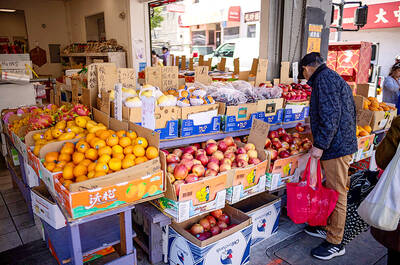
Ajay Verma, a consultant gastroenterologist at Kettering general hospital in Northamptonshire, says our gut is a “complex machine.” “It is constantly providing us with the nutrition we need, initially to grow and develop, and then for us to survive, thrive and repair from injury and illness.” How can we keep it functioning well? Put simply: “Make sure what you put into it is balanced, and that you clear out its waste products adequately,” Verma says. “In a general gastroenterology clinic, the most common conditions we see are irritable bowel syndrome (IBS), gastroesophageal reflux disease, inflammatory bowel disease and constipation,” says Nisha
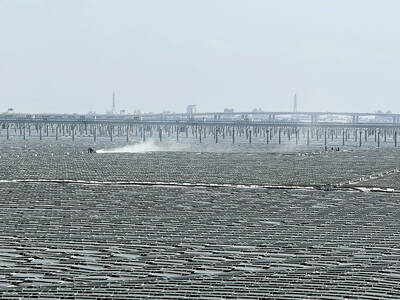
The arithmetic is straightforward and uncomfortable. By the end of 2025, Taiwan had committed itself to a 50-30-20 electricity mix — half natural gas, 30 per cent coal, 20 per cent renewables. The Ministry of Economic Affairs’s (MOEA) own monthly energy reports tell a different story. Natural gas reached 47.8 per cent of generation last year. Coal stood at 35.4 per cent, comfortably above its target ceiling. Renewables came in at 13.1 per cent, well short of the 20 per cent Taipei had pledged a decade earlier. Installed renewable capacity reached roughly half of the 12 gigawatts (GW) the government

Last week US President Donald Trump was asked by a reporter whether he would speak on the phone to the President of Taiwan. “l’ll speak to him. I speak to everybody. We have that situation very well in hand,” Trump said. This marked the second time in a couple of weeks he had said he would talk to the President of Taiwan. In 2016 he famously took a call from then-president Tsai Ing-wen (蔡英文), when he was president-elect. Despite warnings that the apocalypse was nigh because of a phone call, the world quickly forgot about the conversation between two democratically-elected presidents.
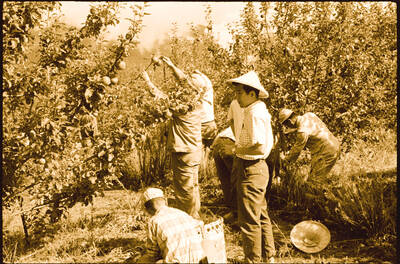
May 25 to May 31 Few believed that apples could be cultivated on a commercial scale in Taiwan’s high mountains. When horticulturalist Cheng Chao-hsiung (程兆熊) first proposed the idea in 1955, both American and Taiwanese colleagues dismissed it as implausible, arguing that temperate fruit could not be reliably grown on a subtropical island, especially on rugged terrain. However, it was this terrain in the Central Mountain Range where many Chinese Civil War veterans were resettled in the late 1950s. With limited job prospects and no family in Taiwan, they were placed on cooperative farms aimed toward self-sufficiency. Some say the conditions


 RSS
RSS