


When Fernando Davila was 8 years old in Colombia, he failed a drawing class because he painted donkeys red.
There was a reason for that: He is colorblind.
Now the 72-year-old Davila is an established and respected artist whose vibrant paintings have been exhibited in South America, Europe and the US.

Photo: AP
“I have the most wonderful job in the world, which is painting every morning,” Davila said from his studio in a Miami suburb. “To mix colors. To have joy to share with the world, that’s really my passion.”
He started off painting only in black and white until he was around 30 years old because of his colorblindness, a congenital condition which makes it difficult for people to tell the difference between certain colors, particularly red and green, and shades of color. There is no cure for the condition, which for Davila also makes the colors pink, violet, turquoise and yellow-green confusing.
Since the mid-1980s, Davila has painted in color through the help of glasses developed by an ophthalmologist in New York, where Davila was living at the time. One lens is transparent and the other is shaded red, and they help him discriminate between contrasting shades that normally blur together. With the lenses, he can see almost two-thirds of the colors, but without them he only sees around 40 percent of the colors.
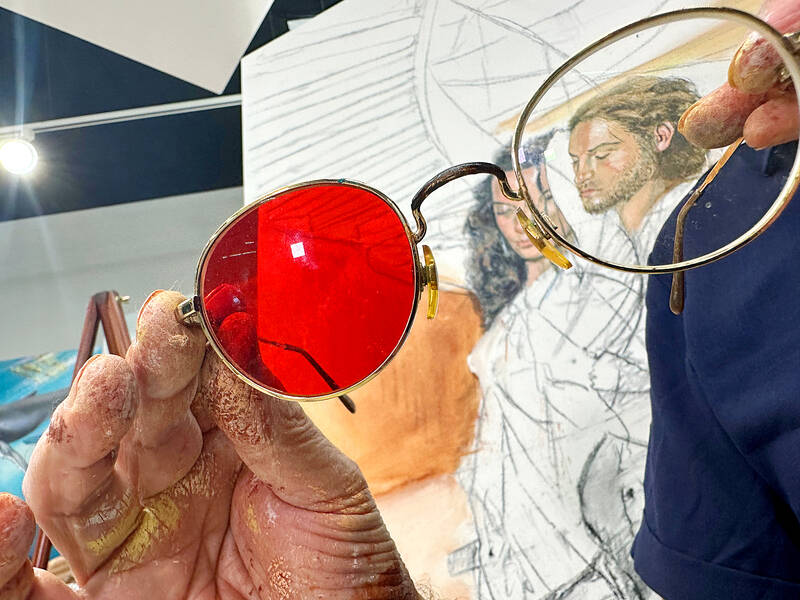
Photo: AP
Davila compared his condition to having a box of chocolates but only being able to eat a sample of the selection. He says he has such a strong desire to see every color.
“It’s something that I miss in my life, that if somebody says, ‘Look at this flower,’ which is bright, bright pink, I want to do it,” he said. “It’s something that comes from my heart so passionately. I can feel the vibration of color.”
Colorblindness runs his family. A grandfather and some great uncles only saw in black and white, while his mother and her three sisters also were colorblind even though the condition is rarer in women. His two brothers also have trouble discriminating between colors.
Davila has spent his career in Colombia, New York and Florida. He was awarded the “Order of Democracy” by the Colombian Congress in 1999 for his contribution to the arts. He also has published two hardcover books and many catalogues about his paintings, and his work has appeared at major auctions including Christie’s and Sotheby’s.
His paintings include romantic images of men and women embracing and landscapes, often using the color blue as a foundation.
“I think color is one of the most important things in life,” he said. “And especially for me.”

By global standards, the traffic congestion that afflicts Taiwan’s urban areas isn’t horrific. But nor is it something the country can be proud of. According to TomTom, a Dutch developer of location and navigation technologies, last year Taiwan was the sixth most congested country in Asia. Of the 492 towns and cities included in its rankings last year, Taipei was the 74th most congested. Taoyuan ranked 105th, while Hsinchu County (121st), Taichung (142nd), Tainan (173rd), New Taipei City (227th), Kaohsiung (241st) and Keelung (302nd) also featured on the list. Four Japanese cities have slower traffic than Taipei. (Seoul, which has some

In our discussions of tourism in Taiwan we often criticize the government’s addiction to promoting food and shopping, while ignoring Taiwan’s underdeveloped trekking and adventure travel opportunities. This discussion, however, is decidedly land-focused. When was the last time a port entered into it? Last week I encountered journalist and travel writer Cameron Dueck, who had sailed to Taiwan in 2023-24, and was full of tales. Like everyone who visits, he and his partner Fiona Ching loved our island nation and had nothing but wonderful experiences on land. But he had little positive to say about the way Taiwan has organized its
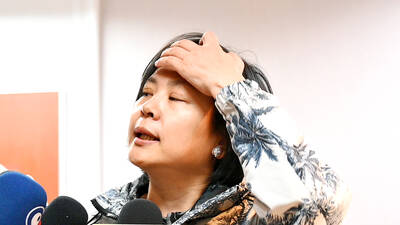
The entire Li Zhenxiu (李貞秀) saga has been an ugly, complicated mess. Born in China’s Hunan Province, she moved to work in Shenzhen, where she met her future Taiwanese husband. Most accounts have her arriving in Taiwan and marrying somewhere between 1993 and 1999. She built a successful career in Taiwan in the tech industry before founding her own company. She also served in high-ranking positions on various environmentally-focused tech associations. She says she was inspired by the founding of the Taiwan People’s Party (TPP) in 2019 by Ko Wen-je (柯文哲), and began volunteering for the party soon after. Ko
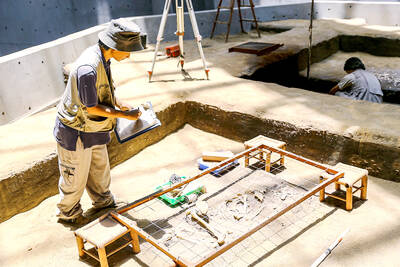
Writing of the finds at the ancient iron-working site of Shihsanhang (十 三行) in New Taipei City’s Bali District (八里), archaeologist Tsang Cheng-hwa (臧振華) of the Academia Sinica’s Institute of History and Philology observes: “One bronze bowl gilded with gold, together with copper coins and fragments of Tang and Song ceramics, were also found. These provide evidence for early contact between Taiwan aborigines and Chinese.” The Shihsanhang Web site from the Ministry of Culture says of the finds: “They were evidence that the residents of the area had a close trading relation with Chinese civilians, as the coins can be


 RSS
RSS