


By global standards, the traffic congestion that afflicts Taiwan’s urban areas isn’t horrific. But nor is it something the country can be proud of.
According to TomTom, a Dutch developer of location and navigation technologies, last year Taiwan was the sixth most congested country in Asia. Of the 492 towns and cities included in its rankings last year, Taipei was the 74th most congested. Taoyuan ranked 105th, while Hsinchu County (121st), Taichung (142nd), Tainan (173rd), New Taipei City (227th), Kaohsiung (241st) and Keelung (302nd) also featured on the list. Four Japanese cities have slower traffic than Taipei. (Seoul, which has some of the longest average commute times in the developed world, is absent from TomTom’s rankings because South Korean law restricts how geographic data is processed and exported.)
When examining data accumulated across the entirety of each local government division, rather than just the urban core, the results are a bit different: Hsinchu County is 58th worst in the world, while Taipei is 70th. Taoyuan, New Taipei City, Kaohsiung, Taichung and Tainan are all among the planet’s 200 most congested municipalities.
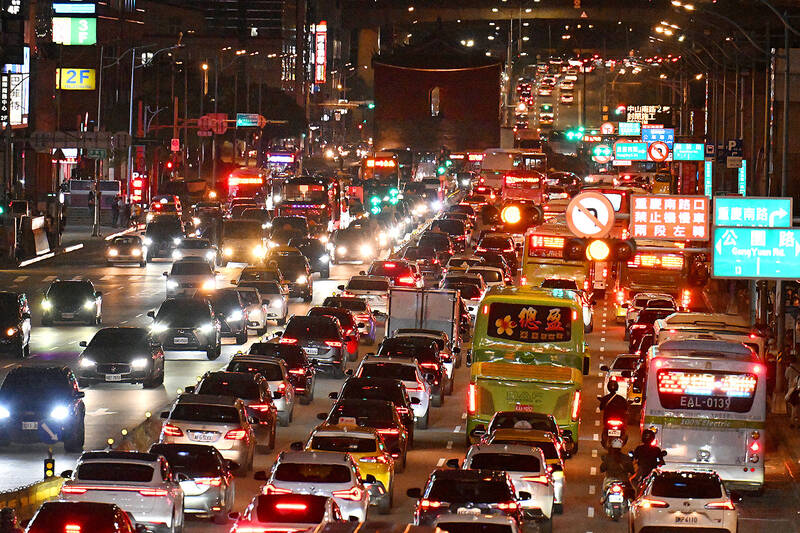
Photo: Tien Yu-hua, Taipei Times
Because many people in affluent societies prefer to use their own vehicle, even when good public transportation is available, some local governments have turned to congestion charges as a means to limit downtown traffic, reduce the frequency and duration of jams and improve urban air quality. A meta-analysis published in 2022 by scholars at Sweden’s Lund University found that, of various interventions shown to reduce car use in Europe, congestion charging appeared to be the most effective.
SYSTEMS AND BENEFITS
Singapore was a pioneer. Back in 1975, to curb surging car use, it introduced its first road pricing scheme. Until 1998, any driver wishing to enter Singapore’s central business district (CBD) had to buy and display a daily or monthly permit. This system, enforced by human wardens, has been described as “inefficiently successful.” Traffic flowed more smoothly in the mornings, but because many drivers tried to enter the CBD just before or just after the permit-required period, there was heavy congestion at those times, and also jams around the CBD fringe. Moreover, the system unfortunately encouraged a “stay and drive” mentality; having paid to enter, drivers felt entitled to utilize CBD streets without limit.
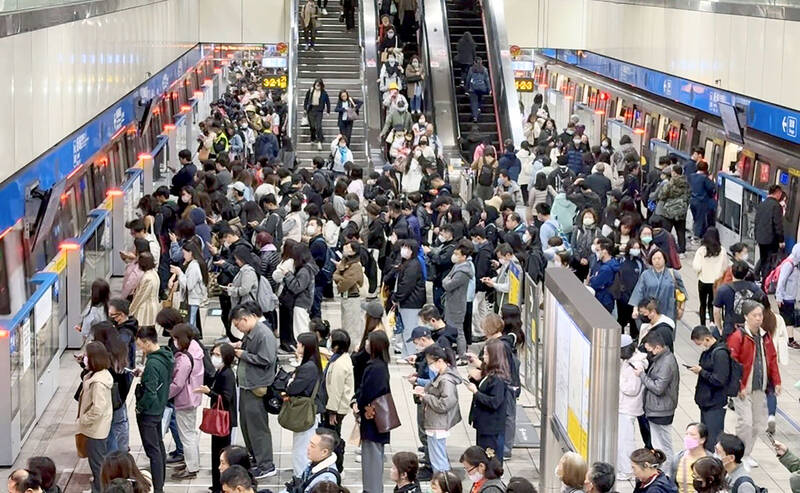
Photo: Tung Kuan-yi, Taipei Times
The Electronic Road Pricing (ERP) system introduced in 1998 resolved many of these issues. Now, the more you drive, the more you pay. Each quarter, traffic patterns are reviewed and the charge for each 30-minute segment is adjusted. Rush hour journeys are expensive; in the middle of the night they’re often free.
London’s congestion charge is less sophisticated. Once a driver has paid the daily fee — currently £18 (NT$765), payable 7am to 6pm weekdays and noon to 6pm on weekends — there’s no financial incentive to drive less within the zone for the rest of that day. The system makes a substantial annual profit, which by law must be spent on public transportation and cycling infrastructure in the British capital.
New York City’s Central Business District Tolling Program was launched Jan. 5 last year, and TomTom’s Web site states that the data they’ve accumulated indicates it’s already made a “strongly positive” difference.
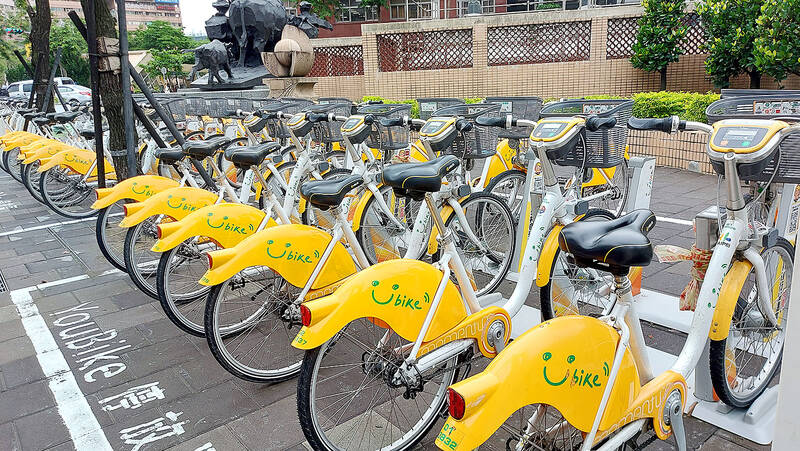
Photo: Huang Tzu-yang, Taipei Times
Although the city’s overall congestion level “remained flat compared to 2024, the first year of congestion pricing delivered clear, data-backed improvements on its busiest travel corridors.” Bus travel into Manhattan has become more efficient, and bridges are less likely to get jammed. What’s more, “safety outcomes within the congestion zone improved significantly: crashes dropped 14 percent, injuries fell 15 percent and pedestrian fatalities reached their lowest levels since 2018.”
With congestion pricing offering clear benefits, and around 720,000 vehicles from other counties and cities passing through Taipei each day, it’s surprising that no major politician has nailed their colors to that mast. Building the necessary infrastructure would be well within Taiwan’s technical capabilities. Over 95 percent of the cars on Taiwan’s roads already carry an eTag for distance-based charges on freeways, so there would be no need for drivers to buy an in-vehicle transponder unit like those required in Singapore.
THE SCOOTER CONUNDRUM
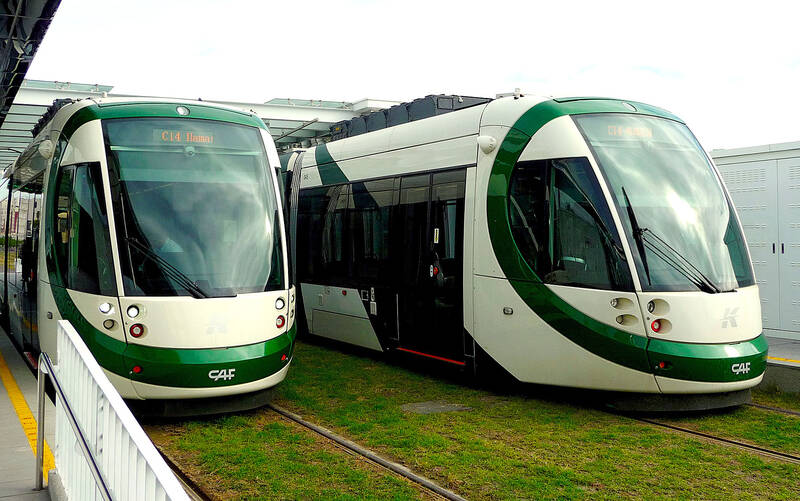
Photo: Steven Crook
Nearly half of Taiwan’s adults use motorcycles as their primary mode of transportation, and many citizens switch from car to two-wheeler depending on the weather and their daily plans. A tariff that applies only to cars would encourage some drivers to ride buses or take the metro, but would probably also lead to even more gasoline-burning scooters in city centers. That could reduce gridlock — yet it’s unlikely to improve air quality, and it might well result in additional traffic accident casualties.
Any strategies implemented to reduce overall traffic congestion and pollution “should focus equally on both cars and motorcycles,” says Cheng Tsu-jui (鄭祖睿), an assistant professor in the Department of Transportation and Communication Management Science at National Cheng Kung University.
In Tainan, where Cheng lives, motorcycles must now pay NT$20 per day if parking downtown. Making people pay for parking is a good way to discourage people from using motorcycles or cars, he says, “but parking fees can only do so much if there are no alternatives, such as public transportation and cycling infrastructure. Cracking down on illegal parking is also important, so it’s fair for everyone.”
Cheng backs the idea of dynamic parking fees that fluctuate according to demand. The Taipei City Government is already moving in this direction; during this year’s Taipei Lunar New Year Festival, the cost of parking at several locations was hiked to NT$80 per hour.
In many downtown areas, a significant percentage of the traffic consists of drivers searching for parking spots. The city government’s Fun Travel in Taipei (臺北好行) app shows in real time which of the capital’s parking lots have spaces, but it’s unclear if out-of-towners make much use of this platform.
Other efforts to alleviate congestion in Taipei include investing NT$357 million since 2023 in smart traffic signals. Officials hope these upgrades will trim travel times by up to 8 percent along 29 key corridors.
Asked if congestion pricing might be right for Taiwan’s cities, Cheng notes that it took London and New York City decades of discussion before they finally implemented their systems.
“Congestion charging requires a comprehensive understanding of how vehicles move within the designated zone to ensure the charge is fair and effective, and how passenger and goods movements might affect people and businesses inside and outside the zone. It’d require alternative modes of transportation in place beforehand, particularly adequate public transportation. Without alternatives, people would have no option but to continue driving in, out or through the zone,” he says.
If a May 31, 2023 discussion on the PTT online bulletin board is reflective of public opinion, there may be space for a bold politician to build the case for congestion charging.
Some users said they’d accept a scheme if the government reduced the taxes car owners pay annually regardless of how often they drive. One recalled that, until the early 1990s, bridge tolls were a fact of life for motorists entering Taipei. Another pointed to “Taipei’s well-developed public transportation system and monthly passes” as showing that the region is ready for a congestion charge. As of early this year, however, Taipei Metro’s Blue and Brown MRT lines were already operating at full capacity during morning and evening peaks.
Others commenters said the authorities should first tackle illegal parking or “fix awful road design.” One opponent argued that, “The purpose of congestion fees is simply to make money for the government. They won’t improve the traffic situation.”
There was no mention of another approach, one that aligns perfectly with Taiwan’s high levels of education and digital literacy while requiring zero infrastructure investment. If local employers could ditch their “presenteeist” mindset and normalize working from home one or two days per week, it’d alleviate city-center congestion. But that’d require overcoming a hurdle far more stubborn than any traffic jam: deep-seated corporate culture.
Steven Crook, the author or co-author of four books about Taiwan, has been following environmental issues since he arrived in the country in 1991. He drives a hybrid and carries his own chopsticks. The views expressed here are his own.


Taiwan’s English education system is being pulled apart by three opposing forces. Bilingual Nation 2030 pulls students toward English and global communication. Artificial Intelligence (AI) readiness pulls them toward digital judgment, verification and AI-mediated work. But Taiwan’s old exam culture pulls them back toward memorization, grammar drills, timed reading and correct answers. If the education system keeps using old exams to define success, it risks producing graduates who are neither genuinely bilingual nor genuinely AI-ready, but trained for tasks machines can already perform. The first force is Bilingual Nation 2030. Launched in 2018, the policy aimed to “help Taiwan’s workforce connect

“Taiwan’s Opposition Leader Comes to US With a Message Straight Out of Beijing” read a May 31 headline in the Wall Street Journal. Top US administration officials and members of Congress almost certainly read the WSJ, and if there was a bullet point takeaway that people in Washington should absorb ahead of Chinese Nationalist Party (KMT) Chair Cheng Li-wun’s (鄭麗文) arrival in DC on June 9, that headline is it. The last few columns have discussed this very topic, and the timing is not coincidental. While those top officials likely do not read the Taipei Times, judging by the number
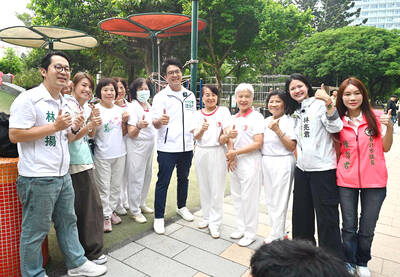
With weighty, anxiety-inducing geopolitical topics dominating the headlines, checking in on the wild and weird state of local politics can take some of the edge off. This November’s elections will determine who will be in charge of fixing potholes in your neighborhood, not the potholes in Taiwan’s complicated geopolitical space. Recently, after an online interview with a Taipei-based journalist, I commented that Taipei journalists never go further than the MRT can take them. He laughed and agreed. Naturally, the Taipei mayoral race is eating up much of the press attention. TAIPEI CITY Democratic Progressive Party (DPP) candidate Puma Shen (沈伯洋) has
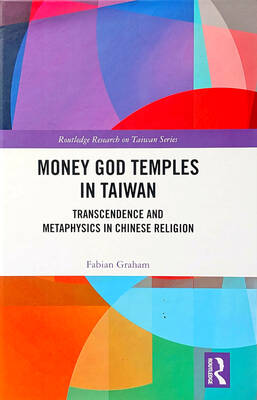
As someone who normally steers clear of books with “transcendence” or “metaphysics” in their subtitles, this reviewer — a casual observer of local belief systems since the 1990s — found Fabian Graham’s Money God Temples in Taiwan a challenging read. Those who’ve only dipped their toes into temple culture will likely need to parse several sections with special care if they’re to keep up with the author, a British ethnographic researcher whose previous books have investigated religious practices among ethnic Chinese in Southeast Asia. This scholarly volume examines a facet of Taiwan’s religious landscape that didn’t exist a century ago, and


 RSS
RSS