


The holiday season is a time for giving thanks, giving gifts — and for many, a time for giving back.
Food banks, services that deliver meals to seniors and other US charities, typically see a surge in volunteering between Thanksgiving and the end of the year. But there are good reasons to volunteer at any time of the year.
Alfred Del Grosso volunteers weekly to work the lunch shift at Shepherd’s Table, a food bank in Silver Spring, Maryland. “I feel more connected to the broader community,” he said.
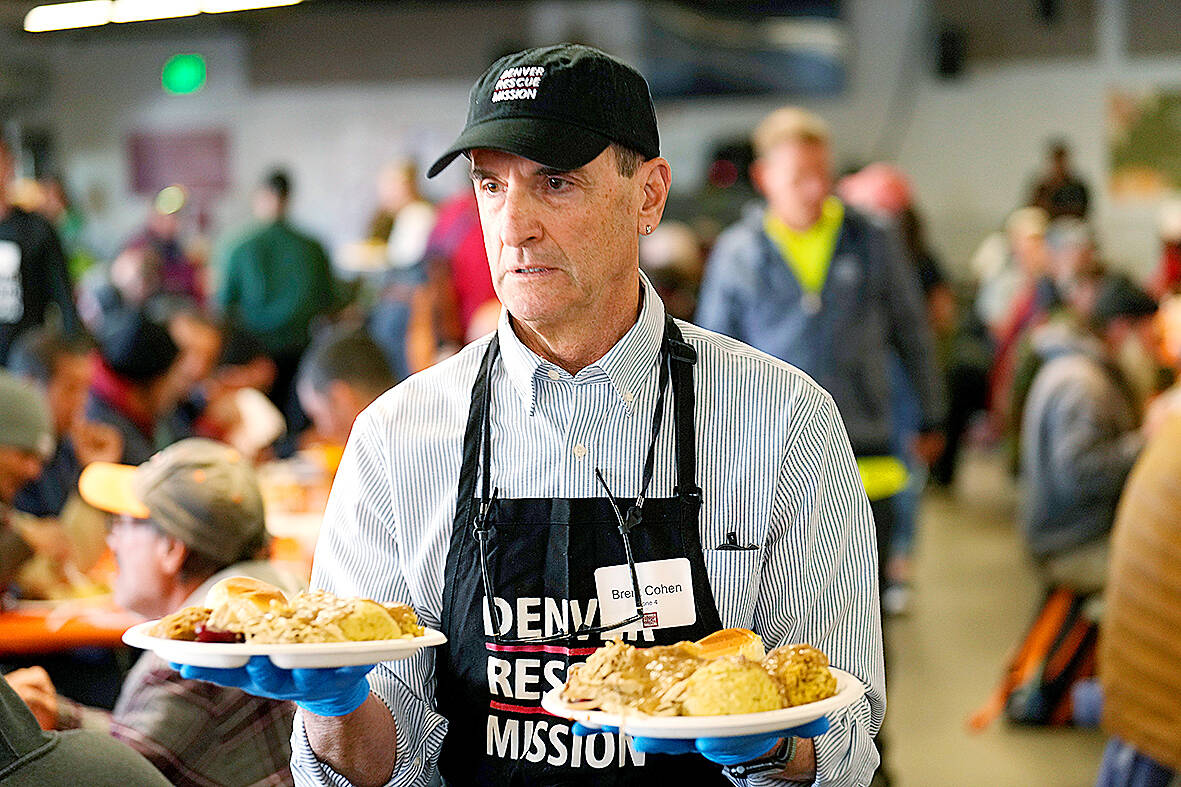
Photo: AP
Most Thursdays, the retired chemist from Kensington, Maryland, also lends an unpaid hand to help clear fallen trees and brush from local trails with the Potomac Appalachian Trail Club. “It’s mostly volunteers who help maintain the trails,” he said.
Researchers who study human evolution and social psychology say that giving back is deeply rooted in human nature. Volunteers say they feel closer ties to the communities they serve.
“When we feel grateful for all we have, that motivates us to do good things for other people who have helped us, and also to do good things for new people,” Sarah Schnitker, a psychologist at Baylor University, said,
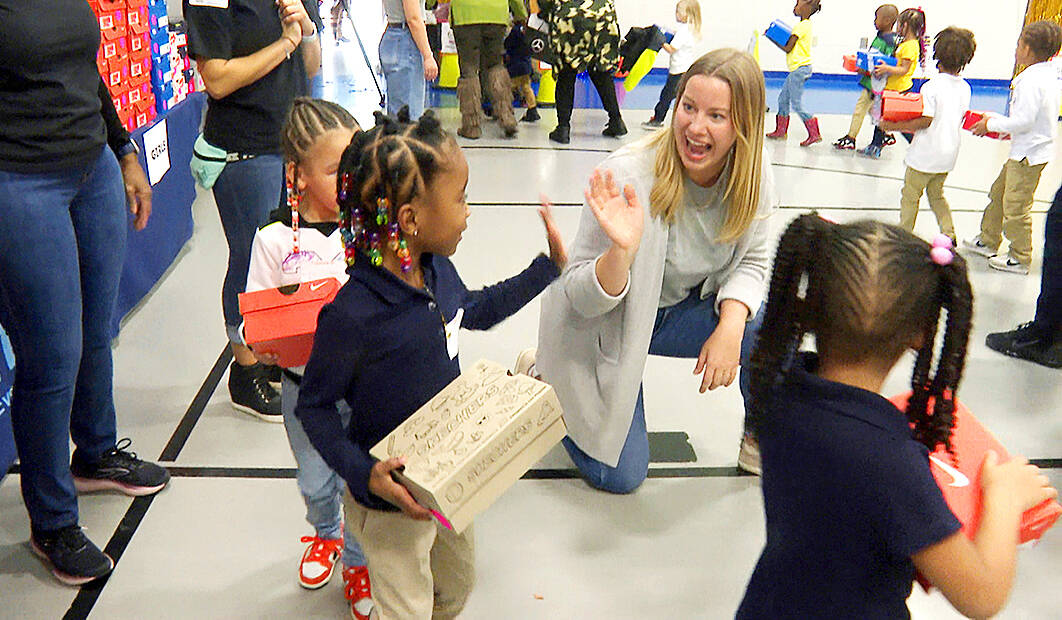
Photo: AP
“There’s a nice upwards reciprocal spiral between gratitude and generosity,” often enhanced at holiday times, she said.
For many in the US, the season most associated with giving, receiving and volunteering runs from Thanksgiving through Hanukkah and Christmas to New Year’s.
But around the world, a giving season or festival is present in many cultures, Amrisha Vaish, a developmental psychologist at the University of Virginia, said.
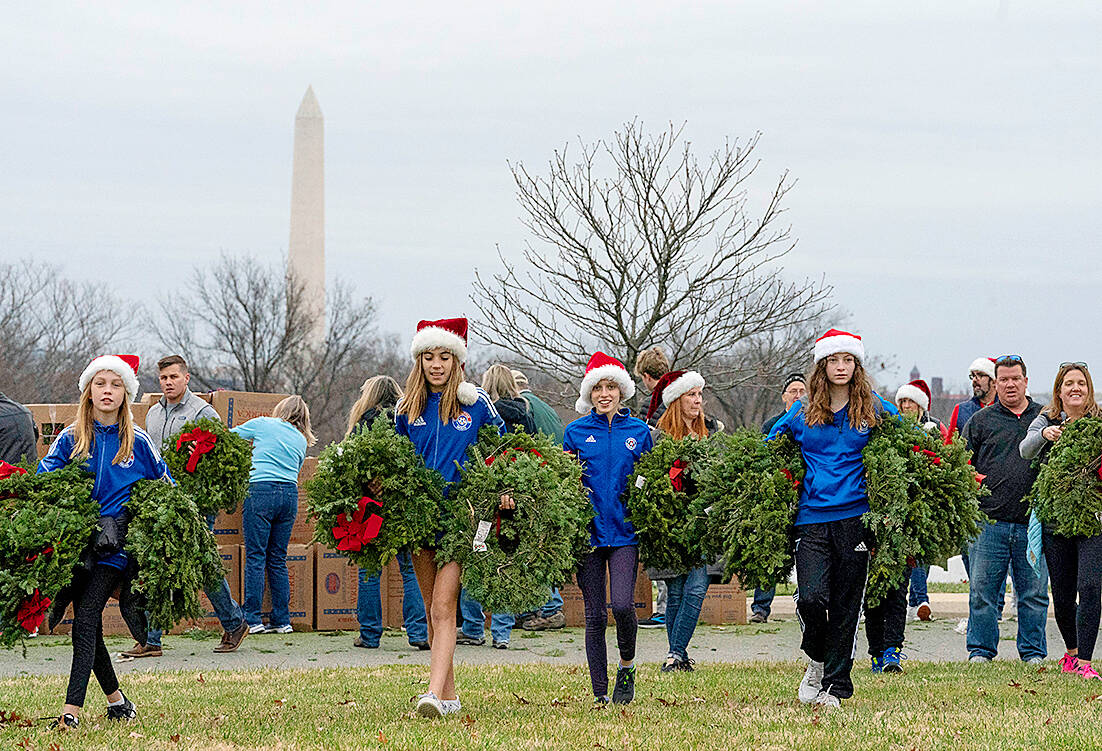
Photo: AP
“Nearly all cultures have events or public festivals that allow people to express gratitude,” she said. “In Hinduism, Divali is a time of lights and festiveness and good eating, but also a time in which people give gifts to really express what people have meant to them.”
For Muslims, Ramadan, which ends with the festival of Eid al-Fitr, is a time for reflection, gratitude and acts of charity. Many Buddhist traditions also emphasize gratitude.
The common purpose of such seasons, which also include non-religious acts of service, is to reinforce our natural cooperative tendencies, Vaish said.
“In human evolutionary history over hundreds of thousands of years, we’ve had to become cooperative in order to work together and survive as a species,” she said.
“We don’t have sharp claws, high speed, many other natural abilities. But what we do have is that we’re super cooperators; we can do more in groups than alone.”
Of course, humans aren’t always cooperative and generous — sometimes we’re also selfish and stubborn.
The tension between selfishness and altruism was recognized even by Darwin, Michael Tomasello, a psychologist at Duke University, said. “That’s why life is so complicated. We have all these motives mapped together.”
But reflecting with gratitude on what we have, and seeing others do good, can encourage our most generous tendencies, experts say.
On an individual level, “giving, volunteering and generosity have the ability to increase our sense of meaning and purpose in life,” said Jenae Nelson, a developmental psychologist at Brigham Young University.
“There’s a quick dopamine hit sometimes called the ‘helpers high.’ But there’s also that deeper reward of helping us to establish purpose and meaning,” she said. “By helping other people and believing that small acts can change the world, you can bring coherence to your own life.”
After Mia Thelen retired as a nurse in Owosso, Michigan, she began volunteering for the American Red Cross, starting out by minding the office phones during blood drives before gradually taking on more organizational and administrative responsibilities.
“It’s a good way to spend your time, making the lives of others a little easier,” Thelen said. “I wanted to do something that helps the community.”
“And I’m learning a lot: learning computer skills, learning communication skills. I have great co-volunteers.” She enjoys feeling more connected with her neighbors.
Another common holiday tradition — sending greeting cards to family and old friends — also provides a chance to enhance or renew social ties, which people are often surprisingly reluctant to do, said Lara Aknin, a social psychologist at Simon Fraser University.
Her research has shown that “people are actually hesitant to reach out to old friends, they worry about being a burden or an inconvenience,” she said. But on the flip side, “people who’ve just heard from old friends report it as a really positive experience.”
So go ahead and write those cards or make those phone calls, she said. Use the holidays as an excuse to reconnect, and share a laugh or a warm mulled drink.

Just after 6am, I walked up to the ticket gate at Taipei Main Station and entered the Taiwan Railway platform without scanning any ticket; instead, I flashed the Sanrio Fun Rail pass on my phone to the gate worker and was admitted. I found my train and prepared to board. My destination? This very same station. I was embarking on a 13-hour journey on one of two round-the-island trains operated by ezTravel. They run each day, one counterclockwise around the island and one clockwise. They differ in a number of ways from an ordinary Taiwan Railway train and can make for
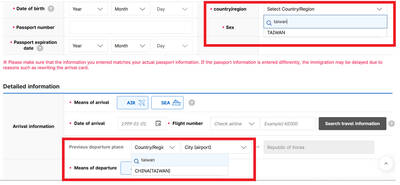
Jason Han says that the e-arrival card spat between South Korea and Taiwan shows that Seoul is signaling adherence to its “one-China” policy, while Taiwan’s response reflects a reciprocal approach. “Attempts to alter the diplomatic status quo often lead to tit-for-tat responses,” the analyst on international affairs tells the Taipei Times, adding that Taiwan may become more cautious in its dealings with South Korea going forward. Taipei has called on Seoul to correct its electronic entry system, which currently lists Taiwan as “China (Taiwan),” warning that reciprocal measures may follow if the wording is not changed before March 31. As of yesterday,

The Portuguese never established a presence on Taiwan, but they must have traded with the indigenous people because later traders reported that the locals referred to parts of deer using Portuguese words. What goods might the Portuguese have offered their indigenous trade partners? Among them must have been slaves, for the Portuguese dealt slaves across Asia. Though we often speak of “Portuguese” ships, imagining them as picturesque vessels manned by pointy-bearded Iberians, in Asia Portuguese shipping between local destinations was crewed by Asian seamen, with a handful of white or Eurasian officers. “Even the great carracks of 1,000-2,000 tons which plied

On Thursday, former Taipei mayor and founder of the Taiwan People’s Party (TPP) Ko Wen-je (柯文哲) was sentenced to 17 years in prison and had his civil rights suspended for six years over corruption, embezzlement and other charges. Seven others related to the case were also handed prison sentences, while two were found not guilty. It has been a bad week for the TPP. On Tuesday, prosecutors charged Chinese immigrant Xu Chunying (徐春鶯) with suspicion of taking part in Beijing-directed election interference. Xu has strong links to the TPP, which once offered her a party list legislator nomination. Tuesday also


 RSS
RSS