


If China attacks, will Taiwanese be willing to fight?
Analysts of certain types obsess over questions like this, especially military analysts and those with an ax to grind as to whether Taiwan is worth defending, or should be cut loose to appease Beijing.
Fellow columnist Michael Turton in “Notes from Central Taiwan: Willing to fight for the homeland” (Nov. 6, page 12) provides a superb analysis of this topic, how it is used and manipulated to political ends and what the underlying data shows.
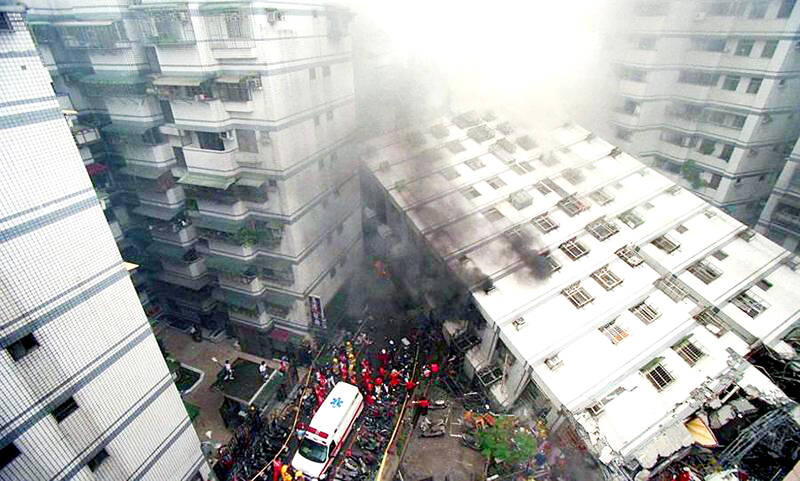
Photo: TT file photo
The problem is that most analysis is centered around polling data, which as Turton observes, “many of these polls do not follow the issue over a long period of time, since they are intended as instant propaganda for one side or the other.”
He demonstrates that in polling taken over time: “The overall trend is clear: over the last decade, Taiwanese have grown more willing to fight the PRC if it attacks Taiwan.”
However, he cautions that “polls post wildly varying numbers showing spikes in one direction or another” that are then “cherry-picked” to support whatever propaganda agenda is being peddled.
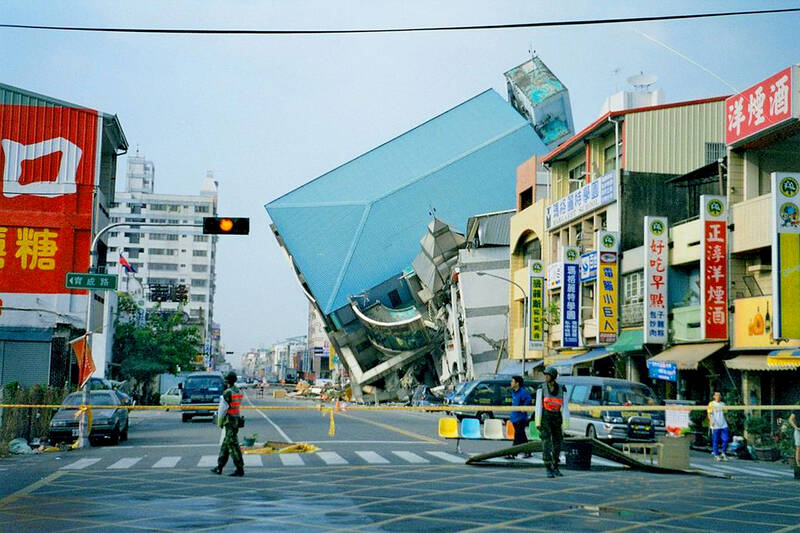
Photo: Courtney Donovan Smith
Regular readers of this normally polling-obsessed column may be surprised that I ignore these polls. The key reason is, as Turton astutely makes clear, “the constantly shifting polls on willingness to fight will actually mean very little once bombs start falling and loved ones start dying.”
The second reason is that the question, while important, misses the big picture.
A more valuable question would be “if under attack and bombs are falling, would you do your part — using your skills, talents and abilities — to best serve in the defense of your community and your nation?”
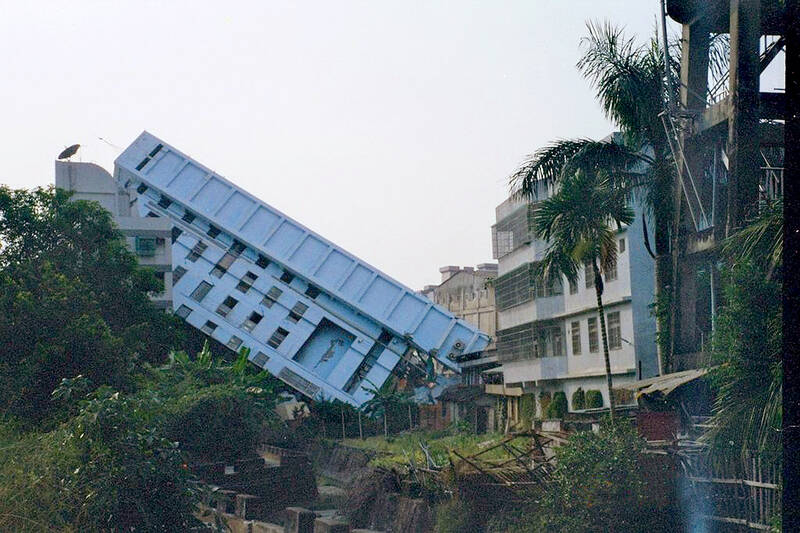
Photo: Courtney Donovan Smith
Not everyone can — or should — pick up arms to fight. Fighting is best done by those with the capacity and training to do so effectively.
To be effective, each fighter needs a small army of supporters backing them up. Logistics personnel, mechanics, medics, cooks, clerks and others are necessary for them to function.
With bombs falling, people will be needed in nearly every capacity. Some will clear rubble and rescue trapped people, while others replenish their water and food. Others will be needed to hurriedly jury rig stretchers and bandages, clear pathways and care for the wounded.
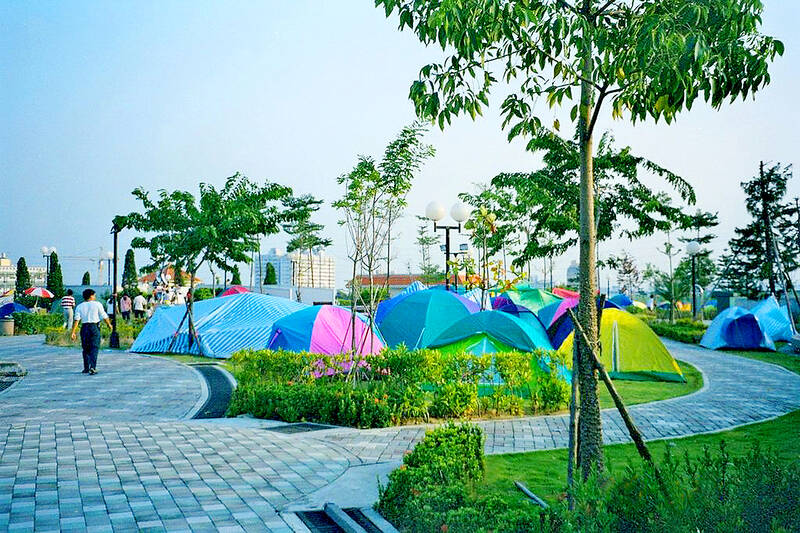
Photo: Courtney Donovan Smith
In such a scenario, there is a role for nearly everyone to play, and even minor-seeming tasks can be lifesaving. There is an elderly lady in my neighborhood with a magical ability to pile almost anything in absurd quantities onto her little scooter for recycling. She would be perfect for handling rapid logistics response around the neighborhood in an emergency.
The third reason I ignore the polling is that I already know the answer: The vast majority of Taiwanese will step up to do their part. That means everyone, including frontline fighters.
Why the certainty? Because over and over again, in crisis, I have witnessed Taiwanese in action, and they step up when needed.
Not because they were asked, but because it was the right thing to do.
LIFE IN CRISIS
For many, the recent “shovel superhero” phenomenon will come to mind, where tens of thousands of Taiwanese dropped everything, picked up shovels and disaster-relief kits and made their way to Hualien to help unbury Guangfu Township (光復) from the mud that engulfed it.
Others may recall how quickly Taiwanese adapted to the pandemic. While the rest of the world floundered, the nimble, flexible and adaptable Taiwanese showed their world-beating prowess at problem-solving and quick turnaround under pressure.
Taiwanese factories quickly retooled and adapted to pump out urgently needed facemasks and PPE, aided by apps tracking availability store-by-store to most efficiently distribute them. They did so with such speed and efficiency that they not only quickly saturated the local market, they rapidly became an essential lifeline for people around the world.
However, it is the 921 Earthquake (known internationally as the 1999 Jiji Earthquake) that most clearly demonstrated the Taiwanese spirit in response to disaster. This 7.3 magnitude earthquake struck at 1:47am in Jiji Township (集集) in Nantou County, and is the second most deadly in Taiwan’s history.
Destruction and death were widespread on mainland Taiwan, and buildings collapsed as far away as Taipei. Coincidentally, I was staying in Taipei that evening, and while my hotel’s walls cracked and buckled, another hotel in Taipei collapsed completely.
By far the majority of the 2,415 deaths and 11,305 injuries were in Nantou and today’s Wufeng (霧峰), Taiping (太平), Dali (大里), and Dongshih (東勢) districts in Taichung.
The destruction was widespread, and the terror kept coming. Aftershock after aftershock, some as strong as 6.8, could and would hit at any time.
Despite my Taichung neighborhood being on fairly solid bedrock, parks were packed with families living in tents in fear of the relentless aftershocks — some of the aftershock epicenters were right in the heart of the city. For a year afterwards, children would scream in terror whenever an earthquake struck.
For weeks, power and water were intermittent at best, and due to the dangers, gas was out of the question. Water trucks provided drinking water. Cell phone towers were down, and with smartphones not yet invented, the only Internet was via computer and modems, which were useless much of the time with the power out.
Our only reliable information was battery-powered radio, and for English speakers, ICRT Radio was the essential lifeline, especially reports by Taichung-based Douglas Habecker, who reported from the ground and via helicopter in Nantou County. Everyone felt very isolated and afraid, desperate for news.
Roads were buckled and cracked, and traffic lights were often out of commission. Aftershocks continued to take down buildings and take lives unpredictably, and when out buying supplies, it was important to keep an eye out for structural integrity.
The atmosphere was eerily calm, punctuated by moments of dread as the earth shook yet again. People seemed slightly distracted; typical day-to-day concerns faded in importance as people busied themselves with the urgent tasks at hand.
HEROS ARISE IN CRISIS
Heroic rescuers appeared to try and save people trapped in the rubble. First, they appeared locally in communities, then from around the country.
They were quickly followed by the Japanese, then from around the world, skirting Chinese airspace on what Beijing insisted was a domestic problem. It is truly awe-inspiring that these people would risk their own lives, far from home, in hopes of saving others here.
There was no chaos, no looting, no violence. People devoted themselves to dealing with the crisis at hand, helping neighbors and strangers alike to get through the difficulties.
Yes, this was different from a war; no one was intentionally killing people — and that psychologically is different than weeks of seemingly random natural destruction. Yet, reading how Ukrainians live their lives coping with periodic destruction being rained down on them, frequent outages and the knowledge that people we know may be among the dead bears more than a passing similarity.
If the Chinese Communist Party (CCP) unleashes the People’s Liberation Army (PLA) on Taiwan, they will attack with unrelenting brutality and lethality. The CCP’s respect for human life is less than zero, despite all their talk of “Taiwanese compatriots.”
Will some be too scared to help, narrowly selfish, or even traitorous? Yes, but they will be a rare few compared to those who step up to respond to the crisis.
Will the government and civil society groups have adequately prepared a coordinated response to optimally channel a civilian response? Not yet, but the seeds are there, and never underestimate the resourcefulness of the Taiwanese in a crisis.
Propagandists can spin poll numbers however they want, but it will not change the reality.
Yes, Taiwanese will fight. More importantly, they will come together.
Donovan’s Deep Dives is a regular column by Courtney Donovan Smith (石東文) who writes in-depth analysis on everything about Taiwan’s political scene and geopolitics. Donovan is also the central Taiwan correspondent at ICRT FM100 Radio News, co-publisher of Compass Magazine, co-founder Taiwan Report (report.tw) and former chair of the Taichung American Chamber of Commerce. Follow him on X: @donovan_smith.
If one asks Taiwanese why house prices are so high or why the nation is so built up or why certain policies cannot be carried out, one common answer is that “Taiwan is too small.” This is actually true, though not in the way people think. The National Property Administration (NPA), responsible for tracking and managing the government’s real estate assets, maintains statistics on how much land the government owns. As of the end of last year, land for official use constituted 293,655 hectares, for public use 1,732,513 hectares, for non-public use 216,972 hectares and for state enterprises 34 hectares, yielding
The small platform at Duoliang Train Station in Taitung County’s Taimali Township (太麻里) served villagers from 1992 to 2006, but was eventually shut down due to lack of use. Just 10 years later, the abandoned train station had become widely known as the most beautiful station in Taiwan, and visitors were so frequent that the village had to start restricting traffic. Nowadays, Duoliang Village (多良) is known as a bit of a tourist trap, with a mandatory, albeit modest, admission fee of NT$10 giving access to a crowded lane of vendors with a mediocre view of the ocean and the trains
The March/April volume of Foreign Affairs, long a purveyor of pro-China pablum, offered up another irksome Beijing-speak on the issues and solutions for the problems vexing the People’s Republic of China (PRC) and the US: “America and China at the Edge of Ruin: A Last Chance to Step Back From the Brink” rang the provocative title, by David M. Lampton and Wang Jisi (王緝思). If one ever wants to describe what went wrong with US-PRC relations, the career of Wang Jisi is a good place to start. Wang has extensive experience in the US and the West. He was a visiting

One of the challenges with the sheer availability of food in today’s world is that lots of us end up spending many of our waking hours eating. Whether it’s full meals, snacks or desserts, scientists have found that it’s not uncommon for us to be mindlessly grazing at some point during all of our 16 or so waking hours. The problem? As soon as this food hits the bloodstream in the form of glucose, it initiates the release of the hormone insulin. This in turn activates a switch present in every one of our cells, which is responsible for driving cell


 RSS
RSS