


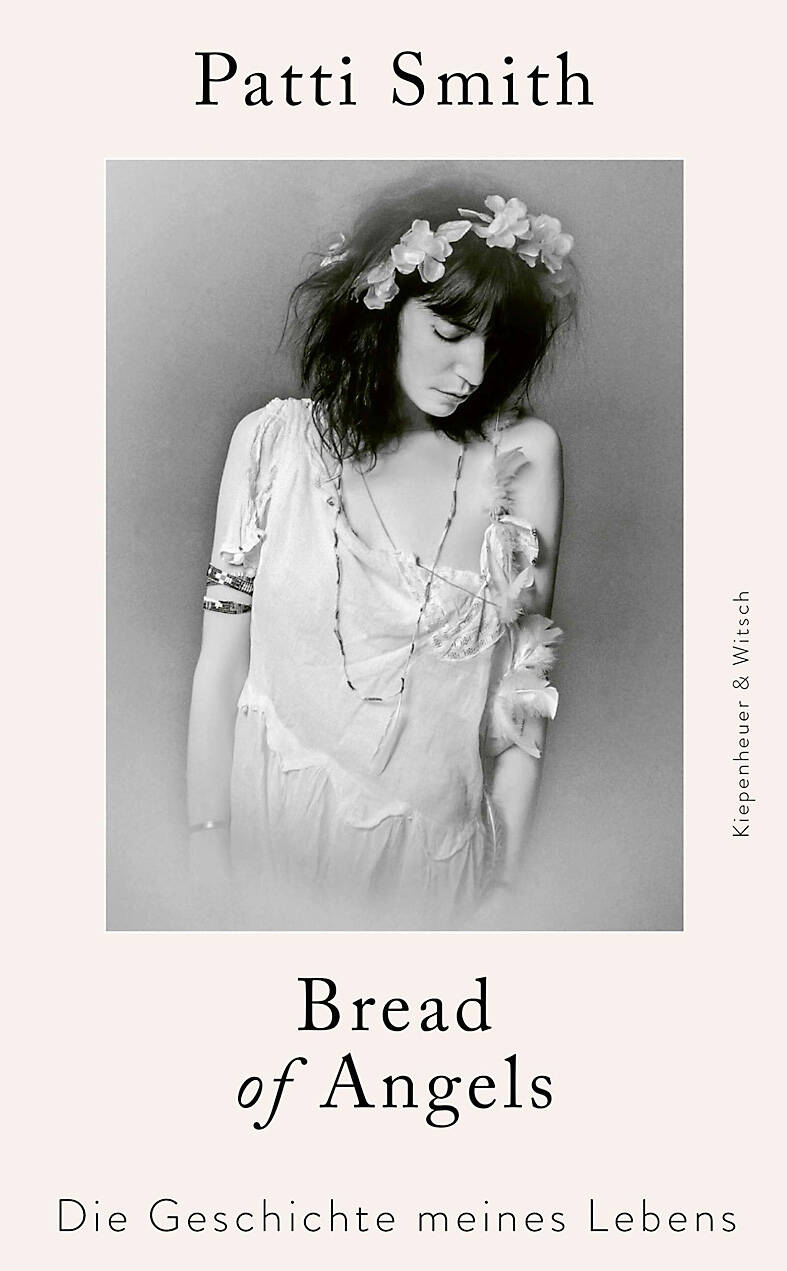
The post-pandemic flood of artist memoirs continues, but Patti Smith stands apart. The poet who wrote punk into existence before pivoting to pop stardom then ghosting fans to raise a family has, in the 21st century, leaned into literature and music with such vitality it has become hard to say which medium suits her better. It hardly matters. At 78 years old, Smith lives and breathes both.
Her latest memoir follows the tightly focused coming-of-age story Just Kids, published to great acclaim in 2010, and 2015’s more ruminative M Train. Bread of Angels splits the difference to create a more conventional autobiography. It could be described as Just Kids’ prequel and sequel, moving from Smith’s hardscrabble childhood to the near-present, where a striking twist takes the narrative back to her literal conception. It’s one of a number of revelations about an artist whose story would otherwise seem, by now, well-chiseled into the tablets of rock history.
But surprises don’t feel crucial to a work that builds its world as much through narrative voice as its description of events. That voice can take some getting used to. Oddly formal, even archaic, in tone, at times unrestrained if not undisciplined, Smith’s literary mind is a wild mare. It can occasionally feel repetitive or self-indulgent. But once you settle in, it casts a potent spell, and you’ll learn as much about the artist from her style as from the stories themselves.
The book begins with a Proustian invocation, flickering between present and distant past, Smith confessing her outsider desire to “disguise the miniature Quasimodo trapped inside an awkward child’s body,” and introducing a recurrent metaphor, her “rebel hump” — a sort of holy flaw she comes to accept, harness and ride.
Like many of us, she romanticizes her childhood; 70 pages in, she’s still just 10 years old. She idolizes her father, a damaged second world war vet who takes factory jobs to support his young family, moving them from a Philadelphia rooming house into nearly condemned government housing. They relocate 12 times before settling into a modest new development in rural south Jersey.
Smith was a sickly child. Diagnosed with TB, she was sent to Chattanooga to quarantine and recuperate with relatives. In response to her metaphysical inquiries, they enrolled her in Presbyterian Sunday school. She yearned to create; she recalls her “outstretched fingers trying to reach the ivory keys” of her grandmother’s “glowing spinet,” and she kept diaries scrupulously. She’d disappear into reveries — in one story, she was waylaid by a tortoise en route to school and absent-mindedly lost the morning communing with it. She found similar escape in vividly imagined playtimes with sister Linda, younger by 11 months, and little brother Todd.
“As our parents grappled with an uncertain fate, we practiced oblivion,” she writes, among many singing sentences; “the future was a grownup concern.”
There’s an awful lot of rambling through woods and yards, waiting for destiny to descend. It does, and you see the rebel artist being born in stop-motion. Smith refuses to salute the American flag in school, per the Jehovah’s Witness teachings her mother introduced her to. On her first trip to an art museum, Picasso and Modigliani light up her imagination. So do encounters with films (Lost Horizon), music (the Shirelles’ Will You Love Me Tomorrow, the album Another Side of Bob Dylan), and literature (Wilde’s The Selfish Giant, Rimbaud’s Illuminations). When art and religion inevitably clash, she chooses sides.
“I was told that there was no place for art in Christ’s Kingdom,” she writes of an exchange with a church elder, “and I was counseled to consider what I truly believed in. But I knew what I believed in.”
The tipping point comes when 19-year-old Smith announces she’s pregnant and, in solidarity, her brother confesses his own gender non-conformity. Smith gives her child up for adoption, heads to New York City, and begins the life chronicled in Just Kids. Those years, and her profound relationship with soulmate Robert Mapplethorpe, fly by in a blur here, the book’s tempo shifting from ramble to gallop. Her romance with Sam Shepard. Her debut at St Mark’s Church with guitarist Lenny Kaye. The touchstone CBGB residency.
We learn that Dylan invited her to join the fabled Rolling Thunder Revue, then bumped her off the lineup on opening night. She hints at a love triangle between herself, actor Maria Schneider and billionaire Paul Getty. She recounts her principled knack for shooting herself in the foot commercially (refusing to alter the lyrics to Pissing in a River for radio, or to lip-sync Because the Night on American Bandstand). A final show for 80,000 Italian fans, and a pre-retirement counseling session with William S Burroughs, mark her 1979 exit from the public eye.
The pace slows as Smith heads off to Michigan with MC5 guitarist Fred Smith. They live a bohemian love story: making their home in an abandoned hotel, refurbishing an old boat, traveling to far-flung artistic landmarks, money evidently available if not outrageously plentiful. They marry with just their parents in attendance. They have kids; she does laundry, and she writes. The narrative is radiant and intimate, but guarded.
“The trials and challenges that Fred and I suffered were our own,” she writes elliptically in one moving passage, alluding to her husband’s health, his drug history and whatever marital troubles they endured, declaring “his decline was the tragedy of my life.”
A transcendent sequence that follows — like those moments in her songs when poetic incantation takes flight — displays her eccentric writing style not as a tic but a superpower.
Fred Smith’s passing from heart failure in 1994 is followed by a cascade of other losses, deaths that trigger a creative rebirth. Michael Stipe cold-calls her (“confessing he was somewhat intoxicated”), jump-starting a long friendship. Allen Ginsberg urges her to return to the stage. Longtime comrade Tom Verlaine joins her band for a comeback tour. Dylan invites her to open some shows, and to sing a magnificent duet, Dark Eyes. She captures that moment with her childhood hero indelibly.
“I was somewhat nervous as Bob called me to the stage. I began the verse, and we sang the chorus together on the same microphone, our faces nearly touching. I could see tiny beads of sweat on his forehead and caught the intensity in his eyes. I gripped my dress and looked down at my bare feet, and for that moment I was just a widow and the raging young poet who once dominated my teenage senses, was just a man.”
There are new albums, endless tours, books, awards, a doubling down on activism. And as the narrative spins into an elegantly diaristic laundry list, she and her sister Linda discover something about their lineage that stops time, realigning the architecture of a remarkable life. It’s a beautiful moment of storytelling. Yet her DNA doesn’t change what the book has already made plain — that the Patti Smith we know gave birth to herself. She sang herself into being. She’s written — is still writing — her own story.

Just after 6am, I walked up to the ticket gate at Taipei Main Station and entered the Taiwan Railway platform without scanning any ticket; instead, I flashed the Sanrio Fun Rail pass on my phone to the gate worker and was admitted. I found my train and prepared to board. My destination? This very same station. I was embarking on a 13-hour journey on one of two round-the-island trains operated by ezTravel. They run each day, one counterclockwise around the island and one clockwise. They differ in a number of ways from an ordinary Taiwan Railway train and can make for

Jason Han says that the e-arrival card spat between South Korea and Taiwan shows that Seoul is signaling adherence to its “one-China” policy, while Taiwan’s response reflects a reciprocal approach. “Attempts to alter the diplomatic status quo often lead to tit-for-tat responses,” the analyst on international affairs tells the Taipei Times, adding that Taiwan may become more cautious in its dealings with South Korea going forward. Taipei has called on Seoul to correct its electronic entry system, which currently lists Taiwan as “China (Taiwan),” warning that reciprocal measures may follow if the wording is not changed before March 31. As of yesterday,
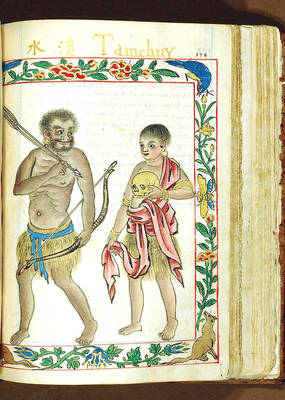
The Portuguese never established a presence on Taiwan, but they must have traded with the indigenous people because later traders reported that the locals referred to parts of deer using Portuguese words. What goods might the Portuguese have offered their indigenous trade partners? Among them must have been slaves, for the Portuguese dealt slaves across Asia. Though we often speak of “Portuguese” ships, imagining them as picturesque vessels manned by pointy-bearded Iberians, in Asia Portuguese shipping between local destinations was crewed by Asian seamen, with a handful of white or Eurasian officers. “Even the great carracks of 1,000-2,000 tons which plied

On Thursday, former Taipei mayor and founder of the Taiwan People’s Party (TPP) Ko Wen-je (柯文哲) was sentenced to 17 years in prison and had his civil rights suspended for six years over corruption, embezzlement and other charges. Seven others related to the case were also handed prison sentences, while two were found not guilty. It has been a bad week for the TPP. On Tuesday, prosecutors charged Chinese immigrant Xu Chunying (徐春鶯) with suspicion of taking part in Beijing-directed election interference. Xu has strong links to the TPP, which once offered her a party list legislator nomination. Tuesday also


 RSS
RSS