


Cheng Shao-shu (鄭少書) was advancing alone through a smoke-filled corridor in Miaoli, when he suddenly realized he couldn’t breathe. The firefighter tore off his mask, only for the hot air to scorch his lungs. Gasping, he snapped the mask back on and scrambled out of the inferno.
Cheng says he survived the fire only because he was near a door; had he been deeper inside the building, he wouldn’t have made it out.
“It may not be the toughest job, but it is certainly one of the most dangerous,” Cheng says.
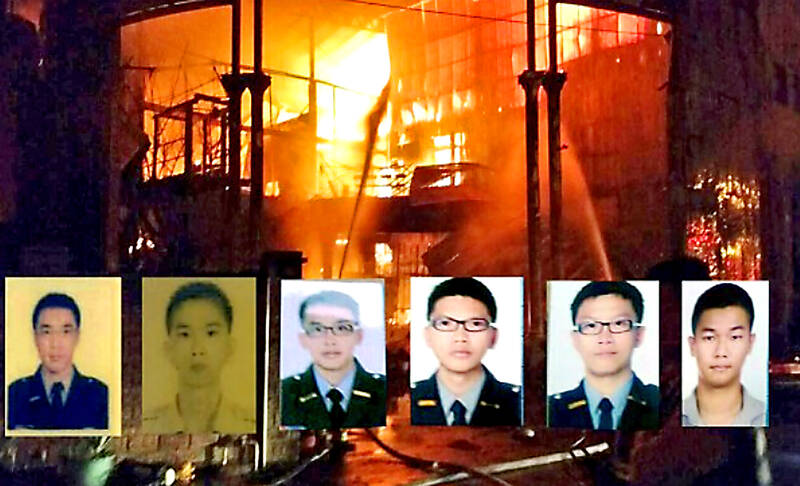
Photo: TT file photo
Over the past two decades, 77 firefighters have died in the line of duty — more than double Hong Kong’s toll of 31 over the past 84 years, according to the National Association for Firefighters.
SHRINKING WORKFORCE, RISING BURDEN
Those losses are part of a deeper crisis in Taiwan’s firefighting system: one driven not only by danger, but also demographics.
Graphic: Billy Wu
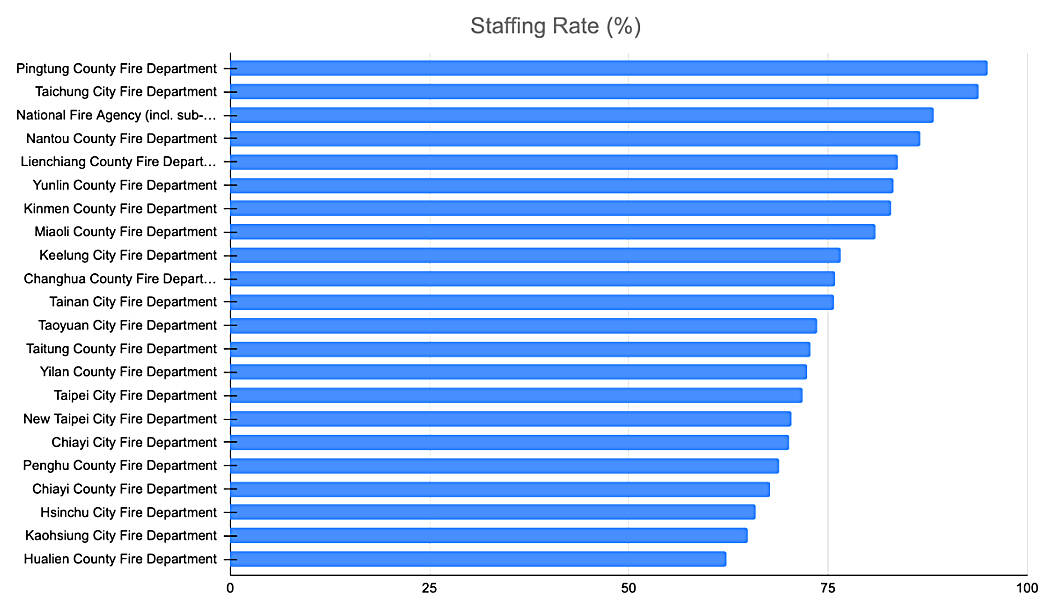
As of last year, Taiwan’s fire departments are short more than 2,000 personnel, leaving roughly one-quarter of all positions unfilled nationwide, data from the National Fire Agency (NFA, 消防署) shows.
The situation is especially dire in Hsinchu County (新竹縣), where crews are running on barely half of the needed manpower.
“Understaffing leads to chronic overwork, insufficient rest and extreme stress,” says Hsinchu County Councilor Ou Yang-ting (歐陽霆). “This is not only unfair to firefighters but a direct threat to public safety.”
Graphic: Billy Wu
The issue leaves many firefighting teams staffed by skeleton crews.
“The first team that goes in? Two people, maybe three,” Cheng says. “Each team can rescue only one person. That’s it.”
Chen Hong-hua (陳弘樺), a 17-year veteran, has faced the consequences firsthand. A residential fire had trapped three people in a building, but his undermanned team couldn’t conduct simultaneous rescues.
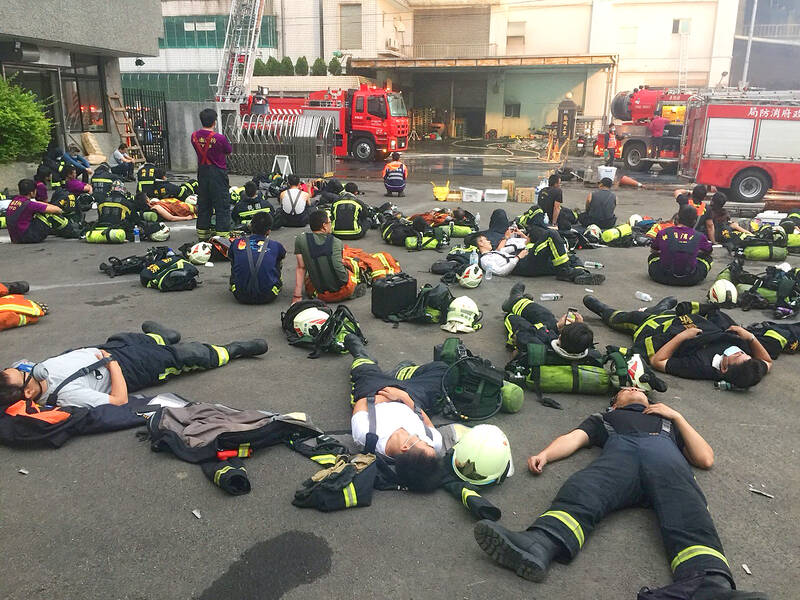
Photo: Hsu Chuo-hsun, Taipei Times
They decided to prioritize an elderly woman with mobility issues, directing the other two victims to the rooftop to await backup. Although the pair were eventually rescued and sent to hospital, they were left unnecessarily traumatized by the experience.
“If manpower remains this limited,” says Wu Hung-yi (吳宏毅), a senior specialist at NFA’s training center, “that kind of danger will keep happening.”
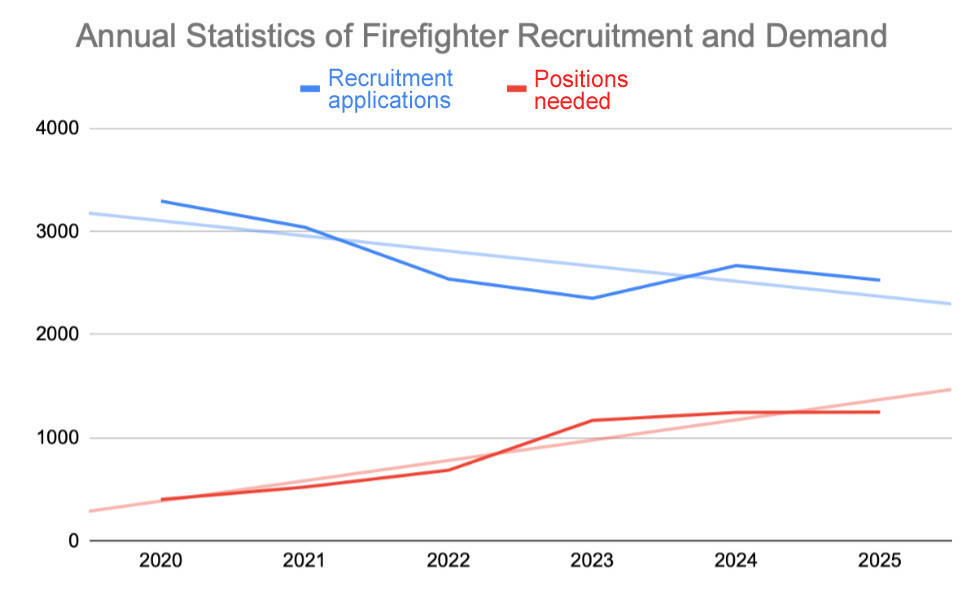
NFA data show that firefighter recruitment has fallen from 3,294 applicants to 2,527 over the past six years, even as demand for new hires has tripled.
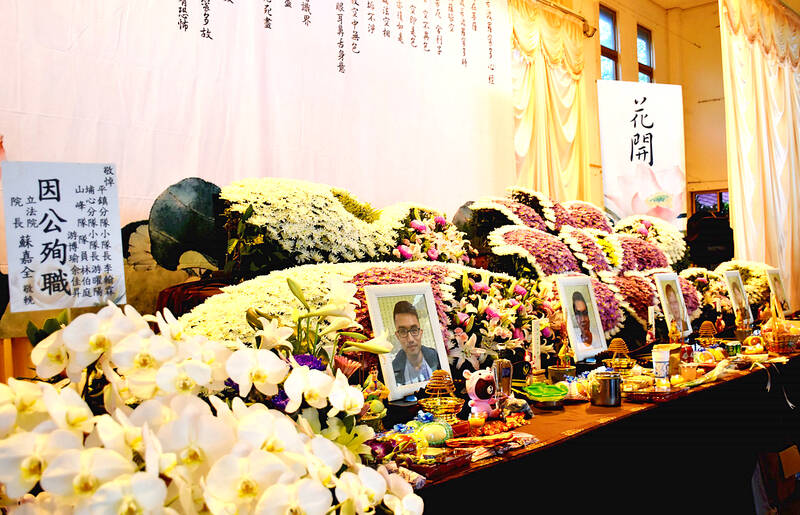
Photo: Lee Jung-ping, Taipei Times
ONE COUNTRY, 22 SYSTEMS
The Local Government Act (地方制度法) limits the central government’s ability to increase manpower. Under that act and the Fire Services Act (消防法), local governments control their own fire departments, meaning rules and resources vary by region.
The NFA can issue guidelines and provide incentives, but it has no authority over manpower, equipment or training protocols.
“We can only assist from the sidelines,” says Hsu Hsiu-yen (許岫?), section chief at the NFA’s personnel office.
Hsu says the agency once considered proposing nationwide staffing standards, but they would have served only as a reference.
“It’s one [country] with 22 different systems,” Cheng says. “That’s the problem.”
In counties and cities with tight budgets, fire departments often operate with only about 60 percent of the personnel legally required under regulations.
“The fatigue builds up, and that puts both firefighters and the public at risk,” says Hsinchu County Fire Chief Chen Chung-chen (陳中振).
And unlike other countries, Taiwan’s firefighters double as emergency medical responders, operating both fire engines and ambulances.
Chen and Cheng say they’ve driven ambulances while barely conscious due to overwork.
A Taiwan Occupational Hygiene Association (台灣職業衛生學會) study found that 19 percent of firefighters reported operational errors caused by stress or fatigue, ranging from incomplete safety checks to delayed reactions.
Cheng says more than half of all emergency calls that firefighters have to respond to are ambulance runs.
Firefighters are also dispatched for more mundane reasons: to retrieve cell phones from sewers, collect clothes tangled on telephone poles or conduct door-to-door safety education.
The fragmented system creates a vicious cycle: overworked teams are diverted by incidents unrelated to firefighting, impacting real fire emergencies.
UNEVEN PROGRESS, UNEVEN PROTECTION
The decentralized system has also produced uneven competence and resource quality among departments.
After six firefighters were killed in the 2015 bowling alley blaze in Taoyuan’s Sinwu District (新屋), the deadliest incident for firefighters in the nation’s history, the city carried out sweeping reforms that included major equipment upgrades and stricter safety protocols.
Today, it is regarded as a national model.
Yet even these hard-won improvements stop at the city’s borders. Many still struggle with outdated gear and minimal training.
Will, a Kaohsiung firefighter who requested anonymity to avoid career retaliation, says his department still issues breathing apparatus considered substandard.
The US-made gear is the same model that failed Cheng in the Miaoli fire.
“The seal isn’t good; smoke leaks in and the lenses fog quickly,” Will says. “You can get disoriented and lost inside the fire.”
Hsinchu County stopped buying the brand years ago after discovering it couldn’t connect directly to radios, forcing firefighters to lift their masks to talk.
Public procurement records show the supplier is a Kaohsiung firm.
When ask for comment, the city fire department acknowledged firefighter concerns, adding that it would “consider those opinions” in future purchases, while maintaining that the gear meets official standards.
REFORMS UNDERWAY?
Both central and local governments are pushing for change to address the long-standing problems.
By 2028, the NFA plans to add 3,000 new firefighters, supported by recruitment campaigns that ease application standards and expand media outreach.
Hsu acknowledges the structural constraints but remains cautiously optimistic.
“We’ve made progress,” she says. “Danger pay is now mandatory.”
The NFA is also introducing new technologies, such as rescue robots, drones and expanded volunteer programs to supplement professional crews.
Some departments have upgraded their gear as well, replacing older breathing apparatus with electronic models equipped with multiple warning systems.
But for many firefighters, change feels too slow.
They still cannot unionize, remain excluded from Taiwan’s Occupational Safety and Health Act (職業安全衛生法) and work within a fragmented, uncoordinated system. The cycle continues: tragedy sparks reform, but systemic barriers stall implementation.
For now, firefighters like Will and Cheng continue answering emergency calls, knowing they are gambling with their lives each time they suit up.
“Lips and teeth rely on each other,” Cheng says, invoking a Chinese idiom. “No citizen can be safe if firefighters are not safe first.”

Just after 6am, I walked up to the ticket gate at Taipei Main Station and entered the Taiwan Railway platform without scanning any ticket; instead, I flashed the Sanrio Fun Rail pass on my phone to the gate worker and was admitted. I found my train and prepared to board. My destination? This very same station. I was embarking on a 13-hour journey on one of two round-the-island trains operated by ezTravel. They run each day, one counterclockwise around the island and one clockwise. They differ in a number of ways from an ordinary Taiwan Railway train and can make for
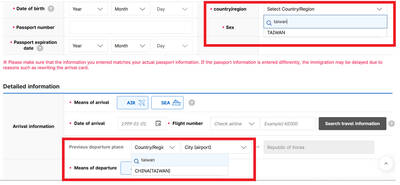
Jason Han says that the e-arrival card spat between South Korea and Taiwan shows that Seoul is signaling adherence to its “one-China” policy, while Taiwan’s response reflects a reciprocal approach. “Attempts to alter the diplomatic status quo often lead to tit-for-tat responses,” the analyst on international affairs tells the Taipei Times, adding that Taiwan may become more cautious in its dealings with South Korea going forward. Taipei has called on Seoul to correct its electronic entry system, which currently lists Taiwan as “China (Taiwan),” warning that reciprocal measures may follow if the wording is not changed before March 31. As of yesterday,
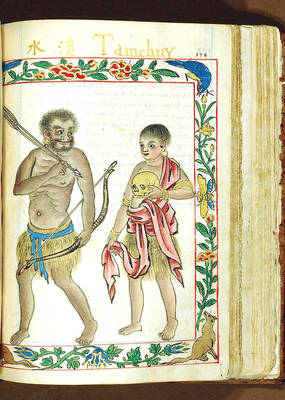
The Portuguese never established a presence on Taiwan, but they must have traded with the indigenous people because later traders reported that the locals referred to parts of deer using Portuguese words. What goods might the Portuguese have offered their indigenous trade partners? Among them must have been slaves, for the Portuguese dealt slaves across Asia. Though we often speak of “Portuguese” ships, imagining them as picturesque vessels manned by pointy-bearded Iberians, in Asia Portuguese shipping between local destinations was crewed by Asian seamen, with a handful of white or Eurasian officers. “Even the great carracks of 1,000-2,000 tons which plied
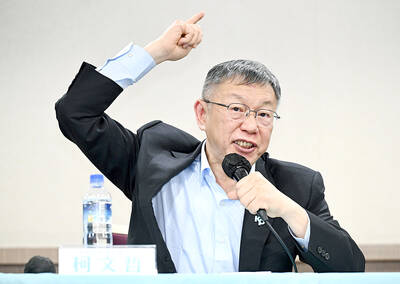
On Thursday, former Taipei mayor and founder of the Taiwan People’s Party (TPP) Ko Wen-je (柯文哲) was sentenced to 17 years in prison and had his civil rights suspended for six years over corruption, embezzlement and other charges. Seven others related to the case were also handed prison sentences, while two were found not guilty. It has been a bad week for the TPP. On Tuesday, prosecutors charged Chinese immigrant Xu Chunying (徐春鶯) with suspicion of taking part in Beijing-directed election interference. Xu has strong links to the TPP, which once offered her a party list legislator nomination. Tuesday also


 RSS
RSS