


Smart speakers are a great parenting crutch, whether it be for setting a timer (kids seem to be weirdly obedient to them) or asking Alexa for homework help when the kids put you on the spot. But reader Katie Matthews has hacked the parenting matrix.
“I used to have to nag repeatedly to get the kids out of the house,” she says. “Now our Google speaker announces a five-minute warning before we need to leave. They know they have to do their last bits of faffing when they hear that warning. Then the speaker announces, ‘Shoes on, let’s go!’ when it’s time to leave. It really has transformed our mornings.”
MEALTIME MUSTS

Photo: AP
Getting your child to endure the torture of eating the food that has been lovingly prepared for them can be painful. But this sweet tip comes tried and tested from author Holly Bourne.
“Making my daughter ‘ice-cream’ for breakfast — with blended avocado, banana, strawberries and full-fat Greek yoghurt — has been a gamechanger. It’s important not to ‘trick’ kids into eating healthy food, so she helps us make it and sees what goes into the blender, but doesn’t seem to mind if it’s becoming ice-cream.”
While some of us fret about snacking, reader Sarah de Malplaquet says giving her six-year-old a snack plate of raw vegetables before dinner has improved mealtimes.
“He happily munches through veggies he would reject at dinner, and then the pressure is off when we sit down to eat as we know he’s already had a variety of vegetables.”
And if the dinner table has become a war zone, Sue from Norwich has a suggestion: “When sharing something tasty between two boys, one would cut and the other would get to choose which half they’d like.”
Some parents have had great success in actually handing over the cooking responsibilities. Jo from Berkshire shares: “When my son was seven, his grandmother taught him to make a cheese omelet, and now he’ll make that for breakfast for the whole family at any opportunity, because it makes him feel responsible. There’s something about giving kids a role in the family that pushes them a bit – and they feel like it’s something grownup and maybe a bit dangerous! That’s been a real parenting win.”
DAY TRIPS
Nadia from London has an idea that sounds such fun you’ll be booking a day out asap.
“I’ve always loved museums,” she says, “but they can be overwhelming for children. For decades now, I’ve done something called ‘playing postcards.’ We do the museum backwards, visiting the gift shop first. Each child gets to choose three postcards. Then they take it in turns to find that particular artwork in the museum and give us a little information about the piece from the details on the postcard, or from any gallery plaque. At the end of this treasure-hunt-style activity, we vote for our favorite in the cafe.”
If even deciding where to go is a trial, Deb from Dorset says she gives her children a choice — and smaller kids will usually go for the last of three options, so make that your preference.
“They are really happy it’s their choice,” she says. “If you’ve got more than one child, make sure they know whose turn it is to choose and be absolutely rigorous in sticking to that — children love fairness.”
HYGIENE HACKS
On dealing with kids’ personal hygiene, Pip from London says, “‘Try for three, then ask for me’ is a great mantra — it’s been good for bum-wiping at least.”
And when it comes to younger children, Caroline from Derby says, “When cutting a baby’s fingernails, put them in a high chair so you’ve got both arms free to hold a reluctant baby arm — it also works for brushing teeth and administering medicine.”
To get kids into the bath, Anna from Manchester suggests saying something like: “I bet you can’t get into the bath by the time I count to 10 — and if you do, I’ll do a silly dance.”
Battling to then get them out again? Try this from Catherine in Birmingham: “My baby hates getting out of the bath and it used to start a pre-bedtime tantrum. Now we say goodbye to the bath toys and put them away one by one as the bath water drains out. She’s eventually sitting in an empty bath and is then happy to move on to the next stage of the bedtime routine.”
And if you’ve been worn down by chasing reluctant kids with SPF, reader Carly shares this genius idea: “Apply sunscreen or moisturizer with a tanning mitt. It takes 30 seconds to do a whole body and goes on more evenly.”
MAKING PLAYTIME FUN
To break up the tedium of parenting, Julia Pegg from Sheffield suggests: “When times get tough on my 87th read of Paw Patrol: Pups Save Adventure Bay, I imagine I’m a minor celebrity on CBeebies Bedtime Story. I look into the ‘camera’ and give the performance of a lifetime. I can suddenly do voices, tone and inflection with much greater ease, and convey all the feelings I can muster. It seems silly, but it definitely lifts the monotony.”
Sean, a headteacher and father of two, offers a mental shift that helps him: “I remind myself that one day they won’t ask me to play Lego or dinosaurs — that makes me enjoy it while I can.”
JUST BEHAVE!
There are moments you feel you’d do anything to get your kids to stop fighting, screaming or causing chaos.
“When the kids are driving me up the wall, I call on a piece of advice a friend gave me: take them outside or put them in water, whether that’s a bath or playing with a water gun,” says Katharine from Exeter. “The change of environment really helps with de-escalating a tantrum.”
Emily from London plays “you’re not allowed to laugh” when her three children kick off. The idea is the children can be as sad or furious as they need to be, but they must not laugh.
“Any smile or giggle, we pounce on with ‘No laughing, you’re supposed to be cross!’ Within minutes, they’re all usually laughing hysterically. I don’t know why it works, but it’s saved me many times.”

If one asks Taiwanese why house prices are so high or why the nation is so built up or why certain policies cannot be carried out, one common answer is that “Taiwan is too small.” This is actually true, though not in the way people think. The National Property Administration (NPA), responsible for tracking and managing the government’s real estate assets, maintains statistics on how much land the government owns. As of the end of last year, land for official use constituted 293,655 hectares, for public use 1,732,513 hectares, for non-public use 216,972 hectares and for state enterprises 34 hectares, yielding

The small platform at Duoliang Train Station in Taitung County’s Taimali Township (太麻里) served villagers from 1992 to 2006, but was eventually shut down due to lack of use. Just 10 years later, the abandoned train station had become widely known as the most beautiful station in Taiwan, and visitors were so frequent that the village had to start restricting traffic. Nowadays, Duoliang Village (多良) is known as a bit of a tourist trap, with a mandatory, albeit modest, admission fee of NT$10 giving access to a crowded lane of vendors with a mediocre view of the ocean and the trains

For many people, Bilingual Nation 2030 begins and ends in the classroom. Since the policy was launched in 2018, the debate has centered on students, teachers and the pressure placed on schools. Yet the policy was never solely about English education. The government’s official plan also calls for bilingualization in Taiwan’s government services, laws and regulations, and living environment. The goal is to make Taiwan more inclusive and accessible to international enterprises and talent and better prepared for global economic and trade conditions. After eight years, that grand vision is due for a pulse check. RULES THAT CAN BE READ For Harper Chen (陳虹宇), an adviser
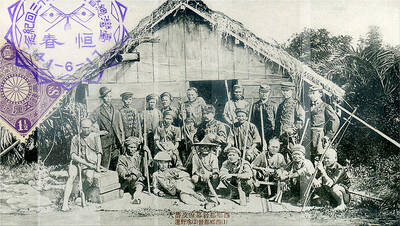
Traditionally, indigenous people in Taiwan’s mountains practice swidden cultivation, or “slash and burn” agriculture, a practice common in human history. According to a 2016 research article in the International Journal of Environmental Sustainability, among the Atayal people, this began with a search for suitable forested slopeland. The trees are burnt for fertilizer and the land cleared of stones. The stones and wood are then piled up to make fences, while both dead and standing trees are retained on the plot. The fences are used to grow climbing crops like squash and beans. The plot itself supports farming for three years.


 RSS
RSS