


There is a lovely story of friendship, grief and starting over at the heart of Eleanor the Great. The film, directed by Scarlett Johansson in her feature debut, gets tangled in a plot contrivance that is, at best, unnecessary and at worst, loathsome.
That’s the problem with the elevator pitch mentality, though. A story about a 90-something trying to make friends in a new city might sound a little too simple, a little too straightforward. What if she does so by pretending to be a Holocaust survivor? I’m not kidding.
Eleanor is played by June Squibb (the great). At 94-years-old, she has moved from Florida to New York after the death of her best friend and roommate Bessie (Rita Zohar). Her daughter, Lisa (Jessica Hecht), and grandson, Max (Will Price), have taken her into their small Manhattan apartment, but they only seem interested in getting Eleanor into an assisted living arrangement. Lisa especially treats her mother’s presence like an inconvenience, a problem to fix, and Eleanor starts looking elsewhere for companionship.
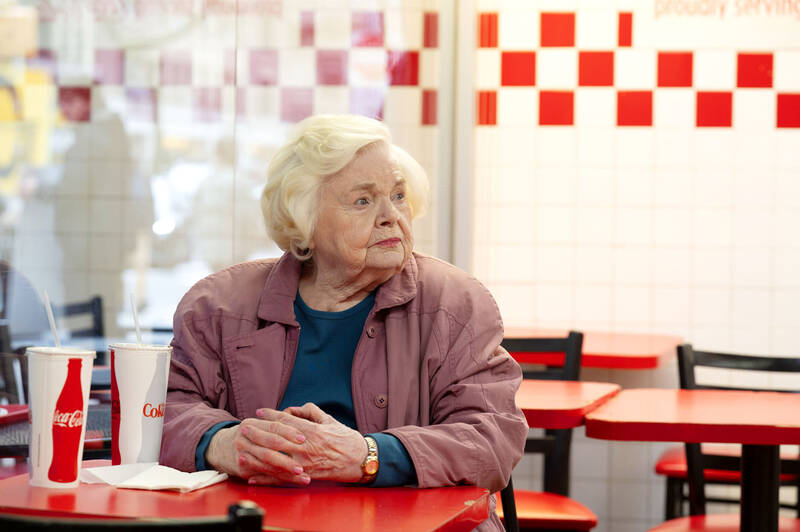
Photo: AP
The thing is Eleanor had a great life in Florida, living with her platonic best friend in a little apartment. The script, Tory Kamen’s first produced screenplay, smartly introduces this idyllic moment first. It is a distinct joy to watch the two nonagenarians go about their daily activities, from velcroing their shoes to doing their exercises on the beach.
Squibb recently had a version of this in the delightful Thelma, but there she was alone, a widow determined to hold onto her independent living situation. Here, Bessie and Eleanor help each other, whether it’s waking up on time, or standing up for the other at the local supermarket when their preferred brand of kosher pickles isn’t on the shelf and the teenage employee dares to suggest that “all pickles taste the same.” Then Bessie suddenly dies, and Eleanor is left with no choice but to start over.
It’s hard to make new friends anywhere, at any age, but perhaps even more so in drizzly, cold New York. When a friendly woman at the Jewish Community Center asks Eleanor if she’s here for “the group,” Eleanor doesn’t question it. Yes, she says with a relieved smile. When it becomes clear that this group is for Holocaust survivors, she does try to leave, but everyone encourages her to stay and suddenly she’s telling Bessie’s story of losing her brother in Poland as her own. The script has already established Eleanor as a bit of a liar — but they’re the small kinds, the white lies that, she says, aren’t hurting anyone.
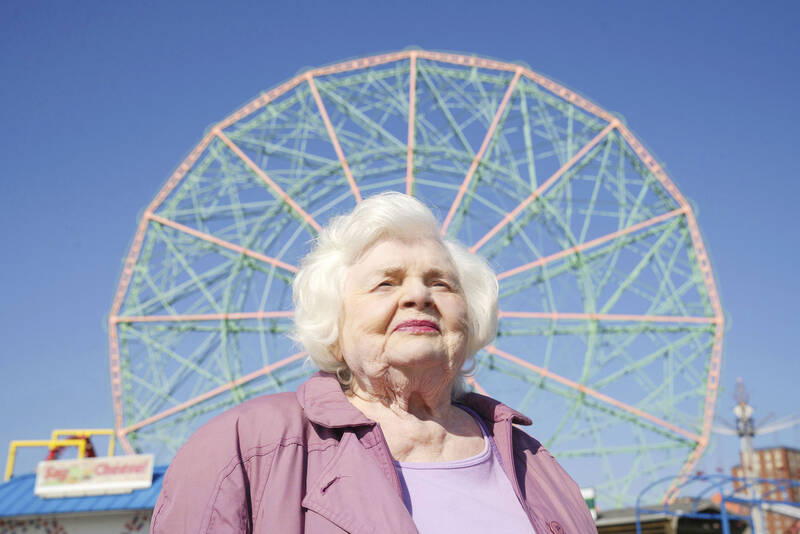
Photo: AP
This might have just been a one-time thing, but sitting in the room is an NYU journalism student, Nina (Erin Kellyman), who is moved to tears and wants to talk to Eleanor more. The two develop an unlikely, but incredibly sweet friendship.
Nina has recently lost her mother and finds solace in this relationship. It’s here where you can start to see how the rest of the movie is going to play out, how the lie will go on too long and be exposed at a terrible time, leading to inevitable feelings of betrayal and humiliation. And it is very, very hard to watch Squibb in distress. Rather than celebrate the performance you want to lash out at the script that put her in this situation in the first place. That may not be fair but it’s also true.
The story becomes less of a character study of the strange ways in which grief manifests and more about the escalating hijinks of a lie that takes on a wild life of its own. Soon Eleanor is speaking to Nina’s journalism peers in an on-the-record, taped conversation, telling another of Bessie’s stories. Then, Nina’s distant father (Chiwetel Ejiofor), a local news anchor, decides Eleanor’s is a great human-interest story for his show.
There is a thread about the merits of preserving memory, but it’s introduced a little too late and too flimsily to justify all that came before it. Johansson directs the proceedings simply, like a classic New York character drama, allowing the performances to shine over the filmmaking, but who she is as a filmmaker remains to be seen. Squibb and Kellyman, both terrific, are the real reasons to seek out Eleanor the Great. The film may trip over its own contrivances but their performances will leave you moved.

Ajay Verma, a consultant gastroenterologist at Kettering general hospital in Northamptonshire, says our gut is a “complex machine.” “It is constantly providing us with the nutrition we need, initially to grow and develop, and then for us to survive, thrive and repair from injury and illness.” How can we keep it functioning well? Put simply: “Make sure what you put into it is balanced, and that you clear out its waste products adequately,” Verma says. “In a general gastroenterology clinic, the most common conditions we see are irritable bowel syndrome (IBS), gastroesophageal reflux disease, inflammatory bowel disease and constipation,” says Nisha
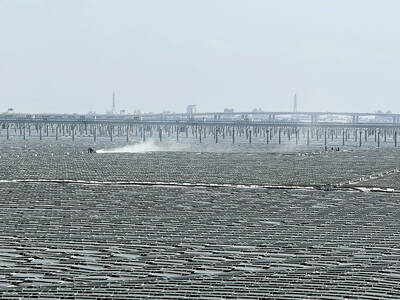
The arithmetic is straightforward and uncomfortable. By the end of 2025, Taiwan had committed itself to a 50-30-20 electricity mix — half natural gas, 30 per cent coal, 20 per cent renewables. The Ministry of Economic Affairs’s (MOEA) own monthly energy reports tell a different story. Natural gas reached 47.8 per cent of generation last year. Coal stood at 35.4 per cent, comfortably above its target ceiling. Renewables came in at 13.1 per cent, well short of the 20 per cent Taipei had pledged a decade earlier. Installed renewable capacity reached roughly half of the 12 gigawatts (GW) the government

Last week US President Donald Trump was asked by a reporter whether he would speak on the phone to the President of Taiwan. “l’ll speak to him. I speak to everybody. We have that situation very well in hand,” Trump said. This marked the second time in a couple of weeks he had said he would talk to the President of Taiwan. In 2016 he famously took a call from then-president Tsai Ing-wen (蔡英文), when he was president-elect. Despite warnings that the apocalypse was nigh because of a phone call, the world quickly forgot about the conversation between two democratically-elected presidents.
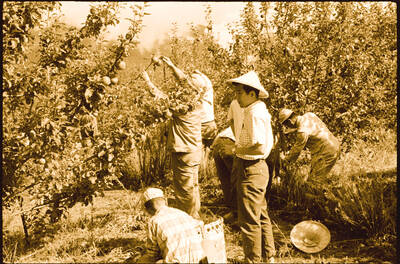
May 25 to May 31 Few believed that apples could be cultivated on a commercial scale in Taiwan’s high mountains. When horticulturalist Cheng Chao-hsiung (程兆熊) first proposed the idea in 1955, both American and Taiwanese colleagues dismissed it as implausible, arguing that temperate fruit could not be reliably grown on a subtropical island, especially on rugged terrain. However, it was this terrain in the Central Mountain Range where many Chinese Civil War veterans were resettled in the late 1950s. With limited job prospects and no family in Taiwan, they were placed on cooperative farms aimed toward self-sufficiency. Some say the conditions


 RSS
RSS