


Not long into Mistress Dispeller, a quietly jaw-dropping new documentary from director Elizabeth Lo, the film’s eponymous character lays out her thesis for ridding marriages of troublesome extra lovers.
“When someone becomes a mistress,” she says, “it’s because they feel they don’t deserve complete love. She’s the one who needs our help the most.”
Wang Zhenxi, a mistress dispeller based in north-central China’s Henan province, is one of a growing number of self-styled professionals who earn a living by intervening in people’s marriages — to “dispel” them of intruders.
Photo: Reuters
“I was looking for a love story set in China,” says Lo, speaking from Hong Kong. “I thought it would be really interesting to [explore] the peripheral gaze of a mistress.”
Lo’s first feature, the award-winning Stray, followed abandoned dogs on the streets of Istanbul. It was praised for its gentle, non-judgmental perspective on human (and canine) relationships. Mistress Dispeller is similarly restrained, allowing the film’s central protagonists — Mr and Mrs Li, his mistress Fei Fei and her dispeller — to be seen as fully rounded, sympathetic people.
CULTURALLY CONFOUNDING
Photo: EPA-EFE
At its core, the film is, to western audiences, culturally confounding. A woman discovers that her husband is having an affair. Rather than confronting him, she hires another woman to befriend her husband. Teacher Wang, as this mistress dispeller is known, uses powers of persuasion and deception to manipulate the husband and his lover, in an effort to end their relationship. If all goes to plan, it’s happily ever after for the married couple — and for the mistress who, in Teacher Wang’s view, is set free.
Teacher Wang’s profession, if it can be called that, has only become a phenomenon in China in the last 10 years. As the country grapples with falling marriage rates, rising divorce rates and an increasing number of young people refusing to wed altogether, an entire “love industry” aimed at promoting and protecting the institution of marriage has emerged. There are dating camps, government-sponsored marriage initiatives and even dating apps aimed at parents wanting to set their unattached children up with partners.
“Divorce is easy,” says Teacher Wang’s assistant on a live stream. “It’s easy to just leave. It’s harder to take responsibility and provide your family with a good life.”

Photo: AFP
But while the struggle to find love is a universal one, hiring someone to pretend to be an old friend — so that they can persuade your husband to end his affair on your behalf — is not. Some viewers might wonder why the wife doesn’t just suggest couples therapy. Lo explains that, according to Teacher Wang, therapy is still very stigmatized in China.
“To enter as a stranger and a professional into a private setting and ask someone to divulge their family struggles would be unthinkable.” Teacher Wang “would be ejected immediately.”
The dispeller dynamic, while grounded in the strong cultural desire to save face, may seem very deceptive to western audiences. But Lo believes that, despite the profound conflict, there is a “kindness in doing that to each other.”
“On one hand, you can say it’s very repressive, and you’re not fully dealing with the problem at its root. But from another angle, it’s also an incredibly graceful way of resolving a conflict in which nobody has to lose face. You never call it what it is head-on.”
The indirect approach to family conflict is reminiscent of The Farewell, the 2019 semi-autobiographical feature directed by Lulu Wang, a Chinese-American film-maker. The Farewell tells the story of a family who, upon learning that the grandmother has terminal cancer, decide to keep the information from her, instead hastily organizing a wedding so that the relatives can gather to say goodbye to the oblivious matriarch. While the film was hailed as a bittersweet, eye-opening exploration of cultural differences in the west, some Chinese viewers found it unremarkable — why wouldn’t you lie to your grandma about her terminal cancer diagnosis?
For Lo, making Mistress Dispeller was about exploring a culture different from, although closely related to, her own. Growing up in Hong Kong, which was a British colony until it was handed over to China in 1997, she devoured western romances such as Notting Hill and Bend It Like Beckham. But the storylines shaped an “idealized version of love” for the young Lo.
“That version is counter to what I understood and observed love to be in my cultural context in Hong Kong, where love is bound up with duty, sacrifice. I really wanted to use this film as a way to get to know mainland China, because I’m from Hong Kong — and to represent the type of love, and vision of family, that feels distinct to Hollywood films.”
CULTURAL REVOLUTION
But Hong Kong and China also have unique traditions, some of which help to explain how a job like Teacher Wang’s could exist on the mainland. China’s Cultural Revolution — a decade of upheaval and chaos between 1966 and 1976 in which many familial and social bonds were destroyed — shattered traditional hierarchies. So, says Lo, while certain beliefs and customs still run deep, China is in many ways less orthodox than Hong Kong.
“A lot of dating coaches and matchmakers we talked to in mainland China said dating today in China is like the wild west, because there are no rules. People are making them up as they go.”
At times, Teacher Wang’s approach certainly seems ruthless. The aim is to make the mistress feel “abandoned on a cold bench.” The situation is “just like a war. You either win or lose everything.”
But the overarching feeling that emerges through the documentary’s many layers is compassion. The husband truly feels torn between his two loves. The wife shows respect for the mistress, and vice versa. Teacher Wang ultimately treats everyone with kindness.
That empathy helps to answer the other burning question that the viewer has after watching Mistress Dispeller: how on earth did the cameras get in? Much of the drama unfolds in the intimacy of the married couple’s dining room, with the viewer brought so close to the scene that it feels like being a guest at a painfully awkward dinner party. In one scene, the wife, stage-managed by Teacher Wang, storms out of the room in faux anger at her husband’s cooking — a ploy to get him alone with Teacher Wang.
Lo’s approach to ethical film-making required a complex set of arrangements, whereby some of the characters were initially told they were agreeing to be in a documentary about “modern love and dating in China.” Only after Teacher Wang’s work was done, and the truth was revealed, were the film crew able to reveal their true role in the process, and ask once again for consent.
Lo says the fact that they agreed is “testament to how Wang was able to build such trust.” In particular, the wife agreed because Teacher Wang persuaded her that by sharing her story — and her approach to dealing with the common but rarely discussed problem of infidelity — she could help other women.
Despite the tension between the two women, the wife shows remarkable compassion to the mistress, something that builds as the documentary reaches its apex. While the relationships in the film may feel uniquely Chinese, Lo does make one final observation. Love, she says, “is the most relatable thing in the world.”

Ajay Verma, a consultant gastroenterologist at Kettering general hospital in Northamptonshire, says our gut is a “complex machine.” “It is constantly providing us with the nutrition we need, initially to grow and develop, and then for us to survive, thrive and repair from injury and illness.” How can we keep it functioning well? Put simply: “Make sure what you put into it is balanced, and that you clear out its waste products adequately,” Verma says. “In a general gastroenterology clinic, the most common conditions we see are irritable bowel syndrome (IBS), gastroesophageal reflux disease, inflammatory bowel disease and constipation,” says Nisha
The arithmetic is straightforward and uncomfortable. By the end of 2025, Taiwan had committed itself to a 50-30-20 electricity mix — half natural gas, 30 per cent coal, 20 per cent renewables. The Ministry of Economic Affairs’s (MOEA) own monthly energy reports tell a different story. Natural gas reached 47.8 per cent of generation last year. Coal stood at 35.4 per cent, comfortably above its target ceiling. Renewables came in at 13.1 per cent, well short of the 20 per cent Taipei had pledged a decade earlier. Installed renewable capacity reached roughly half of the 12 gigawatts (GW) the government
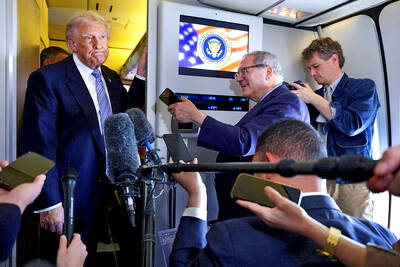
Last week US President Donald Trump was asked by a reporter whether he would speak on the phone to the President of Taiwan. “l’ll speak to him. I speak to everybody. We have that situation very well in hand,” Trump said. This marked the second time in a couple of weeks he had said he would talk to the President of Taiwan. In 2016 he famously took a call from then-president Tsai Ing-wen (蔡英文), when he was president-elect. Despite warnings that the apocalypse was nigh because of a phone call, the world quickly forgot about the conversation between two democratically-elected presidents.
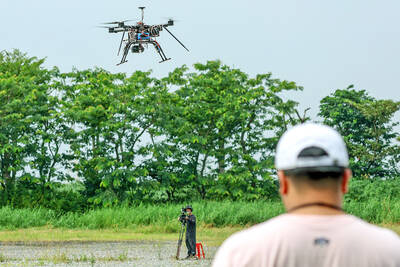
Taiwan’s drone exports are taking off, fuelled by the war in Ukraine, as Taiwanese companies seek a stake in the fast-growing global market for unmanned aerial vehicles (UAV). Low-cost drones used for reconnaissance and strikes are in high demand as governments around the world boost defense spending in the face of intensifying conflicts. A relative new player in the increasingly competitive industry, Taiwan’s pitch is to be an “Asian hub” for the production of UAVs and components free of Chinese materials, or “non-red.” That means its UAVs can be up to three times more expensive than their Chinese competitors, like the world’s biggest


 RSS
RSS