


“They say you murdered my mother,” the young would-be nun tells the shady tycoon. “I feel the need to address this.”
There’s something about the deadpan delivery and the clear-eyed manner that makes you sit up and take notice of Liesl, and even more of Mia Threapleton, who plays her in The Phoenician Scheme, which is currently in theaters in Taiwan. (And there’s another thing, too obvious to ignore: Boy, does she ever resemble her mom, Kate Winslet.)
A vivid presence despite her dry-as-dust tone, Threapleton makes a splendid Andersonian debut here as half the father-daughter duo, along with Benicio Del Toro, that drives the director’s latest creation. Their emerging relationship is what stands out amid the familiar Andersonian details: the picture-book aesthetic. The meticulous production design (down to those fascinating closing credits). The chapter cards. The “who’s who” of Hollywood cameos. And most of all the intricate — nay, elaborate; nay, labyrinthine — plot.
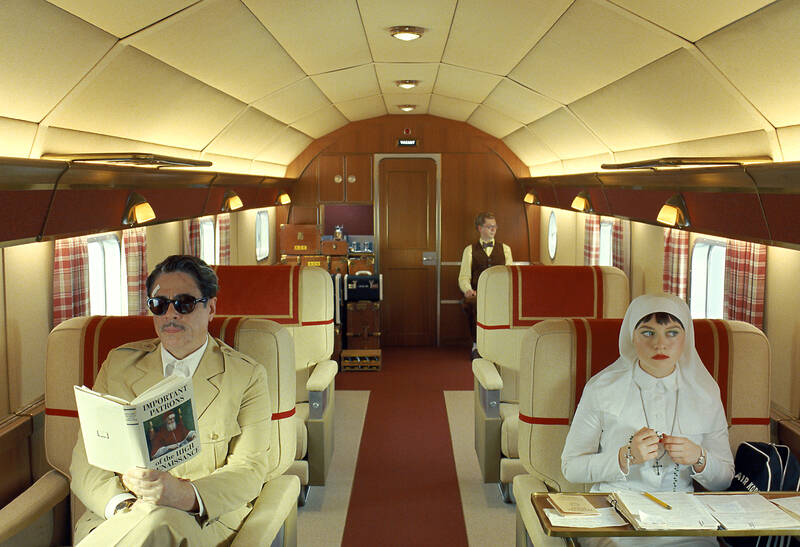
Photo: AP
Indeed, Anderson seems to be leaning into some of these characteristics here, giving the impression of becoming even more, well, Wes Anderson than before. He will likely delight his most ardent fans but perhaps lose a few others with the plot, which becomes a bit exhausting to follow as we reach the midpoint of this tale.
But what is the Phoenician scheme, anyway?
It’s a sweeping, ambitious, somewhat corrupt dream of one Anatole “Zsa-zsa” Korda (Del Toro), one of the richest industrialists in Europe, to exploit a vast region of the world. We begin in 1950, with yet another assassination attempt on Korda’s life — his sixth plane crash, to be exact, which occurs as he sits smoking a cigar and reading about botany.
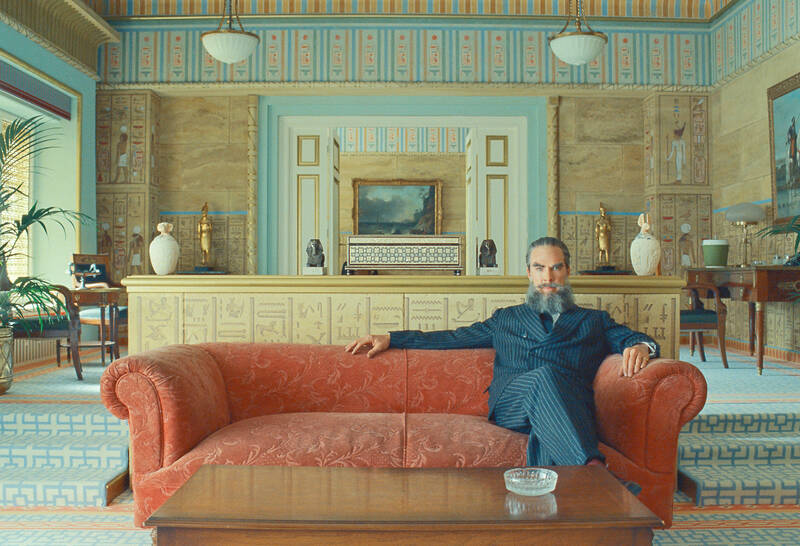
Photo: AP
Suddenly, in a hugely entertaining pre-credits sequence, Korda’s in the cockpit, ejecting his useless pilot and directing his own rescue, asking ground control whether he should crash into a corn or soybean field. The media mourns his passing — and then he turns up, one eye mangled, biting into a husk of corn. As usual, reports of his death have been … you know.
Recovering at his estate, with some truly fabulous, tiled bathroom floors, Korda summons Liesl from the convent where he sent her at age 5. He wants her to be his sole heir — and avenger, should his plentiful enemies get him.
His plans are contained in a series of shoeboxes. But Liesl isn’t very interested in the Korda Land and Sea Phoenician Infrastructure Scheme. What she wants to know is who killed her mother. She also mentions they haven’t seen each other in six years. (“I apologize,” he says.) And she wonders why none of his nine sons, young boys he keeps in a dormitory, will be heirs. But Korda wants her.

Photo: AP
They agree to a trial period. We do get the creeping feeling Liesl will never make it back to the convent — maybe it’s the red lipstick, or the affinity she’s developing for jewels? But we digress.
We should have mentioned by now the tutor and insect expert, Bjorn. In his first Anderson film but likely not the last, Michael Cera inhabits this character with just the right mix of commitment and self-awareness. “I could eat a horse,” he muses in a silly quasi-Norwegian accent before lunch, “and easily a pigeon!”
Now it’s on the road they go, to secure investments in the scheme. We won’t get into the financial niceties — we writers have word-length limits, and you readers have patience limits. But the voyage involves — obviously! — a long line of characters only Anderson could bring to life.
Among them: the Sacramento consortium, aka Tom Hanks and Bryan Cranston, two American guys who hinge their financial commitment on the outcome of a game of HORSE.
Next it’s to Marseille Bob (Mathieu Amalric), and then to Marty (Jeffrey Wright), leader of the Newark Syndicate (we’re not talking Jersey here, but Upper Eastern Independent Phoenicia), who offers a blood transfusion to Korda because, oh yes, he was shot by terrorists at the previous meeting. (Don’t worry, the guy’s indestructible.)
Then there’s Cousin Hilda (Scarlett Johansson, continuing the cameo parade), whom Korda seeks to marry to get her participation in the investment.
And then back on the plane, the group is strafed by a fighter jet. Soon, it’ll be revealed that one of them is a mole. We won’t tell you who, although it’s hard to tell if anything is really a spoiler here — like the part when Benedict Cumberbatch appears with a very fake beard as Uncle Nubar, who may be someone’s father or may have killed someone, and engages in a slapstick fight with Korda, complete with vase-smashing.
We also shouldn’t tell you what happens with the big ol’ scheme — it was all about the journey, anyway. And about Korda and Liesl, who by the end have discovered things about each other but, even more, about themselves.
As for Liesl, at the end, she’s clad stylishly in black and white — but definitely not in a habit. As someone famously said about Maria in The Sound of Music, “somewhere out there is a lady who I think will never be a nun.”

Ajay Verma, a consultant gastroenterologist at Kettering general hospital in Northamptonshire, says our gut is a “complex machine.” “It is constantly providing us with the nutrition we need, initially to grow and develop, and then for us to survive, thrive and repair from injury and illness.” How can we keep it functioning well? Put simply: “Make sure what you put into it is balanced, and that you clear out its waste products adequately,” Verma says. “In a general gastroenterology clinic, the most common conditions we see are irritable bowel syndrome (IBS), gastroesophageal reflux disease, inflammatory bowel disease and constipation,” says Nisha
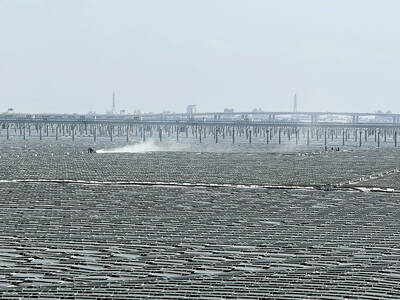
The arithmetic is straightforward and uncomfortable. By the end of 2025, Taiwan had committed itself to a 50-30-20 electricity mix — half natural gas, 30 per cent coal, 20 per cent renewables. The Ministry of Economic Affairs’s (MOEA) own monthly energy reports tell a different story. Natural gas reached 47.8 per cent of generation last year. Coal stood at 35.4 per cent, comfortably above its target ceiling. Renewables came in at 13.1 per cent, well short of the 20 per cent Taipei had pledged a decade earlier. Installed renewable capacity reached roughly half of the 12 gigawatts (GW) the government

Last week US President Donald Trump was asked by a reporter whether he would speak on the phone to the President of Taiwan. “l’ll speak to him. I speak to everybody. We have that situation very well in hand,” Trump said. This marked the second time in a couple of weeks he had said he would talk to the President of Taiwan. In 2016 he famously took a call from then-president Tsai Ing-wen (蔡英文), when he was president-elect. Despite warnings that the apocalypse was nigh because of a phone call, the world quickly forgot about the conversation between two democratically-elected presidents.
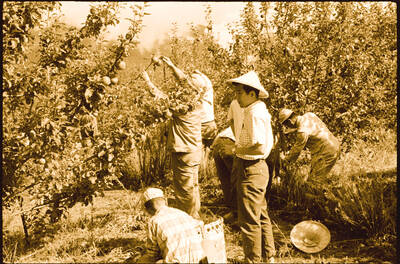
May 25 to May 31 Few believed that apples could be cultivated on a commercial scale in Taiwan’s high mountains. When horticulturalist Cheng Chao-hsiung (程兆熊) first proposed the idea in 1955, both American and Taiwanese colleagues dismissed it as implausible, arguing that temperate fruit could not be reliably grown on a subtropical island, especially on rugged terrain. However, it was this terrain in the Central Mountain Range where many Chinese Civil War veterans were resettled in the late 1950s. With limited job prospects and no family in Taiwan, they were placed on cooperative farms aimed toward self-sufficiency. Some say the conditions


 RSS
RSS